Vivid Sydney today launched its 2023 edition, to be held between Friday May 26 and Saturday 17 June, with a theme of Naturally (inspired by mother nature with reflection after the COVID-19 pandemic started) and the biggest expansion of its event since its inaugural edition in 2009 with the addition of a Food pillar.
For $99 an hour at the museum & lookout atop the south-eastern pylon of the Sydney Harbour Bridge, renowned chef, Luke Mangan, will serve a cheese box with Riverina-produced Shiraz (in a small, reusable, sealed cup to protect the pylon) as you take in the spectacular views of Vivid Light around Circular Quay accompanied by disc jockeys’ mixes in Light Up Your Senses At The Pylon. The lookout and museum has never opened during Vivid Light until now. This adults-only Food experience will only operate between Thursday and Sunday each night during Vivid between 5:45pm & 9:45pm and has a very limited capacity of 50 people per hour so book your tickets as soon as possible! But note, the climb to the lookout and museum consists of 200 steps & has no lift.
While over at Barangaroo’s The Cutaway will be Fire Kitchen – a barbie like no other that sees the best of Sydney dining meet the world’s best pit barbequers. Each night, watch them take to the coals while you enjoy the finished exclusive dishes that have the best of what Sydney has to offer added. There are also live demonstrations.
Returning in 2023 is the sell-out test-run of Vivid Food: The Dinner. Held on June 3 at 6:30pm in The Ivy Ballroom, this 4-hour adults-only dinner is hosted by Eddie Perfect, prepared by Ben Greeno & Danielle Alvarez and features musical performances by Montaigne, Julian Belbachir, Eddie Perfect and more! Themed around the concept of ‘rewilding’, The Dinner will feature New South Wales’ seasonal produce along with paired wines. Tickets are on sale until 4:30pm 1 June or until sold out & a minimum of 2 seats have to be purchased with a maximum of a table of 10 with each seat at a table costing about $295.
Chefs Ben Greeno and Danielle Alvarez Photograph: Vivid Sydney
Also new is The Residence, where a currently secret iconic Sydney diner along the Light Walk will host an also currently secret world famous chef for 2 weeks. There is also the new but similar Chef Series. The main differences are it is at multiple restaurants & that international chefs are paired with a Sydney chef to create a menu, unique each night of Vivid, that represents themselves & the relationship between their 2 countries.
Also taking over Sydney venues is The House of Naturalia & HERE NOW. Co-curated by drinks journalist and P&V Wine and Liquor Merchants co-founder Mike Bennie and acclaimed farmer and restaurateur Palisa Anderson, the latter is an adults-only 6-hour party beginning at 3pm at Macquarie Place Park, which has masterclasses that mix food & wine with music & art. Tickets cost $57 and include 1 drink token for basement bar, Mary’s Underground. The former is at Barangaroo House and will contain at Rekodo Restaurant & Vinyl Bar, a custom menu (see below) by head chef, Tara Chua, as well as disc jockeys Frank Booker, Jnett & Queen Bee, while at the Smoke Rooftop & House Bar, a custom sustainable cocktail menu will be the star. Reservations required.
The House Of Naturalia: Rekodo Resturant & Vinyl Bar Custom Menu
PACIFIC OYSTERS (persimmon vinaigrette)
DUCK SPRING ROLLS (mandarin sweet + sour)
PASSIONFRUIT (yuzu mousse + shiso)
Barangaroo House Photograph: Vivid Sydney
Lastly for 5 hours after 5pm on June 16 will see the return of the Carriageworks Night Market. Curated by Australia’s leading sustainable chef, Matt Stone, the Market will feature food demonstrations. Tickets, costing about $20 go on pre-sale at 9am Wednesday 15 March. If you want to stay at Ace Hotel Sydney and TFE Hotels, use the codewords ‘CCWORKS’ and ‘TH15555894’ respectively to get a 15% room rate discount during Vivid Sydney.
Carriageworks Night Market Photograph: Vivid Sydney
All Vivid Food events will also contain a mixture of ‘light, music & ideas’ to round out the Vivid Sydney experience and so you do not miss out on the rest of what Vivid has to offer! The 2023 charity partner of Vivid Sydney is World Wildlife Fund.
Vivid Sydney is the original festival of light, art and culture. 2023 is the 13th time it has been staged and so it has naturally evolved over time to ensure that it stays relevant to the creative industries and what that means to people today.
We are truly proud of this year’s program. We have raised the bar on the size and scale of the events and activated new parts of the city. Our line-up features more diverse talent across more industries.
There are world-firsts and festival-firsts, and both free and ticketed events to make the festival accessible to everyone. Audiences should be prepared to be blown away by the calibre of talent and a program that has been inspired by the beauty and diversity of nature.
Vivid Sydney’s 2023 program is a celebration of authenticity, an invitation to connect, and a chance to create. You do not want to miss Vivid Sydney 2023.
Vivid Sydney Director, Gill Minervini
Each year visitors and Sydneysiders immerse themselves in the program and enjoy the incredible activations of the talented creatives who make the festival so special.
Last year Sydney welcomed a record 2.58 million attendees who injected $119 million into the NSW visitor economy across the festival footprint. It is our expectation that, with its exciting new program and more international travellers returning to our shores, Vivid Sydney 2023 will elevate the experience for our visitors and deliver even more visitor expenditure to the NSW economy.
Destination New South Wales Chief Executive Officer, Steve Cox
Australia Day In Sydney has announced their 2023 program and will see Australia’s Got Talent act The Other Superman doing a world-1st performance spinning high off a crane above Circular Quay in his wheelchair during Australia Day LIVE – the 2-hour finale concert, fireworks, projections & maritime spectacular held at that location.
The Other Superman‘s not-so-secret identity is Paul Nunnari, a silver medallist wheelchair racer at the 2000 Paralympic Summer Games in Sydney and Gunniess World Record holder for the ‘Most 360-degree rope rotations in a wheelchair hanging by one arm in 1 minute (team of two)’, which is 77 rotations!
Paul Nannari racing his wheelchair at the 2nd Paralympic Summer Games: Sydney 2000 Photograph: Aerion Aerial Entertainment Company
Normally, he performs at a minimum height of 6 metres but this time a crane is being used and we have no idea how high the crane is going to be but we assume it is going to be fairly high compared to his usual aerial acrobatics!
He is also a public speaker so there is a chance he may make a small speech at Australia Day LIVE.
Produced by the Australia Day Council of New South Wales (NSW) and the NSW Government and brought to you by Destination NSW and the National Australia Day Council, Australia Day LIVE will be held at Circular Quay & the Sydney Opera House between 7:30pm & 9:30pm AEDT and will be broadcast live on Australian Broadcasting Corporation (ABC) Television (TV) & iView. Tickets, which were free, have already sold out on January 11 (same day tickets became available) for the concert at the Sydney Opera House. To attend in person, you will now need to find a vantage point around Circular Quay before it reaches capacity around 6:45pm AEDT. Pre-show entertainment begins at 6:30pm.
Australia Day LIVE will, once again, be creatively directed and hosted by John Foreman, joining co-hosts Casey Donovan, Jeremy Fernandez and new for 2023, co-host, Sirine Demachkie. They will lead you through a night of entertainment acts including:
Fireworks & projections on the Sydney Opera House
Fireworks from Circular Quay
A concert (detailed below)
A lit vessel parade
Jet-skiers
Fly-boarders
Koomurri dancers and,
Parachutists!
It is important to all of us to begin ‘Australia Day LIVE’ with a moment that looks at the Aboriginal perspective of Australia Day that celebrates artists from all over the country in different locations
Christine Anu is performing ‘My Island Home’, a song that was originally recorded by the ‘Warumpi Band’ in the ‘80s & has an incredible lineage in Indigenous culture, together with symphony orchestras from across the country.
William Barton, ‘Australia Day Live’ Creative Consultant & Performer
The evening concert, with its powerful performances and tributes, adds greater meaning to our national day & celebrates the Australian spirit.
‘Australia Day Live’ will celebrate artists from around each state and territory across the country, with several symphony orchestras collaborating on a mesmerising opening piece.
‘West Australian Symphony Orchestra’, ‘Queensland Symphony Orchestra’ and ‘Aussie Pops Orchestra’ will all come together to perform a stunning live rendition of ‘My Island Home’, sung by Christine Anu & her daughter Zipporah.
‘Australia Day LIVE’ Creative Director, John Foreman OAM
All this non-musical entertainment will be synchronised to a medley of Australian hits and classics performed live by the following artists in addition to the already mentioned at the televised concert, backed up John Foreman’s Aussie Pops Orchestra:
Casey Donovan,
Dami Im,
Isaiah Firebrace,
Anthony Callea,
James Morrison,
William Barton,
Tim Campbell,
Darren Percival,
Emma Pask,
Mirusia and,
Emma Kavanagh
Dami Im will perform Hunters & Collectors rock song, Throw Your Arms Around Me, accompanied by the Fijian abattoir workers who volunteered and uplifted Lismore residents who suffered during the 2022 eastern Australian floods between February & April last year.
Before Australia Day LIVE, there is a still a day’s worth of entertainment beginning at 5:20am with Dawn Reflection – a projection on the western sails of the Sydney Opera House of a First Nations artwork. This year the artist is proud Kamilaroi artist, Rhonda Sampson and the artwork, for the 1st time, will remain a secret until 5:20am on the 26th of January!
This is followed at 7:30am with the hour-long WugulOra (‘1 Mob’) Morning Ceremony at Barangaroo Reserve, which will be it’s 20th anniversary! Televised on ABC TV & iView, the ceremony features Indigenous stories, musical & dance performances, speeches from dignitaries and local Indigenous people as well as a smoking ceremony.
2023 will be the 3rd year for the ‘Dawn Reflection’ which is an important part of starting the day where Aboriginal people are represented. It is a moment to reflect on what it means for this new dawn and reflect on what took place every day prior to 1788 and each day since.
It’s also 20 years of the Australia Day morning ceremony – ‘WugulOra’ is respectful in honouring those who have fallen, continue to suffer but is also about moving forward & how as a state and country we can do this with the First Nations.
Yvonne Weldon, Deputy Chair of the Australia Day Council Of NSW & the Metropolitan Local Aboriginal Land Council
After these 2 significant Indigenous events, at 10:30am, in the middle of Sydney Harbour near Fort Denison, 4 Emerald-Class ferries containing community groups, charities & hundreds of displaced Ukrainians who now call Sydney home will race eastward around Shark Island before finishing under the Sydney Harbour Bridge at around 11:20am in the annual Ferrython!
Following that, at 11:30am, will be the newest flagship Sydney Spectacular, the Salute To Australia, which you can read about here.
Between 12:45pm & 2pm, the Harbour Parade, a parade of vessels covered in Australian-themed decorations, will circle Sydney Harbour from either side of the northern Sydney Harbour Bridge pylons to Goat Island, back under the Sydney Harbour Bridge, past Circular Quay, the Sydney Opera House & Fort Denison to Athol Bay near Taronga Zoo.
Between 10:30am & 4pm at the Overseas Passenger Terminal, will be a Mega Kidz Zone containing wheelchair basketball, an inflatable ninja obstacle course and a massive maze! Finishing at 4pm as well but beginning 30 minutes earlier at 10am on the Tallawoladah Lawns of the Museum Of Contemporary Art will be Surf Life Saving NSW with a lifesaver dress-up photo opportunity, educationary entertainment on the great work they do alongside with the Little Nippers to educate everyone about beach safety and other family-friendly activities.
All in all remember to reflect, respect and celebrate this Australia Day In Sydney!
This all but brings a full day program of events of flagship Sydney Spectaculars at Australia Day In Sydney for the 1st time:
5:20am to 5:50am: Dawn Reflection
11:30am to 12:05pm: Salute To Australia
12pm to 1:30pm: Navy Helicopter Flag Display
7:30pm to 9:30pm: Australia Day Live
Salute To Australia is, primarily, a military salute. It began in 2010 as just an Australian Army 21-gun salute fired from just north of the Fleet Steps on the western side of Mrs Macquaries’ Point in The Domain into Farm Cove at 12pm to commemorate the Federation of Australia, which was its 99th anniversary at the time (Reminder: The actual Federation anniversary is on 1 January). An 180 metre exclusion zone is in place around the salute when the weapons are armed.
A 21-gun salute stems from the 1700’s when a foreign warship was about to enter a foreign port (let’s use Port Jackson as the example). Outside of the Heads, out of cannon range, which is about 5 kilometres from the coast, the foreign warship would fire each of its cannons, one at a time. As loading cannons is a time-consuming task, the ship was neutralised more after each succeeding shot and could be considered friendly. To check this, Port Jackson would fire 3 cannons for each cannon heard from the foreign warship. 3 bursts of fire were chosen due to superstitions that even-numbered cannon bursts would signal death. Given British ships at the time had 7 cannons, this made the total bursts of cannon fire, 21. Over the past 300 years, it evolved from a security measure, which became redundant in the 1950’s, to a symbol of peace between nations to a military salute (as well as a gesture of friendship between the military and who the salute is being performed for).
In 2011, the 21-gun salute was performed by the Australian Army’s 7th & 23rd Field Regiment Royal Australian Artillery, the latter who also performed it in 2012.
In 2014, the salute was expanded to include a Royal Australian Air Force flypast/handling display finale around Sydney Harbour and a Royal Australian Navy salute from a warship stopped in front of the Sydney Harbour Bridge, which is called a Procedure Alpha. Originating from the Royal Navy of the United Kingdom, a Procedure Alpha involves nearly all sailors on the warship to be stationed at an external part of the ship of their choosing, evenly spaced apart & in full dress uniform. The inaugural saluting ship was Her Majesty’s Australian Ship (HMAS) Choules, a dock landing ship, where the Governor Of New South Wales (NSW) reviewed the salute. The 21-gun salute was also relocated in this edition to Milsons Point inside Bradfield Park underneath the north-eastern pylon of the Sydney Harbour Bridge and it was the 1st edition to feature the words Salute To Australia in it’s name.
In 2015, a performance of the national anthem, Advance Australia Fair, by choirs placed around Sydney Harbour was added to the event. A once-off hat tip by the Royal Australian Navy & Australian Army personnel attending the event also occurred. In 2015 & 2016, 2 landing helicopter dock ships were the saluting ships: HMAS Canberra (which hosted numerous dignitaries) and HMAS Adelaide, which is larger (In fact, it is the Navy’s largest ever flagship).
In 2017, it’s timeslot was moved forward by 15 minutes to 11:45am to permanently include an address by the NSW Governor, who spoke from the saluting ship, which was HMAS Canberra that year & in 2018. A Welcome To Country and a speech from Indigenous Elder, Uncle Allen Madden, as well as a video about Australia’s newest citizens was included in 2017. The choirs, which included Tribal Warrior Choir & school choirs, were also now located solely at vantage points around Circular Quay (Hickson Road Reserve, Overseas Passenger Terminal, Sydney Opera House, Bradfield Park ), who performed Waratah, I Am Australian & Advance Australia Fair, the latter with iconic Australian singer, Tina Arena, which concluded with the aerial salute done that year by a Boeing F/A-18E/F Super Hornet.
In 2018, it’s timeslot was moved up by another 15 minutes to the current 11:30am slot and a performance of Bapa was added just for that edition. That year, over 500 school children participated in the choirs including 1 choir on the ship, Young Endeavour & 3 Boeing F/A-18E/F Super Hornets did the aerial salute, beginning the flypast in formation.
In 2019, a once-off radio broadcast & audio description (89.3FM) was added. Musical performances by The Royal Australian Navy Band and a smoking ceremony first appeared. HMAS Choules (where the NSW Governor was) & Boeing F/A-18E/F Super Hornets were the saluting ship and aircraft (the latter, beginning in formation) in 2019 respectively while HMAS Canberra returned for the role in the 2020 edition.
Then COVID-19 arrived. The 2021 edition was unique in that it had its only television broadcast so far, was held at the later timeslot of 2pm with a shortened duration of 30 minutes and was held at the NSW Government House. Frontline workers were also invited to the 2021 edition, which also saw 2 permanent changes: specially-chosen new citizens were invited to the event & the national anthem was sung with a version in Eora language.
Last year’s edition was streamed on YouTube and is now held at Hickson Road Reserve, underneath the south-east pylon of the Sydney Harbour Bridge (though the 21-gun salute is still held underneath the north-east pylon in Bradfield Park on Milsons’ Point) where the NSW Governor now makes their address. They are welcomed to the event with a Guard made up of Australian Army personnel, which they formally inspect before proceedings begin. A Welcome To Country now follows along with a speech, which in 2022, was about Patyegarang, Lieutenant William Dawes and the significance of the land & spoken by Clarence Slockee. A video about Australia’s newest citizens was also played after that speech before I Am Australian was sung by the now-sole choir, Monty Saint Angelo Mercy College Choir (which is now just located at Hickson Road Reserve) featuring Matthew Doyle playing the didgeridoo, which he also does during Advance Australia Fair, which was also accompanied by jet skiers, each holding, in turn, either the Australian National or Australian Aboriginal Flag. HMAS Paramatta, a frigate ship, was the saluting ship & the Lockheed Martin F-35 Lightning II now does the aerial salute formation flypast and handling display finale, now complete with commentary (which was done in 2022 by Australian Air Commander Air Vice-Marshal V.J. Iervasi, though the event actually now concludes with a private, unaired citizenship ceremony.
As you can see, it is now a Spectacular event! As far as we can tell, the 2023 edition will be similar to 2022 though there will be only 2 Lockheed Martin F-35 Lightning II aircraft performing the aerial salute. A YouTube broadcast has not been confirmed yet.
‘Navy Helicopter Flag Display’ Photograph: Australia Day In Sydney
The Navy Helicopter Flag Display was introduced last year as a 2-hour display from 11:30am, the start of Salute To Australia. The helicopter with flag in tow lifts off from HMAS Penguin navy base near Middle Head before exiting Sydney Harbour to travel to Palm Beach (For international readers, this is the backdrop for television soap opera, Home & Away) and back before travelling up & down Sydney Harbour and then south down the coast to the Shoalhaven River which it travels up to Nowra before landing at the nearby HMAS Albatross naval air station at 1:30pm. As far as we can tell, the 2023 edition will be similar, but it will run for 90 minutes from 12pm. This very likely will not be broadcast though it may make a cameo appearance during the potential Salute To Australia broadcast.
The 2023 edition of the Navy Helicopter Flag Display will also occur during the following other Australia Day In Sydney events:
However, these 3 events are not considered flagship Sydney Spectaculars.
It also means aviation-based Australia Day events in the following local governments will be focused on more by our site:
Northern Beaches Council
Municipality Of Woollahra
Waverly Council
City Of Randwick
Sutherland Shire
City Of Wollongong
City Of Shellharbour
Municipality Of Kiama
City Of Shoalhaven
The Municipality Of Kiama will be holding a helicopter flag display with the Australian National & Aboriginal Flags along their coastline at 10am & 3pm that day and the City Of Wollongong will be holding a flypast along it’s coastline at 5:45pm that day by the Historical Aircraft Restoration Society but those aerial displays will not be considered as flagship Sydney Spectaculars as they are still COVID-19 pandemic responses.
Sydney Spectaculars will be providing coverage of the 2023 edition of Australia Day In Sydney and from that event on, we will also be considering military salutes on Sydney Harbour.
The Rationale
Why these events you ask?
With the addition of Wings Over Illawarra in October last year, major annual aerial displays are now considered and on Sydney Harbour, these usually occur only on the 26th of January. The 2023 edition only has 2 aerial displays that have been held before with a consistent history – the Navy Helicopter Flag Display and the Lockheed Martin F-35 Lightning II formation flypast salute and handling display segment of the Salute To Australia. The Salute To Australia, has, as detailed above, grown significantly over the years, particularly since 2014 and gathers the 2nd largest crowd during the day (The biggest crowd being for Australia Day Live). Also, we believe in the near future, aviation-based events such as drone shows will play a central role in Sydney Harbour events, as shown by the recent Elevate Sydney, Sydney Harbour’s first annual drone show and the southern hemisphere’s largest.
To acknowledge their history, growth, our site’s new ‘policy’ of considering aviation-based events & the future growth in such events, we have decided to designate Salute To Australia & the Navy Helicopter Flag Display as flagship Sydney Spectaculars.
Had the COVID-19 pandemic not occurred, this would have been announced a year ago for Salute To Australia.
What if I cannot attend the event?
The Salute To Australia last year was live streamed on YouTube. However, it has not been confirmed for 2023 yet so do not expect a live stream to appear on the ‘Watch LIVE’ page just yet. However, if prior to the event, they announce, confirm or on the event weekend, publish a live stream, we will promote it.
The Navy Helicopter Flag Display will very likely not be broadcast though it may make a cameo appearance during the potential Salute To Australia broadcast.
Vivid Sydney is a bright star on Sydney’s events calendar supporting the entire ecosystem of the state’s visitor economy during winter, from our creative industries to live entertainment and hospitality venues, accommodation providers and retailers.
Our aim is to be the premier events destination of the Asia Pacific and this internationally renowned, and celebrated, event is vital in realising this vision.
Ben Franklin, New South Wales Minister For Tourism & The Arts
Vivid Sydney was also nominated for ‘Best Cultural, Arts or Music Event (National)’ (but lost to BASS IN THE GRASS Music Festival) and ‘Australian Event Of The Year’ (but lost to AIME).
The Technical Direction Company & Destination New South Wales were both nominated but separately entered for ‘Best Achievement In Marketing Or Communication’ for their work on Vivid Sydney but lost out to the Northern Territory MAJOR EVENTS Company for their work on Parrtjima – A Festival in Light.
The gate shown in the video, whilst closed for capacity reasons at the time of the crowd crush, is clearly for entry/exit purposes with a sign attached to the gate saying ‘conditions of entry’.
The Rocks New Year’s Eve 2022 Map with the crowd crush location circled in red by ‘Sydney Spectaculars’ Map: The Rocks
Sydney Spectaculars has circled in red the crowd crush location in the map above that The Rocks published online for event spectators. As you can see, there is no mention of an entry/exit gate to be located there. There is, however, 8 entry/exit gates shown on the map. 2 of which are for free vantage points – East Circular Quay (Gate E1) & Dawes Point (Tar-ra) Park (Gate 13 and likely Gate 16 as well).
The Rocks is a free vantage point as well with the gates opening in the video to it. This is evident as a nearby electronic variable messaging sign says ‘Rocks Now Closed’. The Rocks, whilst free, was not a ticketed vantage point.
Notably, out of all the vantage points featured on the above map, The Rocks is the only vantage point without foreshore access, which might explain why the gate was not featured on the map. Another reason is that The Rocks normally does not fill up until 11pm on NYE.
While no official attendance figure has been published yet, Sydney New Year’s Eve 2022 is expected to have had the highest attendance on record – over 2 million people – as a result of being the 1st celebrations largely unaffected by the COVID-19 pandemic since 2020. This came as vantage points filled up at 6:47pm, 4 hours quicker than usual, except the main locations (Sydney Opera House/East Circular Quay) which filled up at the usual time in the late-morning & mid-afternoon respectively.
The Rocks had a capacity of 18,000 a week ago, which might sound a lot if it was not for the fact that this is a decrease of more than half of the capacity it was on NYE2019 – 40,000!
Why would the capacity of The Rocks be halved when one of the largest crowds ever were expected to attend the event? NYE2020 & 2021 were lowered due to public health concerns but it is also likely that recent temporary design changes to George Street in The Rocks made from September 2020 such as making it an one-way southbound-only street between Argyle Street & the Cahill Expressway to include alfresco dining probably has reduced event capacity significantly. It was announced a few days prior to NYE2022 that the changes will be made permanent. It should be noted that the temporary changes are harder to relocate temporarily (concrete blocks etc.) than if it was permanent (just tables, chairs & umbrellas).
Though it was not the main cause of the crowd crush, rather a contributory cause, no doubt, the use of alfresco dining during major events, particularly after 11pm on NYE, will need to be reviewed as it takes up valuable spectator space. The main cause of the crowd crush probably was poor communication of either the use of alternative unofficial vantage points (such as the back streets of the suburb of Dawes Point assuming they were not full as well, which is a 5-minute walk away. It should be pointed out this is not on the ‘show’ side of the Sydney Harbour Bridge) or the full capacity of The Rocks throughout the city via outdoor advertising, radio and/or the Internet (We were monitoring the Sydney NYE website throughout the day and the event & did not see the 6:47pm ‘All Vantages Points Closed’ announcement leading us to think until the new year that crowds were still low (but higher than NYE2021) and why aren’t other free vantage points except the Opera House & East Circular Quay filling up like usual?)
Spectators could have been redirected to Darling Harbour. However, that area’s fireworks is not considered part of the official event, even if it is listed on the Sydney NYE website as an official vantage point. There are views of the fireworks but at a distance of 2 kilometres away so spectators may have resisted making the 2km trek back there.
The Rocks were contacted by Sydney Spectaculars about the map but they did not respond to our query by the time of publication.
On January 1, following media inquiries about the crowd crush, a statement was issued by the City Of Sydney:
We work with multiple government agencies on crowd management plans well ahead of time, so incidents are dealt with quickly and people can enjoy their night.
City Of Sydney spokesperson
The City Of Sydney were contacted by Sydney Spectaculars for a copy of the crowd management plan for The Rocks vantage point but they were “unable to share the document”.
Sydney has, once again, welcomed in the new year in style with colourful fireworks over Sydney Harbour with 2 waterfalls off the Sydney Harbour Bridge for the first time since NYE2017 – Wonder & the use of 4 city buildings for the first time since NYE2012 – Embrace while a crowd crush occurred at an entrance to The Rocks vantage point in the hour leading up to Midnight.
The Midnight Fireworks returned to its full complement of 6 barges for the 1st time since the start of the COVID-19 pandemic, accompanied by the world premiere of new music from Stace Cadet (featuring KLP), one track of which – Light Me Up – will be on sale in a “similar” version from January 11th. You can purchase or pre-save/add (the latter for Spotify and Apple Music) here.
Shortly before Midnight, in The Rocks at the western end of Jack Munday Place, a crowd crush occurred. It occurred at an entrance of The Rocks vantage point, where people tried to enter the free but obstructed fireworks viewing spot, which has a capacity of 18,000 (Notably, this is a decrease of 22,000 on NYE2019!). It resulted in the arrival of the New South Wales Public Order & Riot Squad.
New South Wales Police & Ambulance reported no serious injuries from the incident:
While there were a few exceptions, most people were well-behaved and enjoyed their celebrations safely and responsibly.
Several vantage points around the city were at capacity by late-afternoon, as over 200,000 revellers travelled into the city and foreshore areas ahead of the 9pm and midnight fireworks displays.
Just before midnight, large crowds surged towards a vantage point for a better view of the fireworks, resulting in police resources being deployed to the area for crowd management.
There were no injuries as a result and no arrests were made.
New South Wales Police Statement
Once again, Sydney welcomed the New Year with a spectacular fireworks display, and the vast majority of revellers enjoyed their night safely.
More than one million people gathered around Sydney harbour for the fireworks last night – the highest crowd numbers in several years due to the pandemic – so it was a very busy night for us, yet somewhat relieving to see an overall drop in call-outs.
New Year’s Eve 2022 Operation Commander, Assistant Commissioner Anthony Cooke
City Of Sydney, Lord Mayor Clover Moore said crowd control management had declared the city “full” at 7pm, about 4 hours earlier than in pre-COVID pandemic editions. The Sydney Opera House also reached capacity by late -morning and other parts of the city in the mid to late afternoon, which is normal. Overall, this resulted in thousands waiting outside vantage point gates or heading home. She said while some City of Sydney vantage points were ticketed, they were all free:
There were huge crowds in the city. It was really back to pre-Covid popularity.
We have measures in place for crowd control. There was a minor event at The Rocks and immediately that was sorted and there were no injuries.
We haven’t got the final (attendance) figures yet, but we probably had more people around the harbour than we have ever had before.
I would like to see all of the sites around the Harbour free.
I don’t believe other councils or government agencies should be making money out of the event.
City Of Sydney Lord Mayor, Clover Moore
To break the Sydney NYE attendance record, it would have to be over 2 million, which was the attendance record set for NYE2013 – Shine.
We work with multiple government agencies on crowd management plans well ahead of time, so incidents are dealt with quickly and people can enjoy their night.
As always, we’ll incorporate any learnings from this event as we plan next year’s celebration with our NSW government partners.
City Of Sydney spokesperson
It was really scary, very dangerous and I thought I was going to be badly injured. People were trampling me, as I was on the ground with about a dozen other people and some were running over the top of me. I lost my footing when I was pushed to the ground and landed on top of two others.
Anonymous
The anonymous person also told The Daily Mail Australia that the situation was particularly frightening given what happened 2 months earlier during Halloween celebrations in Seoul, South Korea, where 196 people where killed in a crowd crush.
The Daily Mail Australia understands the City Of Sydney will now rethink holding ticketed and non-ticketed events in adjacent areas on New Year’s Eve. This is despite the crowd crush occurring in a location that was not ticketed on either side of the gate shown in the video.
There were some specific incidents, and we call on the Government to make sure those incidents are reviewed, and any specific safety lessons are learnt.
Deputy Opposition Leader in the New South Wales Legislative Council, John Graham
Regional Transport & Roads Minister, Sam Farraway said the “vibe was good” in Sydney as over a million people watched the Midnight Fireworks in person:
We had some significant crowd numbers. We had some significant people using public transport across the city and I think by all accounts, and from the Police accounts, everyone behaved themselves
Sydney…brought in new years with an absolute bang
New South Wales Minister for Regional Transport & Roads, Sam Farraway
New South Wales Police on foot and horseback were also called in to turn back crowds of up to 100 people trying to access the Sydney Harbour Bridge at the Grosvenor Street off-ramp, who Nine News said believed “was a legitimate spot to watch the fireworks” just before Midnight.
There were some people who did try to enter the Harbour Bridge last night and that was dealt with very quickly.
Sydney NYE2022 Executive Producer, Stephen Gilby
Other members of the public complained about overcrowding at Circular Quay while exiting ferries. One Twitter post said crowds have made it difficult to exit a ferry.
With Circular Quay being one of the most popular vantage points, some ferry passengers waited briefly to exit their services so they could move safely and freely around the promenade
Transport For NSW Spokesperson
Back to the Midnight Fireworks, apart from the traditional golden waterfall, a rainbow waterfall featured at the 7 minute mark during the Midnight Fireworks to acknowledge the display’s theme of diversity and the upcoming edition of WorldPride, a biannual international LGBTIQA+ festival that Sydney will host in February & March this year. A rainbow waterfall last appeared in the NYE2017 – Wonder Midnight Fireworks to acknowledge the legalisation of same-sex marriage in Australia, which occurred just weeks prior to that display.
An hour before Midnight, Sydney’s hosting of WorldPride in 2023 was celebrated with rainbows covering the Sydney Harbour Bridge as Courtney Act performed Over The Rainbow, famous from Judy Garland’s performance of the sentimental ballad in the film The Wizard Of Oz, and Zanadu, as a tribute to Olivia-Newton John who passed away in 2022.
It kicked started a 30-minute segment celebrating WorldPride 2023 at the ‘Happy New Year’ concert, held on the Northern Broadwalk of the Sydney Opera House, with performances also from Electric Fields & Casey Donovan. The concert, which went a total 2 hours and 45 minutes also featured musical tributes to Judith Durham of The Seekers, Archie Roach, Christine McVie of Fleetwood Mac as well as more to the iconic Olivia-Newton John. Headlined by Tones & I, the ‘Happy New Year’ concert featured performances from Ball Park Music, Vika & Linda, Dami Im, Morgan Evans, Tasman Keith and more from the ‘NYE Queen’, Casey Donovan.
As the ‘Happy New Year’ concert was held, the Sydney Harbour Lights boat parade travelled around the Harbour. The lights on the boats were also synchronised to the Midnight Fireworks, the WorldPride 2023 Moment and Calling Country.
Calling Country, held at 9pm, was separated into 2 distinct parts this year – fireworks and a live performance unlike last year’s Welcome To Country where the 2 parts were joined seamlessly together. But like last year’s Welcome To Country, designed by the 2022 Archibald Prize winner, Blak Douglas, Calling Country was a brilliant showcase of Indigenous culture.
Calling Country was creative consulted this year by The Re-Right Collective, who in turn, collaborated with over 100 other Indigenous artists, nearly all but a few were Indigenous school children. The few that weren’t school children provided the music and one contributed to the Sydney Harbour Bridge pylon projections for the segment.
Calling Country was preceded by a 3-minute Welcome To Country, done via Sydney Harbour Bridge pylon projections at 8:56pm for those harbourside and via a video for those watching from around the world through the ABC broadcast at 8:30pm, though with only 1 Gadigal Elder (Yvonne Weldon), compared with 2 projected onto the pylons harbourside. Before that, at 7:30pm, to open the event, a traditional Indigenous smoking ceremony was held from the vessel, Tribal Warrior, around Sydney Harbour.
ABC, KIIS 106.5 FM & 2RPH, once again, did quality broadcasts. We hope everyone around the world enjoyed them too. We thank the broadcasters for allowing the world to experience Sydney NYE without being there and we thank the City Of Sydney, the Foti family & The Re-Right Collective and the wider Gadigal nation for a spectacular Sydney NYE! Sydney’s back, baby!
After the event, City Of Sydney employees in garbage trucks, sweepers & compactors worked until sunrise to ensure the City looked clean and accessible.
What a spectacular night we’ve just had. After the challenges of the past few years, it was wonderful to welcome international and interstate visitors back to Sydney and mark the beginning of what we hope will be a safe, peaceful and fabulous 2023.
It was great to see restaurants and venues buzzing with locals and visitors from near and far and Sydney has once again cemented its reputation as the New Year’s capital of the world, so we hope those watching from across the globe start planning a visit here.
The fireworks, projections, music and live performances were a fabulous tribute to our remarkable city, showcasing the best of what our city has to offer as a stunning and safe, inclusive and buzzing destination. From our event organisers to the clean-up crews, thank you to everyone who made this event a terrific success.
After the challenges of the last few years, last night’s unforgettable show not only rung in a New Year it signalled to the world that Sydney is well and truly back!
We have sent a message of diversity and inclusion to celebrate the New Year and I hope it’s a sentiment that echoes around the world as we kick off 2023.
I’m proud we started the year off by centring First Nations stories and a spectacular welcome to those heading down under for WorldPride.
This jaw-dropping start to the new year is only possible because of the many thousands of hours of hard work by our City of Sydney team, NSW Government partners, the Foti fireworks family and the many creatives and professionals who help deliver the event. I offer them our sincere thanks. We said this year’s fireworks would be our best yet, and I believe it was!
We hope last night’s celebration provided some relief and an opportunity to look with hope to the new year. I’d like to wish everyone a happy, healthy, safe and peaceful 2023!
City Of Sydney Lord Mayor, Clover Moore
As the COVID-19 pandemic has finally eased (just!) for a return to a normal NYE, we turn to NYE2023 and whether the 9pm fireworks will now return to its former ‘family’ theme. The Indigenous-themed 9pm 8-minute fireworks have been a great addition – one the event needed after the growing Acknowledgement Of/Welcome To Countries since NYE2008 – Creation. Maybe the City Of Sydney should consider starting the visual broadcast off at 8:30pm with a 4-minute Indigenous-themed fireworks display of 2 barges, one east and one west of the Bridge? The event cannot return the Family Fireworks and lose the 8-minute Indigenous-themed fireworks – not after the last 2 spectacular editions of the 9pm fireworks, which have been the best 9pm fireworks done since 1998. We will have to wait & see on that.
Also, coming up in January, the all-important Sydney NYE fireworks contract is up for renewal. After 25 years, will the Foti family bring another 3 spectacular editions or will a new company bring a fresh perspective on the event particularly from the Howard fireworks family, who have been watching from the sidelines since the 2000 Olympics?
Lastly, on a sober note, tonight may have been the last time we see the Sydney Opera House used for fireworks on NYE as the ‘decade of renewal’ ends with the Sydney Opera House’s 50th anniversary in October this year. It may return in NYE2023 for a 50th anniversary tribute but after that is a total guess particularly after the reintroduction of the city buildings in the Midnight Fireworks tonight, which were removed from the event when the Sydney Opera House was readded on NYE2013 – Shine.
We hope you have enjoyed our coverage of Sydney New Year’s Eve 2022 since late November. Stay tuned to our site as the next flagship Sydney Spectacular is just around the corner! And don’t forget in July & August this year, Australia co-hosts the FIFA Women’s World Cup! We also hope to see you again in late November for coverage of Sydney New Year’s Eve 2023.
4 city buildings will feature during the fireworks displays of Sydney New Year’s Eve (NYE) 2022 – their 1st appearance in a decade.
This was anticipated by Sydney Spectaculars, who was expecting the return of city buildings as the Sydney Opera House’s ‘decade of renewal’ comes to an end next year. The ‘decade of renewal’ was the reason the Sydney Opera House was returned as a fireworks location from NYE2013 – the first time since its inaugural appearance at the turn of the millennium.
At the media launch, the official reason for the addition of the 4 city buildings after a decade was to “expand the footprint” and because “it would be a good time to (re)introduce them”, according to Sydney NYE2022 Fireworks Director, Fortunato Foti.
The 4 buildings are:
Overseas Passenger Terminal
Quay Quarter Tower (the new version of the former AMP Centre, opened early 2022)
Grosvenor Place
Crown Sydney (2nd tallest structure in Sydney, opened 28 December 2020)
The latter building being the 2nd time a casino has featured as part of the fireworks since Star City Casino featured in Sydney NYE1997 to celebrate it’s opening.
The 4 city buildings used for Sydney NYE2022 Photograph: Transport For NSW/Google Maps
Also, the Midnight Fireworks soundtrack is a world premiering dance track called Follow The Lights by platinum-selling, Australian Recording Industry Award-nominated music producer, disc jockey & vocalist Stace Cadet featuring vocal powerhouse KLP.
Stace Cadet was very honoured at being chosen:
The Sydney fireworks are so iconic and I am thrilled to be a part of this momentous occasion. I wanted to complement the light display with a cinematic journey purposely designed to articulate the joy that surrounds ushering in the new year and celebrating the last. I’m beyond grateful to have the insanely talented KLP and her amazing vocals featured.
Stace Cadet
Sydney NYE2022’s Midnight Fireworks will also be themed to diversity, beginning with a rainbow being formed on the Sydney Harbour Bridge BEFORE the countdown, which will be started by pyrotechnic “infinity pods” on the Bridge bringing Sydney together, shooting mines & comets. A rainbow waterfall will feature during the display, most likely during the opening sequence.
From 184 firing points on the Sydney Harbour Bridge, 7000 pyrotechnic effects will fire during the Midnight Fireworks. The Sydney Opera House’s 4 sails will have 2000 pyrotechnic effects fire off them as well.
Out of 16,000 individual firework cues, the Midnight Fireworks will feature the colours of aquamarine, lemon & magenta as well as waterfall shells in silver and willow shells that crackle with gold & glitter in green and yellow.
With so many people finally able to come and watch the fireworks in person, we really wanted to make sure they were in for something special as we all come together to share this amazing experience
This year we’re launching fireworks from four city rooftops as well as the Sydney Harbour Bridge and the Sydney Opera House. This will let us create a ‘Panorama of Pyro’ which will be sure to wow crowds.
As with every year the soundtrack and pyrotechnics work hand in hand to create the phenomenal experience that is Sydney New Year’s Eve.
The fireworks are ultimately the performers and the night sky their stage, what we do is give them the freedom to dance.
If we can bring everyone together in celebration and get them looking forward to the New Year ahead with renewed optimism and joy, then we see that as a job well done.
Foti International Fireworks director, Fortunato Foti
The 2 fireworks displays of the night, Calling Country & The Midnight Fireworks, will contain 8 tonnes of fireworks including 35,000 shooting ground-based effects (such as comets, mines and crossettes), over 13,000 aerial shells & over 100,000 individual pyrotechnic effects, from all firing locations including 7 water-based platforms such as the 6 barges – the first time the full set of barges has appeared since the start of the COVID-19 pandemic.
It will take 18 shipping containers, more than 5000 crew hours, 16 computers and 35 kilometres of data link to put on the fireworks displays.
First Nations storytellers will celebrate local histories and contemporary experiences through art, song, sound and dance.
While we honour the histories of our First Peoples of this Country, we recognise the strength and resilience that also exists in our First Nations youth, who lead us into the future.
Re-Right Collective Artist, Dennis Golding
As revealed earlier this week, Calling Country is being creatively consulted by The Re-Right Collective. What we did not know was that the creative consultation was being done in collaboration with Gadigal artist Nadeena Dixon, who has helped design the Sydney Harbour Bridge pylon projections for Calling Country. Her pylon projections highlight the story of Gadigal fisherwomen with illustrations of land, water, marine life & figures of her ancestors.
The Re-Right Collective Photo by Renee Nowytarger/City Of Sydney 30/11/22
As hinted in our previous article, the Calling Country pylon projections designed by The Re-Right Collective will honour Aboriginal women’s knowledge and resilience & to celebrate Indigenous peoples who care for Country, kangaroos draped with superhero capes will feature. The latter is Dennis Golding’s creation (He dreamt becoming a superhero). The kangaroos celebrate this land’s First Peoples who have always cared for Country while the superhero capes recognises Aboriginal cultural identity’s strength. More than 100 young First Nations artists from schools across Sydney have also designed superhero capes & animators have brought to life some of their artworks’ elements for the pylon projections. In addition, they have each written a story in their Indigenous language, with each being translated for projection onto the pylons. Carmen Glynn-Braun’s pylon projections feature the moon as a symbol of connection to Country indicating time, seasons, fertility & new beginnings.
The Calling Country fireworks will feature peonies and umbrella aerial shells, both in sky blue, and pastel peonies in red, orange & lemon to symbolise the sky & sunburnt country respectively. Fireworks will also represent twinkling stars, sunburnt florals and ocean creatures. There will also be strobing & ghost shells as well as a waterfall off the Sydney Harbour Bridge (most likely not a golden waterfall, which is expected to appear exclusively during the Midnight Fireworks)
All of this will be set to a unique soundtrack from sound artist Salllvage (Rowan Savage) featuring Nadeena Dixon as vocalist. It uses recordings of animals & water collected on Gadigal Country alongside a song in language about fisherwomen who lived and gathered food on Sydney Harbour. After the soundtrack, there will be a debut live performance from the Brolga Dance Academy (as hinted in our last article), Gadigal singer-songwriter, Akala Newman and hip-hop artist/rapper, Kobie Dee, which highlights the strength and resilience of First Nations peoples & explores connections of their own to Country. It will conclude with the presentation of a specially created message stick to City Of Sydney Lord Mayor, Clover Moore.
The overall theme for Calling Country this year is Sky, Land & Sea and tells of a journey from sunrise to sunset.
City Of Sydney Lord Mayor, Clover Moore, said the City Of Sydney is committed to celebrating First Nations stories in the public domain:
This year’s talented artists have created music, visual art and performances that celebrate Sydney’s rich First Nations identity and people, and the glorious land and ocean that surrounds us.
The City is committed to increasing recognition of Aboriginal and Torres Strait Islander culture and heritage in the public domain, and New Year’s Eve provides the opportunity to do so loudly and proudly in front a global audience.
City Of Sydney Lord Mayor, Clover Moore
A smoking ceremony from the Tribal Warrior will open the event at 7:30pm while before Calling Country at 8:57pm, 2 Elders from the Metropolitan Local Aboriginal Land Council will welcome visitors to Gadigal Country as part of the Welcome To Country.
The 11pm WorldPride 2023 Sydney Harbour Bridge light & pylon projection show, revealed in our last article, will last 3 minutes and may feature a synchronised light show on the Sydney Harbour Lights boats as well. It is also officially called the WorldPride 2023 Moment and will feature the Progress Pride colours. Hosted by Jeremy Fernandez, a wider surrounding televisual segment will feature performances by Electric Fields, Courtney Act & Casey Donavan, most likely from the televised concert (which is mentioned in more detail below).
The lighting designer is once again Ziggy Zeigler of 32 Hundred Lighting, returning for his 6th edition and the pylon projections are being produced by Vandal for the 2nd year in a row.
The City Of Sydney Lord Mayor, Clover Moore, is also expecting a crowd of 1 million people to return for the 1st time since the start of the COVID-19 pandemic.
Sydney’s iconic fireworks are the best in the world and kick off global celebrations with a spectacular bang.
As we go over the final plans and get ready for the countdown, we are hopeful this will be our best New Year’s Eve yet!
After the challenges of the past few years, we’re excited to welcome international and interstate visitors back to Sydney to mark the beginning of what we hope will be a safe, peaceful and fabulous 2023.
Sydney is one of the first cities in the world to ring in the New Year and we set the benchmark with a spectacle that showcases the best of what our city has to offer as a stunning and safe, inclusive and buzzing destination.
This year’s fireworks displays include a special celebration of the original custodians of our land and, as we ready to host WorldPride 2023, projections, coloured comets and pyrotechnic showers will turn the iconic Harbour Bridge into a spectacular rainbow.
We are not out of the woods of the pandemic yet and its impacts are still being keenly felt throughout the community. We’re hopeful this celebration provides some relief from the challenges faced over the past few years and an opportunity to look with hope to the new year.
Our service, hospitality and tourism industries have particularly struggled through the pandemic but are now making the most of strong, pent-up demand and starting to bounce back. I encourage everyone in the community come join us this New Year’s Eve and make a night of it. Make a reservation at a restaurant or bar to start your evening, stay overnight at a hotel and support our terrific Sydney businesses.
City Of Sydney Lord Mayor, Clover Moore
The City of Sydney is working with NSW Health & Ambulance to ensure a COVID-19-safe event, this year costing $5.88 million to put on. The event currently contributes $280 million to the Sydney economy. Like last year, most of the Sydney Harbour foreshore is ticketed as a COVID-19 precaution. The City Of Sydney provides 6 of the many vantage points. However, unlike most of the vantage points, their vantage points are free of charge and for 4 of them, ticketed. Facing questions from journalists at the media launch, Lord Mayor of the City Of Sydney, Clover Moore, agreed that the other vantage points, which are run by either local governments or the NSW Government and require a fee, should consider lower the current price of their fees to encourage event visitation.
It should be kept in mind, particularly for international visitors, that New South Wales is currently in its 4th COVID-19 wave. It is not yet of sufficient concern to affect the event but businesses are still recovering from the pandemic so Sydney NYE spectators are encouraged to support local businesses on the night before heading to a vantage point to watch Calling Country and/or the Midnight Fireworks.
There is a chance the 4th COVID-19 wave will be of sufficient concern to affect the event by the 3rd December, at which point Sydney Spectaculars will once again cease to post updates on our site until the public health of New South Wales once again can be guaranteed. NSW Health officials have stated they expect this wave to be short and peak a lot earlier than previous waves.
If you cannot attend the event. the official radio broadcaster is KIIS 106.5 FM (from 6pm AEDT) and the official television broadcaster is the Australian Broadcasting Corporation (ABC) (from 8:30pm AEDT). For the vision impaired, ABC will audio describe Calling Country and The Midnight Fireworks on the ABC Listen app.
Hosted by Charlie Pickering (the new ‘Richard Wilkins’), the ABC broadcast will begin, simulcast on ABC ME, with The Early Night Show, which itself is hosted by Rhys Nicholson, Casey Donovan, Gemma Driscoll along with surprise guests. After Calling Country, at the start of Sydney Harbour Lights, is Zan Rowe, returning as concert co-host to guide you through performances by Tones and I, Ball Park Music, Vika and Linda, Dami Im, Morgan Evans & Tasman Keith.
The concert will also be aired on the entire ABC network including social media, local ABC radio (so if you’re down on the Harbour, tune in on 702AM from 9:15pm) as well as ABC International for global audiences.
We’re thrilled to be ringing in another new year with our partners City of Sydney to deliver yet another unforgettable NYE celebration. We hope that Australians at home and around the world join the ABC in celebrating what we expect to be a magical night
ABC Director of Regional & Local, Judith Whelan
At the media launch, journalists inquired whether drones have been discussed or imagined to be added or to replace the fireworks. The Lord Of Mayor of the City Of Sydney, Clover Moore, confirmed drones will be used during Sydney NYE2022 though Sydney NYE2022 Fireworks Director, Fortunato Foti, confirmed they will not be used for fireworks. This indicates drones will most likely be used as part of the ABC broadcast. However, Fortunato Foti conceded drones being added for fireworks as “probably inevitable and a matter of how and when we do it”. He also acknowledged that they already have someone to collaborate with for drones. In fact, drones have already been used for fireworks at the conclusion of the 2021 Saudi Arabia Grand Prix.
The official charity partner of Sydney NYE2022 is The Smith Family, who help disadvantaged children get the most out of their education through long-term support and evidence-based programs.
As part of Sydney NYE2022, The Smith Family is holding a raffle. You can buy up to 20 tickets at a time, with funds going to The Smith Family’s Learning For Life program, which provides long-term support for the participation of young Australians in education.
3rd prize is 2 premium tickets to Rodgers and Hammerstein’s Cinderella at Sydney Lyric Theatre with chocolate & drinks (Valued at $320.00); 2nd prize is 2 nights accommodation at Pullman Melbourne On Swanston, 2 premium seats to Agatha Christie’s The Mouse Trap and a Webjet voucher (Valued at $2,120.00) while 1st prize is a return trip to London for 2 people thanks to Singapore Airlines including 2 nights stay in the centre of London (Valued at $10,674.36).
You can enter here with entries closing 11:59pm, Sunday the 8th of January 2023 AEDT.
The Smith Family has supported children and young people for 100 years, and today we are helping more children than ever to achieve their potential through the transformational power of education.
We are so proud to mark the end of our centenary year as the City of Sydney’s New Year’s Eve official charity partner, and with the generous support of the community, we can help even more children experiencing disadvantage to create better futures for themselves.
Chief Executive Officer Of The Smith Family, Doug Taylor
UPDATED 14th of June 2024: Re-classifies Moore Steps “crowd crushes” as “near-crowd crushes”, adds scientific definition of crowd crush & estimated crowd numbers in the “near-crowd crushes” to article.
Yes, every year Vivid Sydney is crowded but everything does have a limit to how crowded one space can be…
Even planning ahead to see exhibits over multiple nights, the only #VividSydney memory my daughter and I have is suffocating crowd crush.
As a keen spectator of major Sydney events, I have been following Vivid Sydney since its inception in 2009 and have attended every year since 2013. For the first few years of the event’s history, the Sydney Opera House was the symbol of the event and the Vivid Light component slowly grew in size but on a grand scale, it was still minute. Then came 2013. The Sydney Harbour Bridge was brought into the event and Vivid exploded in popularity.
The Queen’s Birthday long weekend is well known for being THE most crowded time of Vivid Sydney and while this year’s edition had the extra factor of an East Coast Low causing nearly a whole weekend of the event to be cancelled, the following Long Weekend clearly showed that if the event is to grow in popularity even further, organisers are either not ready for it, have been making misjudgements from the beginning or in the worse possible scenario, putting social media publicity before the lives of people.
I’ve thought about writing an article about the crowds for a few years but the potential danger is now too great for me to not draw attention to it. A simple e-mail to Vivid won’t suffice in my opinion so consider this article an open letter to Vivid Sydney.
Long Weekend Crowds
As an University graduate majoring in event management and a fan of Sydney’s major pyrotechnic/lighting events, for fun I try to look for potential problems as I like to ‘look after’ these events. Clearly as everyone else did, one of the first problems I noticed was the crowds on the 2013 Long Weekend around Circular Quay. I have no doubt that Vivid did try to fix this problem. I assumed the solution was to expand the Festival to outside the city and hence, free up space inside the city. In 2014, Vivid expanded to Martin Place, The Star & the University Of Sydney; in 2015, to Chatswood, Central Park & Pyrmont and in 2016, to Taronga Zoo & the Royal Botanic Gardens (also to celebrate their respective anniversaries).
While in most cases this solution would work, in my opinion it wouldn’t work in this case. That is because people attend Vivid for the Sydney Opera House/Harbour Bridge and the Sydney Opera House/Harbour Bridge only. They are going to Circular Quay regardless of where other lights are unless it is something iconic like Taronga Zoo. The solution did produce successful new precincts but the overall crowds at Circular Quay, mainly full of tourists, still remained.
So a more recent solution to be implemented was to extend the event by 5 days. This sounds good in writing but when you think about it, it makes little to no difference. Firstly, this year, it added only 1 Saturday, 1 Friday and 3 other weekdays. Vivid is only attended on weekends – few people attend on weeknights – and with 3 of the 5 extra days non-Friday weeknights, this solution would produce little relief on the Long Weekend crowds. So the basic logic would have been to make the event run on weekends more or make the event run only on Friday nights/weekends over a longer time scale (such as 2 months). A benefit of this would be more worthwhile electricity usage (better than heaps of lights and no one to see it).
A more overall realistic solution to ease crowds, which I thought of after the 2013 event, would be to make the Vivid Light Walk an one-way loop. Using the Martin Place precinct as the starting point, the loop would go through the Domain back along the foreshore westward to Barangaroo before heading south to Wynyard Railway Station where it would finish. People could also enter and exit the route at the major train/ferry stops & the walk between Wynyard and Martin Place is small enough to make a full loop. Having 2 major entry/exit points (Circular Quay & Martin Place/Wynyard) can allow people to divide their journey into 2 days – 1 journey per day. It would also allow the Sydney Opera House projections to be shown on both sides if finances allowed it.
A potential one-way loop.
The one-way loop concept was implemented at Taronga Zoo and the Royal Botanic Gardens this year & while I only attended Taronga Zoo, it made a whirl of difference to the clogging that two-way crowds create. Taronga Zoo’s Vivid experience was by far the most pleasant Vivid experience I’ve had to date… but that wasn’t the same when I returned back to Circular Quay.
While the popularity of Vivid combined with a long weekend is a major factor at play in creating these crowds, I believe other small factors are contributing in negative ways and if organisers don’t fix them, they could combine to create a disaster.
The Purpose Of The Barricade?
One of the other problems I first encountered in 2013 and still exists to this day, is the barricading of Circular Quay Promenade at either the western or eastern end. Whilst it is likely they have done that to ease crowds by redirecting them along Alfred Street, it baffled me as most people have the instinct to walk past the ferry terminals either to hop on transport or to walk to the other side’s lights (unless they are interested in seeing the Customs House projections). It also baffled me as it took everyone to a bottleneck anyway.
Approximate location of the barricades
I presumed the objective of the barricade is to assist people catching public transport at Circular Quay so any queues that form don’t affect the Vivid Light Walk especially on the Long Weekend. The Cahill Expressway forms a physical barrier between the foreshore and Customs House & as most associate the Vivid Light Walk as a foreshore walk, the instinct is to walk past the ferry wharves instead of heading to Customs House (unless you wanted to see the Customs House projections). The same instinct applies if you like to catch a ferry or train. Unlike all the other major projection shows, Customs House is also hidden behind the Cahill Expressway. On the other side of the Cahill Expressway is also Alfred Street and while the road is closed from traffic, people treat it like an open road and so they walk close to the road’s edge anyway causing bottlenecks along the side-walks on the approach to Customs House. Bottlenecks are also caused by bus shelters narrowing the space to walk. These bus shelters also act as a physical barrier to the route. The Vivid Light Walk is also poorly signed and so most people don’t know the ‘official route’.
Pink: The Official 2016 ‘Vivid Light Walk’. Blue: Instinct route if you going to Customs House. Orange: Instinct route if you wish to bypass Customs House. Black: Barricade locations
In fact, the Vivid Light Walk‘s official route doesn’t go past the ferry wharves. It runs along Alfred Street instead but due to poor signage, no one knows that and so instinct kicks in. So why put a barricade when it’s not on the route? Well firstly, it is a precaution to protect against that instinct. So why not put up more directional signage? That I don’t know. The main objective, like I said, would be to assist public transport users at Circular Quay so wouldn’t a better solution be to add Vivid Light Walk & Circular Quay Transport Interchange directional signage, remove the barricade and install temporary Opal card/ticket gates there instead and also around the promenade’s other access points? That way public transport users (particularly ferry users) can still access the transport interchange while Vivid Sydney visitors can follow the official route around past Customs House?
A proposed access strategy. Pink: ‘Vivid Light Walk’ Directional Signage. Green: Circular Quay Transport Interchange Directional Signage Orange: Circular Quay Transport Interchange Opal Card/Ticket Barriers
The barricade might be a probable error on Vivid‘s part but if it wasn’t, it leads me to think that Vivid Sydney might be intentionally driving crowd flow away from the ferry wharves in order to promote Customs House. This would drive up social media publicity of the iconic projection show and hence, boost the profile and economic benefits of the event. It’s a horrifying idea that lives might be put behind money & social media but it seems plausible as the barricades are ideally placed so the crowd is forced to follow the official designated route of the Vivid Light Walk (1 ferry wharf is outside the barricades). And like I said before, unlike all the other major projection shows, Customs House is also hidden behind the Cahill Expressway so people might not be aware of its existance unless they see it in front of them but I don’t think Vivid Sydney organisers would stoop that low – it is more likely a poorly thought out crowd control measure.
I’ve always intended to watch a Customs House projection show but the crowds, bottlenecks and that barricade always prevent me from doing so. Most of the time I’ve watched part of the show in a queue.
The Train System
Now we head to 2016. I went to Vivid on the rainy Friday night prior to the East Coast Low’s arrival. It’s just past 8:30pm and the rain had just started bucketing down for it’s first lengthy downpour. Heaps of people decided to leave Vivid at this point. The line to the ticket machine was long (which is expected particularly with non-Opal card users like foreign tourists – maybe a special Vivid paper transport ticket for tourists should be introduced?) but the line to the Opal card/ticket readers was worse.
It took a good several minutes to get from the back of the line and through the gate. The line was that long, a person I was with was separated by roughly 5 metres from me at 1 point. A lot of people were trying to enter the station…but not many were trying to exit the station. There are roughly 8 ticket gates on 1 of the 2 sides of Circular Quay’s railway station but at this point of the night, only 2 were open to entering passengers on, at least, the side I was on.
Compared to the exiting passengers, the entering passengers deserved at least 4 more gates open. This would fasten things up but the next problem is to prevent a crowd crush inside the small foyer immediately after the gates and also up the staircases, escalators & lifts. As Wynyard-bound trains arrive on 1 platform & St James-bound trains on the other, the tickets gates, staircases, lifts & escalators should be designated signs & fenced inbetween so as to direct people to/from their platforms immediately instead of having them approaching or entering the gates and then trying to figure out which is the right one to go to and hence, causing a delay. As the escalators are already one-way, the 2 lifts & 2 staircases per platform could be divided into 1 ‘entrance’ and 1 ‘exit’. Above the Opal card/ticket readers could be a sign saying ‘Platform 1 only – Platform 2 Other Entrance’ etc. For this to work though, Sydney Trains would need to be up on the platforms directing passengers off the train to the correct exit.
A potential access strategy for Circular Quay Railway Station. Black: Fences Green: Entrance Red: Exit Note: The larger spaces are there to allow people requiring assistance to access the lifts easier.
During Vivid, Circular Quay Railway Station is ‘pick-up’ only between 6pm & 11pm on Saturdays & the Long Weekend but this is publicised very little. Vivid needs to publicise this more. The ‘pick-up’ only implementation is a good idea to help meet capacity needs but in my opinion, doesn’t need to be implemented prior to 8:30pm. Prior to 8:30pm, it is worker peak hour so why should the workers get the right of access even when thousands of tourists are expecting to hop off at Circular Quay? Workers access the station every day of the year and during Vivid, Wynyard & St James are operating as normal nearly so why can’t for just 7 days a year, hop on at a different stop? On the Long Weekend & Saturdays, workers are entering the stations at lower than normal rates anyway due to it being the weekend and/or a public holiday. To implement my idea, when Circular Quay is at capacity, some flexibility is required similar to the ‘pick-up’ only concept:
During expected mass arrival times (such as 5pm to 7:40pm on Friday/(Long) Weekends), it should be drop-off only (i.e. above diagram all red). To hop on, head to St James or Wynyard.
During expected arrival times (such as 5pm to 7:40pm on weekdays) but passenger arrivals = visitor departures due to the worker peak hour, the above diagram should be implemented.
During balanced times on Fridays/(Long) Weekends where passenger arrivals = visitor departures (such as between 7:40pm & 9:20pm), the above diagram should be implemented.
During expected departure times (such as 9:20pm to Midnight on weekdays) but visitor departures is equal to or less than passenger arrivals, normal City Circle operation should occur.
During (un)expected mass departure times (such as 9:20pm to Midnight on Friday/(Long) Weekends or sudden inclement weather), it should become pick-up only (i.e. above diagram all green). If you’re being dropped off, it would be either at Wynyard or St James. Trains could even ‘terminate’ at Wynyard & St James, compulsorily emptying the train before travelling to Circular Quay to start a new journey filling up the carriages all with Vivid visitors.
This year’s Vivid also saw the traditional finishing time of Midnight moved an hour forward to 11pm. The reason why they did this I have no clue so I asked them why. A Destination New South Wales spokesperson said:
“Vivid Sydney is always evolving, and like any major international festival we take away key learnings each year and adapt our programming to best serve our audience.
While the festival continues to grow in overall attendance with a record 1.7 million attending last year, we know that attendee numbers do drop off significantly by 11pm and therefore at the ‘Vivid Light Walk’ in the CBD, lights have this year switched off at 11pm. However we have added five nights to this year’s Festival giving visitors even more time to explore and enjoy all that Vivid Sydney has to offer.”
Their comment sounds fair – they are saying most people have already left by 11pm. Even if it is minor in size, the earlier finishing time, without a doubt, would see crowds building up larger than usual as people depart at 11pm this year particularly around Circular Quay Railway Station.
Even if my train system ideas above was implemented, it wouldn’t have helped in my situation as my train was nearly 10-15 minutes late. This banked up commuters on the platform. They should, in future (unless they already do), allocate the number of people going through the ticket gates to meet the capacity of the next train. They could probably use Opal card data to estimate the current capacity of each approaching train. If the trains were empty as they approached like in my suggestion above for mass departures, a full platform-length train could hold approximately 900 people – a great relief on the system given trains can be as frequent as every 5 minutes. My train’s lateness puzzled me as while yes, it was raining heavily, Vivid Sydney is supposed to have “4,500 additional public transport services including extra trains”.
When I went to the International Fleet Review in 2013, during the 3 days I was there, the public transport system did not seem to be any different to a normal day despite the same promise as above being made. This led me to presume it is actually a lie to encourage people to use public transport when it fact, there are little extra services available resulting in long queues and overcrowding anyway. At Vivid, the train’s lateness made me think the same is happening 3 years later.
I checked the list of departures of trains leaving Circular Quay between 6pm & 11pm on Saturday 11th June 2016 (during Vivid) with another list for Saturday the 25th of June 2016 (after Vivid) during the same times. What did I find? More services during Vivid! Yay!…Ok, “service”. That’s right – only 1 extra train service was added during the Saturday of the Long Weekend. Trains were no different compared to an ordinary Sydney Saturday – however, it is noted that trains were slightly more frequent just prior to 11pm, this year’s ‘lights off‘ moment of each Vivid night. The increased frequency was probably a way to keep up with the larger than normal crowds around Circular Quay Railway Station at 11pm as everyone would be leaving at that point of that night for sure this year due to the change in the ‘lights off’ moment from 12am to 11pm. So, at least for trains, 0.002% of all supposed ‘extra public transport services’ was a train stopping at Circular Quay – the mecca of Vivid Sydney.
Frequency of trains at Circular Quay Railway Station in minutes.
To be fair, the above shouldn’t be surprising as the current Sydney train fleet is always meeting an 100% demand rate – it couldn’t cope with extra services without removing services from other lines. Either way, this shows that the increasing popularity of Vivid will cause strain on the train system particularly the City Circle.
As the train eventually arrived, a few people hopped off before everyone casually hopped onto the train. Then to everyone’s surprise, the guard starts blowing his whistle and more and more frequently. The initial whistle caused a sudden rush for the train doors. I didn’t rush (as we had barely started to hop on the train when the whistle was blown) but the movement of people pushed me forward. I was now stuck between the left door and another person on the right. It was the beginnings of a crowd crush from a sudden stampede.
A stampede can be defined as an ‘uncontrolled concerted running as an act of mass impulse among a crowd of people in which the crowd collectively begins running, often in an attempt to escape a perceived threat’. The perceived threat was being left behind after waiting nearly 15 minutes for a train that has barely let a customer in. The train, in fact, was fairly empty when the crush occurred as I eventually found myself standing in the aisle on the upper tier looking out the window to an empty platform but the guard’s impatience could have caused a disastrous crush. Had the guard waited patiently, everyone would have gotten on casually and after waiting a small amount of time (compared to the 15 minutes we waited for the train), the train could leave safely.
Being stuck inside the door with 3 other people and masses of people inside and outside the train, people started to move ahead as the initial people who hopped on found somewhere to ride the train. Eventually, a small opening arrived so I could go up the first staircase I could see. I went for it relieving more pressure on the crowd crush before finding myself on the top tier aisle with no more room to move as the rest of the aisle was full. Getting off at our desired stop was a bit difficult with a full aisle but we managed it, just. A possible way to avoid that last bit is to, during Vivid, allocate carriages to passengers’ desired destinations so the shortest journey passenger sit in the centre carriages while the longest journey passengers sit in the outer carriages near the driver/guard. This would also help prevent people heading into carriages that are already full. This idea is only for Circular Quay Railway Station and would look like this if implemented during Vivid:
This may be more difficult to implement than my other ideas as passengers’ destinations may vary each time a train arrives, it is very difficult to prevent passengers going through ticket barriers based on their destination (unless they are happy to wait) and lastly, there is little room, once you reach the top of the staircases or hop off the escalators/lifts, to think about where along the platform you should go. So to implement the above, station staff would need to work very efficiently as well as keeping the general principle that if you got a short journey head to the centre of the platform while if you got a long journey, head to the ends of the platform. Why the centre of the platform for short journeys? Because at the next stops, people are most likely to hop onto the centre carriages. If people with short journeys are hopping off at these stops, it would refill the carriage without overloading other carriages that are full with passengers taking long journeys.
Remember that on the Long Weekend during Vivid, Circular Quay is a pick-up only railway station but the amount of trains is pretty much the same as the next Vivid Saturday, a non-long weekend Saturday, where the station is pick-up & drop-off. What I experienced was just the beginning of a crowd crush caused by a rare stampede. It was the first crowd crush I felt could have happened at Vivid and it was on a Friday night when it was raining & wasn’t a Long Weekend. What could happen when it is a Saturday night that is clear and moon-lit & is the Long Weekend? The potential is there now due to Vivid’s increasing popularity and organisers haven’t managed to ease the crowds in 3 years. I was planning to write a letter after the event ended so next year’s event could accommodate it but even with the East Coast Low, I didn’t expect it to nearly happen on a bigger scale 1 week later and this time Vivid has explaining to do. It clearly was preventable on an organisational scale.
#VividSydney avoid opera house side. Manic. Stick to the cruise ship terminal side.
We arrive at the Long Weekend of Vivid Sydney 2016. It is the first weekend after the East Coast Low cancelled the previous weekends Vivid Sydney. A highly popular new lighting installation, the Cathedral Of Light, is a centrepiece of the new Royal Botanic Gardens precinct. On the Saturday night, people arrive at Vivid to head immediately to the installation. What met them was nearly a crowd crush.
#VividSydney is a joke. It’s deadset gridlock at circular quay.
— lise 🌻 melb n1,2,3, syd n1,2,3 🪩 (@islandbreezeee) June 11, 2016
There were reports of people being treated by paramedics, children crying & even a gas bottle exploding. People were left not moving for up to 45 minutes. East Circular Quay & the Royal Botanic Gardens was soon declared ‘reached capacity’ at 8pm – the first declaration of it’s kind in the event’s history I believe – but Vivid‘s social media posts don’t actually indicate the area was sealed off (I wasn’t there so I don’t know). They only ‘recommend’ going somewhere else. If it was managed access, tents, fences & turnstiles would be there every day just in case but out of all the years I’ve been to Vivid, Taronga Zoo is the only place I’ve seen managed access (as they have the facilities to do that). The only possible ‘managed access’ that could have existed is small road closure/crowd control barriers being relocated or police/volunteers/private security guards blocking the path. I wasn’t there so I can’t be 100% certain but I think that is likely the case – very little proper ‘managed access’. Luckily, no one was seriously injured.
But Vivid organisers should have seen this coming even without an East Coast Low causing abnormally high crowds. Why? Because the near-crowd crush occurred in 1 particular spot not the whole of Circular Quay. The Cathedral Of Light installation was clearly the stand out attraction in the direction of the Sydney Opera House and based on previous years, it’s popularity should have been clearly expected. If you compare this photo of the Cathedral Of Light with this photo of Vivid 2013’s popular Hundreds & Thousands installation, you can see they are nearly identical apart from colour. The Cathedral Of Light was bound to be a hit. The choice of location and crowd control measures to accommodate that location is what failed in this instance.
Security blocking passage & creating incredibly dangerous crush in front of wharf 3 @VividSydney Careful if you have kids. SORT IT OUT VIVID
— @jameshumbers@aus.social (@JamesHumbers) June 11, 2016
The location as mentioned earlier was the Royal Botanic Gardens. The Royal Botanic Gardens has many access points but for Vivid Sydney it had only one. This would be ok normally and was managed correctly but Vivid Sydney organisers didn’t take into account that the Royal Botanic Gardens entrance is at the dead end of the narrow Light Walk path from Circular Quay. Regardless of where you came from, you had to funnel down through the narrow path along East Circular Quay to reach the Cathedral Of Light. Macquarie Street, which runs behind the buildings on East Circular Quay, was closed to traffic and whilst it could have had the same near-crowd crush effect if the crowd was larger, most people didn’t use that road as an access route as it is not listed as part of the Vivid Light Walk and people treat closed roads as open roads except during crushes or times of impatience. As crowds & queues built up at the Royal Botanic Gardens entrance, it started to bank up all the way down to the Moore Steps – the narrowest part of East Circular Quay – where the near-crush occurred. The fact that people walk along East Circular Quay to leave the Royal Botanic Gardens was the final deciding factor in the near-crush’s creation. Two-way crowds combined with narrow space = near-crowd crush. The Moore Steps were then used an ‘escape route’ to Macquarie Street. The Moore Steps are narrow too and could easily have done more or even severe damage.
The location of the near-crowd crush Red: Near-crowd crush location – The Moore Steps is the narrowest part of the red zone. Pink: The official 2016 ‘Vivid Light Walk’ route. Black: Other physical barriers (apart from the East Circular Quay buildings) in gaining access to the Royal Botanic Gardens such as cliffs, driveways, closed gates & fences.
Here is the view from below the Moore Steps:
View from Philip Street (non-closed road 100 metres away from the near-crush):
There are so many people in Sydney for Vivid tonight that people are walking on roads that aren't even blocked off
— 🧪✈️ Lab of Kindness 💗👩🔬 (@labofkindness) June 11, 2016
While no one was seriously injured in this near-crush, this near-crush was easily 10 times worse than mine, which was just the beginning of a near-crush and was partly caused by a stampede from a guard’s whistle. This was nearly a full crush. It lasted nearly an hour. It has happened. It can happen again. Vivid has to be prepared for an increase in popularity. It took nearly a decade for NYE to reach 1.5 million visitors. Vivid took 6 years. It could be larger than NYE very soon and the event’s organisation is not up to scratch. NYE also has the benefit that crowds don’t leave soon after they enter while with Vivid, the crowds are continuously moving. These near-crowd crushes had about 19,000 people in them each night. 2 near-crushes in the space of a week are too much for a highly popular international event. Organisers need to take crowd control more seriously before someone gets seriously injured or dies.
Solutions
Assuming they are planning exactly the same things next year, possible solutions include….
More directional signage. It could be arrows on the ground or on poles – at least it is identifiable as Vivid.
Make an exit from the Royal Botanic Gardens near the Conservatorium Of Music – this is a short walk back to Circular Quay.
Close all roads north & inclusive of Bridge Street & Conservatorium Road up to Circular Quay for all except Macquarie Street which should be closed up to the Sydney Opera House. Cahill Expressway should stay open though.
Put more popular attractions near Walsh Bay – this is usually a quiet spot due to it being west of the Bridge, which is a physical barrier in the Light Walk. This would decrease the amount of people heading towards the Royal Botanic Gardens if there is a major attraction in Walsh Bay.
Include Macquarie Street & the Tarpeian Precinct in the Vivid Light Walk with the Tarpeian Precinct part of the Royal Botanic Gardens experience.
Make East Circular Quay northbound travelling with Macquarie Street/Tarpeian Precinct southbound travelling. Macquarie Street can be made two-way if East Circular Quay begins to not handle northbound-only crowds.
Sell free tickets for time-slotted openings into the Royal Botanic Gardens.
Sell free tickets for time-slotted openings into East Circular Quay.
The Sydney Opera House & businesses along East Circular Quay can sell their own free tickets out of the ones issued (aiding business without conflicting crowds). For example, buy 1 movie ticket, free Vivid access included. Product/service prices should not increase to make an increased profit from that proposed offer though as prices are probably already higher than usual due to Vivid.
Direct all non-ticket holders west of Circular Quay. There is still a free sound-tracked view of the Sydney Opera House projections at Dawes Point. You also pass the Museum Of Contemporary Art and Customs House projections along the way.
If non-ticketed, make Vivid an one-way loop as mentioned earlier.
If non-ticketed, extend Vivid to 2 months in duration but only on Friday, Saturday, Sunday (& Monday on the Long Weekend) nights. It will be the same amount of days with roughly the same crowd numbers & more worthwhile electricity usage.
I’ve forgotten if I had any more possible solutions. If I think of more, I’ll add them to the list.
It took half an hour to walk from Circular Quay to the @SydOperaHouse tonight and the three-way crush near the stairs was fully dangerous.
For the next day, I thought Vivid would respond to the crowd crush situation by making crowd control measures better (as they were clearly caught off-guard) as the crowds for Sunday should have been roughly the same and while the Moore Steps near-crowd crush did occur again, it was slightly less intense than Saturday’s but Vivid didn’t seem to be ready for it still. The 3 first posts below even possibly indicates that they even prevented people escaping up the Moore Steps this time:
I read reports that there were conflicting instructions from police, volunteers etc. inadvertently making the near-crowd crush worse (as the two-way traffic is a major contributing factor to it). Vivid did however warn people of potentially larger crowds around that area 2 hours prior to 6pm. This was a good move by them but this passage of writing baffled me: “To ensure pedestrian safety, the only access to the popular ‘Cathedral of Light’ at the Royal Botanic Garden Sydney will be via the Sydney Opera House forecourt ie. there is no access to the Cathedral of Light via Macquarie Street/Tarpeian Way.“
Whilst it is unclear from that statement if Macquarie Street & Tarpeian Way allowed people to leave the Royal Botanic Gardens that way, it does make it clear that Vivid is insisting people walk through the narrow East Circular Quay path to the Sydney Opera House forecourt as it will “ensure pedestrian safety” but in my opinion doesthe complete opposite especially as Macquarie Street is closed to traffic and the Tarpeian Precinct is, well, empty. The only reason I can see why they advised this is to avoid long queues or a crowd crush at the Royal Botanic Gardens gates but judging from photographs, those gates were well managed – only a long queue would form. There is plenty of space around the Sydney Opera House to walk around so if people didn’t want to wait a long queue, they just had to leave as simple as that.
While Sunday’s near-crush was less in intensity, it did start way earlier than Saturday’s with the Royal Botanic Gardens reaching capacity 6 minutes after it opened. East Circular Quay did not reach it’s designated capacity but the near-crush still occurred at the same spot. Vivid doesn’t post capacities of each precinct but based on Sydney NYE‘s capacities, the capacity of the combined Sydney Opera House/East Circular Quay area is currently 15,200 people with 8000 of that being the capacity of East Circular Quay. As the near-crush occurred but the area hadn’t reached ‘capacity’, Vivid either has the wrong capacity limit or doesn’t have one and just defines whether it is at ‘full capacity’ based on what it looks like on the ground at the time. If it is the latter, that is very dangerous especially on the Long Weekend.
The scientific definition of a crowd crush is when crowd density reaches 9 to 10 people per square metre & this number is sustained for a significant amount of time but a density of 6-7 people per square metre is when people become uncomfortable & the situation becomes dangerous. When East Circular Quay’s capacity of 8,000 for Vivid is reached, the density should be about 1-2 people per square metre.
Vivid, 90 minutes later, posted another update but to only indicate that it is busy at East Circular Quay. The near-crush was at it’s worst shortly after this point and what happened to the Royal Botanic Gardens reaching capacity? Now it is just “large volumes of people“:
Hundreds of people, none the less, complained about the near-crowd crush. The media didn’t take notice of it – probably assuming it was solely due to the East Coast Low. The next day, Monday, was the public holiday but as people headed back to work the next day, crowds were down on the previous two nights. Vivid again advised pedestrians “not to use Macquarie Street” something that, like I said, baffled me:
No near-crush occurred on the Monday night but that didn’t stop hundreds of people warning others on social media to be careful around the Moore Steps. Vivid may have good answers on why their crowd/traffic management plans were the way they were and I would like to know why especially as a person interested in event management but in any case, Vivid clearly has to be prepared for the increasing popularity otherwise it may end in tragedy like it nearly did on the Long Weekend. Destination New South Wales is the government organisation that puts Vivid on and so on the Sunday night, I asked for a general comment on the crowds around East Circular Quay:
Destination New South Wales’s Response
A Destination New South Wales spokesperson said “As expected, Vivid Sydney was once again very popular on Sunday night.
“Eastern Circular Quay, the Sydney Opera House forecourt and Royal Botanic Garden precincts were again crowd favourites.
“Vivid Sydney worked closely with other Government agencies to enact our crowd management plans to ensure the safety of our visitors. This led to a number of changes to traffic conditions around the Circular Quay precinct to accommodate the increased crowds and also included managed access at popular sites including the Royal Botanic Gardens.
“Crowds were well behaved, and we appreciate the patience shown throughout the night.
“This year’s Vivid Sydney will run for an extra five nights, until next Saturday June 18. We encourage visitors to come earlier in the week and earlier in the evening to enjoy the festival when crowds are anticipated to be lighter.”
Conclusion
A lot of people wrote that they will not return to Vivid again after the near-crowd crush experience. I’m not surprised if they are first-time visitors and had no better time than to visit on the Long Weekend but it’s sad that it has tainted the event. This was a huge shambles and something has to be done. It was totally uncoordinated with no communication or plan. It more likely looks like they are taking the attitude that they will deal with it when it happens or are totally shifting responsibility on external security companies who just do what they do – guard. In regards to ferry queues – an annually complained problem, that problem can only be solved by making tickets pre-paid with all non-ticketholders taking other public transport. The huge crowds began in 2013 and has reached crisis point in 2016. Vivid hasn’t done enough. They need to do more otherwise everyone will be LIVID.
Were you there?
If you were stuck in the near-crowd crush particularly around the Moore Steps and like to provide more information, please contact us and also let Vivid Sydney know. This allows us both to provide better information to the public about the event as well as allow Vivid Sydney to plan better for next year.
P.S If you think all social media posts of this incident are in this article, you are wrong. There were many, many more….
Update (16/06/2016): 5 days after the initial Moore Steps near-crowd crush, 1 media organisation finally reported the Moore Steps near-crowd crush. That articles mainly notes that they will incraese police resources for the final 2 days of Vivid. In my opinion, this won’t solve the problem because firstly, there were police at the original 2 near-crushes but were uncoordinated so coordinating police with a ‘crowd crush plan’ would be the 1st thing to solve and secondly, more police equals less space. The problem is a lack of space not a lack of police. Vivid needs to increase space and distribution of the crowds within that increased space but not in uniconic spaces like Chatswood or Central Park but more like the one-way loop concept I proposed which passes heaps of iconic places. The article also quotes a Destination New South Wales spokesperson saying “use public transport to avoid any bottlenecks”. This was terribly worded advice as public transport means ferries & trains and where is the main ferry/train stop at Vivid? – Circular Quay – where the near-crowd crushes and most bottlenecks are occurring. I’m not saying do not use public transport – just do not hop off at Circular Quay on expected crowded nights until they solve the crowd problem.


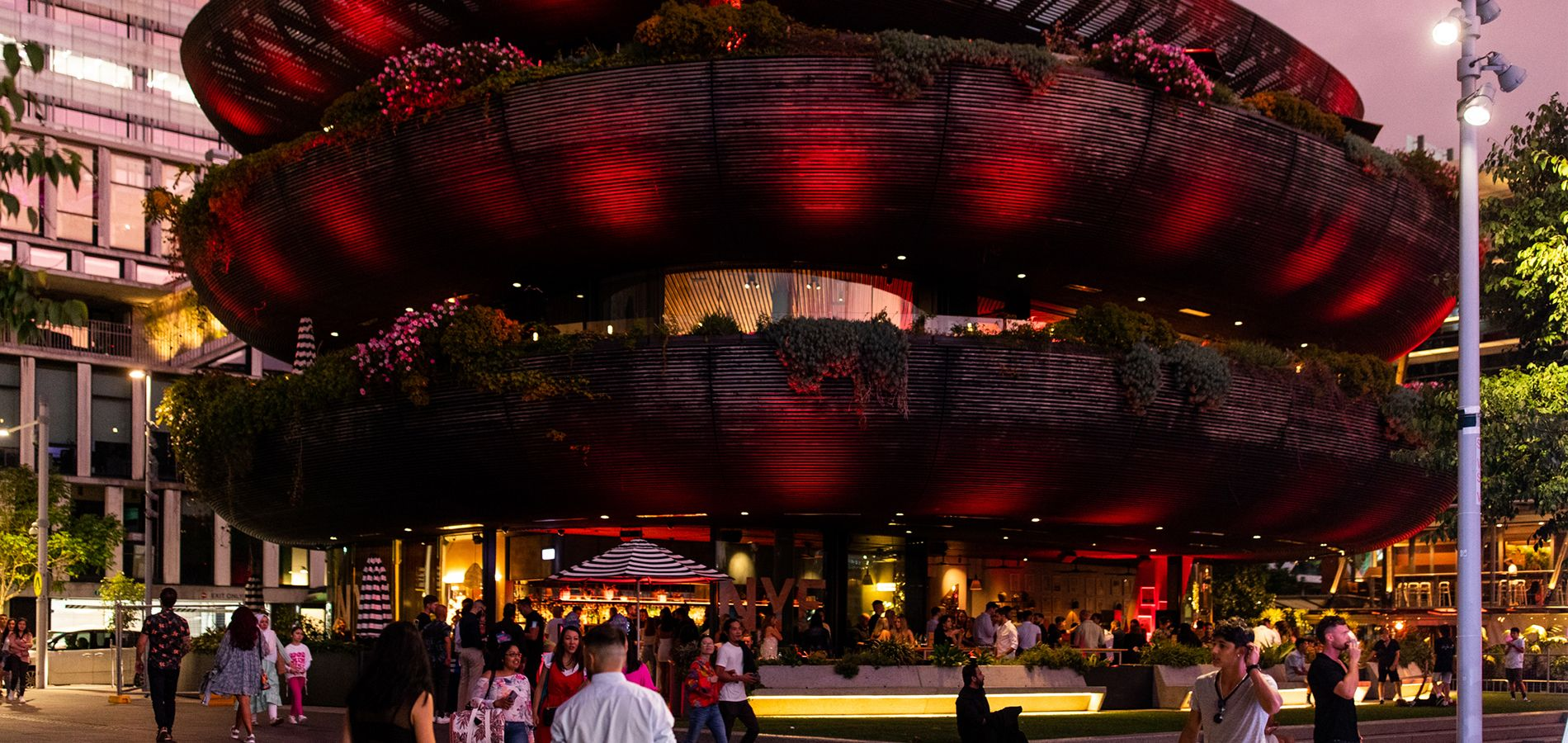


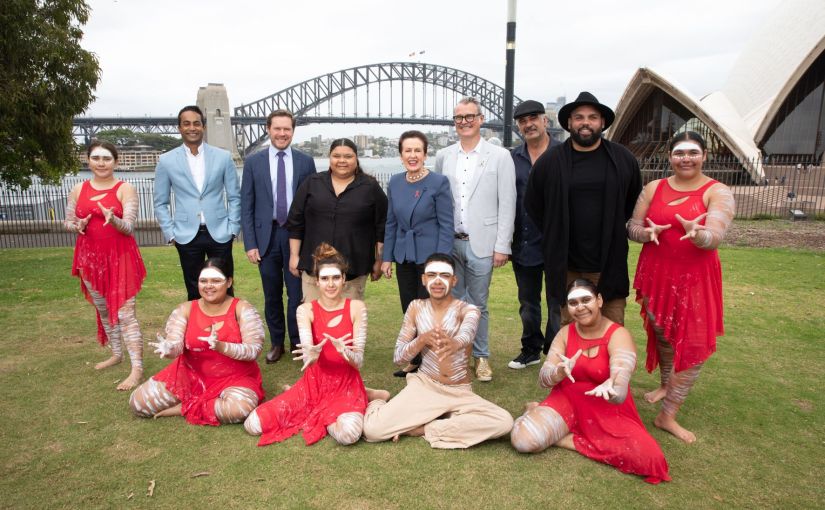
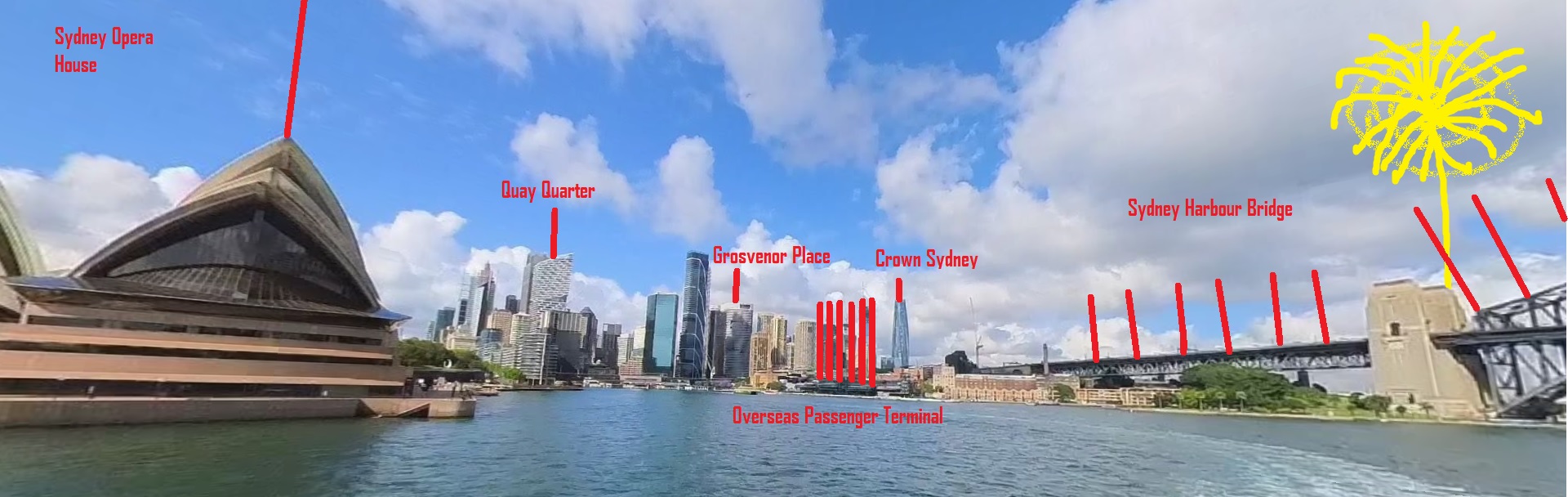


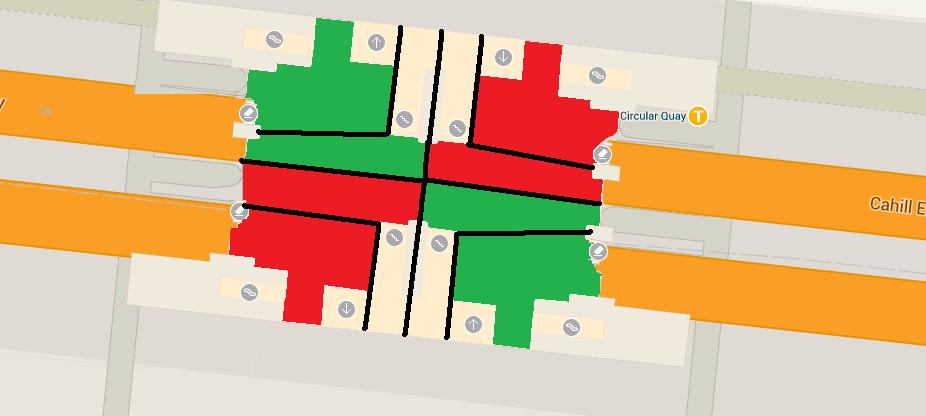
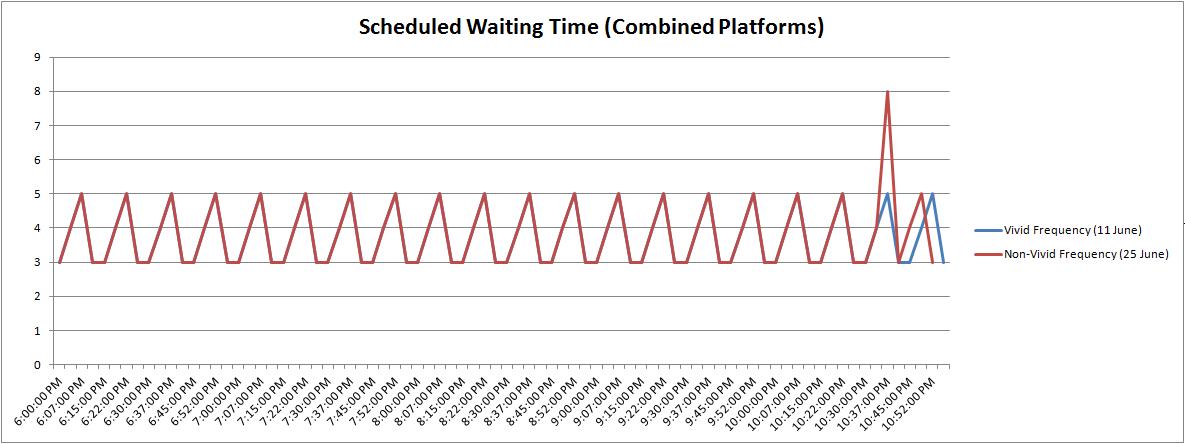


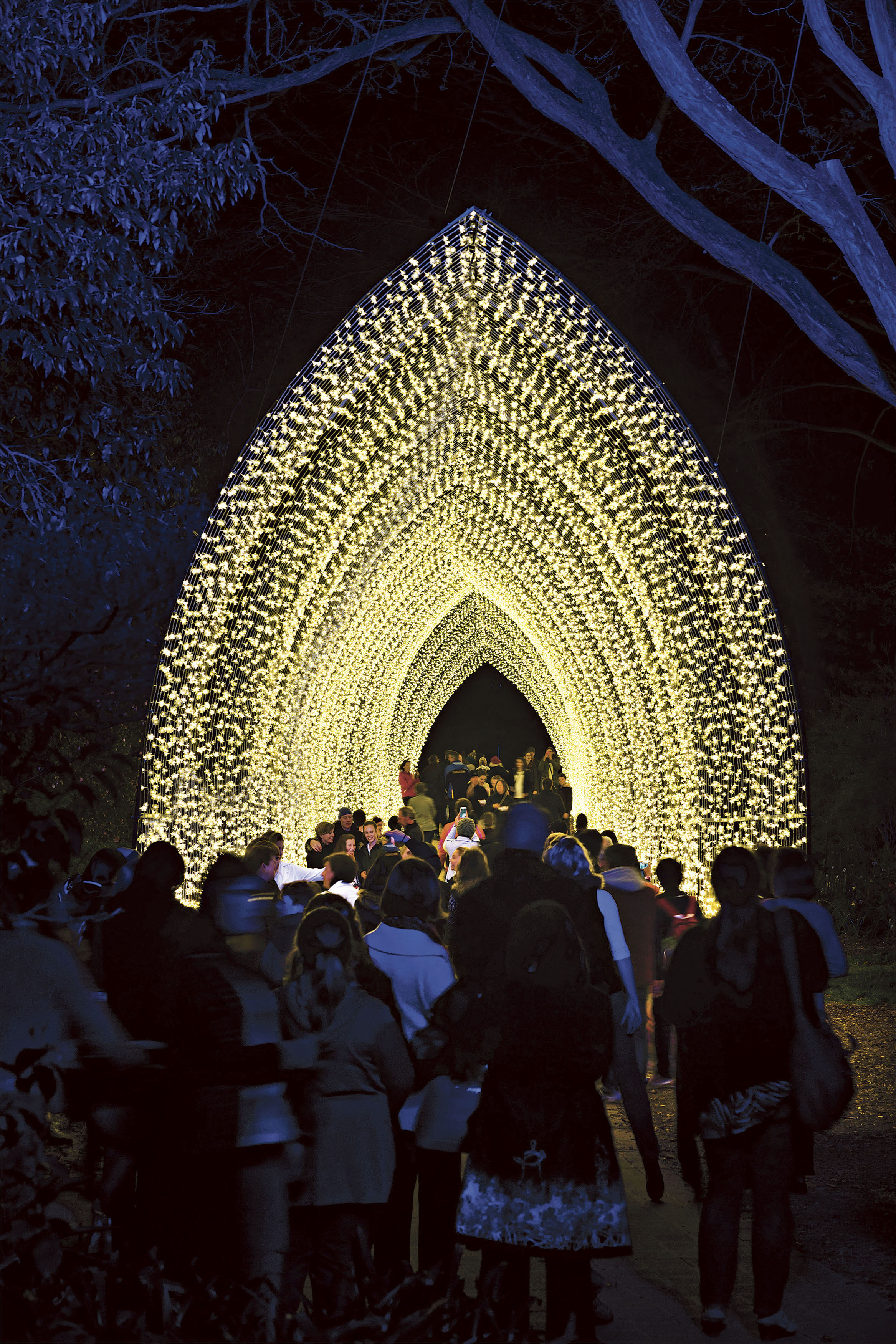

You must be logged in to post a comment.