WARNING: Aboriginal & Torres Strait Islanders are warned that this story mentions an Indigenous person who has died.
Apart from the tragic passing of Rhoda Roberts, here are the other extraordinary & flagship Sydney Spectaculars news items that occurred during our absence…
Extraordinary
125th Commonwealth Naval Force Federation Anniversary International Fleet Review
The United States Navy confirmed their attendance
The ships on review were confirmed to be His Majesty’s Australian Ship (HMAS) Adelaide, HMAS Ballarat, HMAS Brisbane, HMAS Canberra, HMAS Choules, HMAS Dechaineux, HMAS Diamantina, HMAS Stuart, HMAS Supply, HMAS Sydney, HMAS Yarra, Bluebottles (Australia), His Majesty’s New Zealand Ship Te Kaha, His Majesty’s Canadian Ship Charlottetown, Motor/Merchant Vessel Asterix (Canada), French Ship Auguste Benebig, Indian Naval Ship Nilgiri, Republic of Fiji Naval Ship Timo, Republic Of Indonesia Warship Raden EddyMartadinata, Japan Ship Kumano, His Majesty’s Ship Lekir (Malaysia), His Majesty’s Papua New Guinea Ship Francis Agwi, Republic Of The Philippines’ Ship Diego Silang, Republic of Singapore Ship Intrepid, His Thai Majesty’s Ship Naresuan, The Vessel of His Majesty Ngahau Koula (Tonga), Vietnam People’s Navy Ship 016 – Quang Trung, United States Ship Fitzgerald, Republic of Kiribati Ship Teanoai II, Samoan Patrol Boat Nafanua III & Cook Islands Police Patrol Boat Te Kukupa II.
Robertson Park & Middle Head were confirmed as additional vantage points, the latter only good for the Ceremonial Fleet Entry.
The Governor-General Of Australia, Sam Mostyn, was confirmed as the reviewer.
The reviewer was to be accompanied by the Deputy Prime Minister Of Australia, Richard Marles, Chief Of The Australian Defence Force, Admiral David Johnston & the Chief Of The Royal Australian Navy (RAN), Vice Admiral Mark Hammond.
There was also a ceremony on/off Bradley’s Head at 8am, where a Welcome To Country was held on HMAS Canberra as it passed the Head at the same time as the RAN hoisted the Australian White Ensign on the HMAS Sydney I Main Mast Memorial.
The 125th Commonwealth Naval Force Federation Anniversary International Fleet Review happened on March 21:
The Historic Flotilla Procession went the wrong way around Clark & Shark Islands.
A surprise Sydney Opera House projection show happened that night (Check it out below if you missed it! You can also see the Historic Flotilla Procession happening to the left)
Stadium Australia confirmed to host the Final, Bronze Final, 2 Semi-Finals, 2 Quarter-Finals & 2 pool matches
Sydney Football Stadium will host 2 Round Of 16 & 3 pool matches
Docklands Stadium’s retractable roof to be closed for all matches
Hospitality & travel experiences for all matches went on sale from January 27
LIQUI MOLY will have its brand integrated into the event & digitally
Mitsubishi Estate Co. Ltd will bring public viewing sites & other innovative fan engagement programmes
Webb Ellis Cup taken to the top of the Sydney Harbour Bridge by John Eales & Wallaby, Joseph Suaalii (who also carried a RWC – Australia: Men’s 2027 flag), both of whom were joined by 24 young people from local rugby communities representing the tournament’s 24 teams with those regions’ flags
Webb Ellis Cup taken to the top of the Sydney Harbour Bridge by John Eales & Wallaby, Joseph Suaalii (who also carried a RWC – Australia: Men’s 2027 flag), both of whom were joined by 24 young people from local rugby communities representing the tournament’s 24 teams with those regions’ flags. Image: RWC – Australia: Men’s 2027The match schedule was unveiled as t-shirts on an Aussie icon, the Hills Hoist. Image: RWC – Australia: Men’s 2027
Purchase limits will range from 6-10 tickets per match per customer
The pre-sale was held from 12pm, Wednesday, February 18 to 12pm, Wednesday March 4, 2026, all in Sydney time
Fans from 135 countries bought at least 750,000 (30% of) tickets by the conclusion of the pre-sale, with half of the tickets sold in the 1st 6 hours of the pre-sale – the fastest-selling RWC to date
Most in-demand matches during the pre-sale were, in the pool stage, Australia vs New Zealand, England vs Wales, Ireland vs Scotland, as well as any knockout match
Top 10 purchasing countries to date include, in order: Australia, the United Kingdom, New Zealand, Japan, France, Ireland, United States Of America (USA), South Africa, Chile & Canada
For the general application phase for tickets, you will also need to have a ticketing account, if you don’t already, following the same set-up steps as the pre-sale.
Meiji Co. Ltd will supply milk & yogurt at the event as well as host fan-focused activations around the world & have its brand featured on the event’s digital platforms
The Webb Ellis Cup returned to Brisbane for the 1st time since 2003 on Tuesday May 19
Rugby World Cup winner and former New Zealand international, Brad Thorn, former ‘Wallabies’ captain, James Horwill & current ‘Wallaby’ fly-half, Tom Lynagh, joined hundreds of Brisbane area students from dozens of schools to create a large-scale human mosaic spelling ‘RWC27’, alongside the Webb Ellis Cup on May 19, 2026, at Roma Street Parklands’ Celebration Lawn. Image: RWC– Australia: Men’s 2027
The general application phase for tickets opened on Tuesday, 19 May, 2026 at 3pm, Sydney time
By May 29, higher price categories had better availability & due to extremely strong demand in lower price categories, ticket availability for these categories will be limited and likely subject to ballots
During the general application phase for tickets, requests for donations to ChildFund Rugby were made, who, for the event, are working with partners worldwide to build safer, more inclusive communities
The general application phase for tickets closed on Tuesday, 2 June, 2026 at 6pm, Sydney time, with 1.2 million tickets applied for from people in 141 countries.
DStv’s SuperSport to broadcast the event in Sub-Saharan Africa
RWC– Australia: Men’s 2027 & Coca-Cola Partnership Launch Drone Show over Sydney Harbour’s Farm Cove, viewed from Fleet Steps on June 22. Video: RWC– Australia: Men’s 2027
Coca-Cola will be the exclusive non-alcoholic ready-to-drink beverage supplier at all stadiums & fan festivals. They will also provide activations at those locations
Ticket application outcomes were notified on June 23 with those successful having payments via card commencing automatically on June 25
By July 14, demand was high for private suites
ITV to broadcast the event in the United Kingdom, including via ITVX & the ITV Sport YouTube channel
The Australian Sports Minister, The Honourable Anika Wells MP, announced that the Australian Government is providing an extra AUD$37.5 million in funding to support the event including AUD$7.5 million for the Impact Beyond Australia targeted sustainable rugby union long-term legacy programme, which provides the strategic framework for investment & delivery in rugby union in Australia (with a strong and deliberate emphasis placed on increasing female participation by 70% by 2029) from now to beyond the event by supporting Rugby Australia initiatives designed, in collaboration with its local Member Unions, the Australian Government & State and Territory Governments, to deliver lasting benefits for communities across Australia, with the 3 priorities of building capability and capacity, increasing participation opportunities & strengthening inclusion, with the aim of improving infrastructure, creating strong, safe and inclusive community rugby environments, ensuring the community game is ready to sustain increased interest inspired by the event, expand access to the game across all demographics, double participation in national club programmes to more than 16,500 participants, increase the community game by 1/3 across 15s & 7s, supported by a 30% increase in accredited coaches and match officials to sustain long‑term growth, grow overall participation to more than 220,000 rugby union participants by 2029 & have more fans
The tournament is projected to generate up to AUD$2 billion in economic benefits for Australia
You can now receive team-specific updates straight to your calender here
Applications opened to those over the age of 18 (as of 1 April 2027) on 1st September for Team27, the ~3500-place volunteer program, until 23:59, Sydney time, on October 1, all through the portal powered by Wiz-Team, who are supplying the event’s Tournament Management System. Successful candidates, if they are not Australian citizens or permanent residents, must obtain a visa with volunteer working rights for the volunteering period. Successful candidates will also receive training and a uniform pre-tournament. There will also be welcome events & recognition activities
Each host city will have its own volunteer team & unique name: Adelaide/Tarntanya – Kangaroo Hoppers; Brisbane/Meeanjin – Try-Line Huggers; Melbourne/Narrm – Lyrebird Line Breakers; Newcastle/Awabakal-Worimi – Kooka Ruckers; Perth/Boorloo – Quokka Quicksteps; Sydney/Gadigal – Platypus Pack & Townsville/Gurambilbarra – Sea Turtle Scrummers
There will be another ticket release from October 1 with sales on a 1st come, 1st served basis. For this ticket release, you will also need to have an active ticketing account, if you don’t already, following the same set-up steps as the general application phase. You will not be able to create or activate a ticketing account between the 11th & 14th of September. Once logged in, an online queue will be in place. Once through the queue, you will have 30 minutes to secure your seats.
An official ticket resale platform will be made available with further details to be announced later this year
RWC – Australia: Women’s 2029
LIQUI MOLY will have its brand integrated into the event & digitally.
DStv’s SuperSport to broadcast the event in Sub-Saharan Africa.
The Australian Sports Minister, The Honourable Anika Wells MP, announced that the Australian Government is providing an extra AUD$37.5 million in funding to support the event including AUD$7.5 million for the Impact Beyond Australia targeted sustainable rugby union long-term legacy programme, which provides the strategic framework for investment & delivery in rugby union in Australia (with a strong and deliberate emphasis placed on increasing female participation by 70% by 2029) from now to beyond the event by supporting Rugby Australia initiatives designed, in collaboration with its local Member Unions, the Australian Government & State and Territory Governments, to deliver lasting benefits for communities across Australia, with the 3 priorities of building capability and capacity, increasing participation opportunities & strengthening inclusion, with the aim of improving infrastructure, creating strong, safe and inclusive community rugby environments, ensuring the community game is ready to sustain increased interest inspired by the event, expand access to the game across all demographics, double participation in national club programmes to more than 16,500 participants, increase the community game by 1/3 across 15s & 7s, supported by a 30% increase in accredited coaches and match officials to sustain long‑term growth, grow overall participation to more than 220,000 rugby union participants by 2029 & have more fans.
Flagship
Sydney New Year’s Eve (NYE)
2026
This will be Jono Ma’s last Midnight Fireworks soundtrack
On September 2, the official website was updated & tickets went on sale for the Royal Botanic Gardens Foundation & Friends Picnic
For the event’s designated accessible viewing areas, click here
Manly Cove has been removed as an official vantage point
Due to spectators behaving with ‘high safety risk’ including anti-socially, overcrowding & multiple intoxications, Cremorne Point returns as an official (managed) vantage point with a capacity of 8500. Gates open at 1pm with free entry (& bag checks) via Milson Road & food will be available for sale. You can bring your own food too. This is an alcohol-free vantage point. Sunshades must be taken down at sunset
Bradfield Park has been split into 2 separate vantage points: Upper (free but limited iconic views) & Lower (paid but clear iconic views), the latter paid to cover the cost of Cremorne Point now being managed.
Access to Mary Booth Reserve is via Upper Bradfield Park
All the Bradley’s Head vantage points have been combined
The Sydney Harbour Bridge Pylon Projections will begin at 8:30pm
The Welcome To Country is being produced by Dark Lightning
On September 3, tickets forGoat, Shark and Clark Islands went on sale & became available for free for Bradley’s Head & Strickland Estate while a ballot opened for free tickets for the Cahill Expressway (closes 11:59pm, October 2) & paid-ticketed houses and apartments of Cockatoo Island (closes 2pm, September 16)
On September 10 at 12pm, Taronga Zoo went on sale
On September 22, Cockatoo Island camping goes on sale
On October 1, Dudley Page Reserve goes on sale
On October 7 at 9am, Blues Point & Lower Bradfield Park go on sale
On December 26 at 10am, Sydney Opera House Southern Forecourt free tickets become available
2026-2029
Barges & tugs will be supplied, until no later than NYE2029, by AusBarge Marine Services.
We Are Warriors will return as creative producer for Calling Country until NYE2028 inclusive.
illuminart will be doing the Sydney Harbour Bridge Pylon Projections’ animations until NYE2027 inclusive. This is as part of a newly widened contract, which now involves all major City Of Sydney events and festivals & not just NYE and/or the Sydney Harbour Bridge pylons.
2027-2029
Jono Ma will not be composing the Midnight Fireworks soundtrack
Expressions of interest (EOI) applications were open between 9am, August 3 2026 & 5pm, September 7 2026 to become the NYE2027-29 Midnight Fireworks soundtrack composer. However, if you wanted to propose amendments to the contract’s terms & conditions, you needed to propose those amendments by 5pm, 31 August 2026. The proposed amendments are not accepted except if stated in writing by both parties prior to the EOI’s closure. The amendments would then be publicly published for all EOI applicants. This & some redrafting of the application form suggests the City Of Sydney had difficulty with Jono Ma complying with the terms & conditions. A key contract change is that the composer can share footage of the Midnight Fireworks with their own files (rather than just using links). This may have been the compliance issue in the previous contract. A key difference in this EOI to the previous one is that you do not need to provide a proposed creative direction as part of the EOI – that will come later if you are successful. Instead, you are asked to provide your general creative approach to all your previous compositions. Also, knowledge & understanding of current & emerging trends in Australian music is no longer part of the EOI evaluation criteria. A maximum of 6 composers will be shortlisted to develop a final commission proposal with allowed quotes for the contracted work expanded by AUD$5000 to a maximum of AUD$65,000
Vivid Sydney
2026
From 20 January to 3 April, applications were open for the 2026 Local Business Program.
Mitski & her full band were announced as the 2026 headline artists in Music‘s LIVE At The Sydney Opera House program. They would perform in the Concert Hall for 4 nights.
The 2026 Food program had a theme of memories running through it.
New Food events in 2026 included the Regional Dinner Series & The Long Table Dinner: New South Wales (NSW) Icons of Land & Sea. The latter held in the historic Strand Arcade on the night of 30 May, curated and hosted by Nino Zoccali & guided by Simon Marnie.
The Long Table Dinner: New South Wales (NSW) Icons of Land & Sea Photograph: Destination NSW
Vivid Ideas was renamed Vivid Minds.
The 2026 overall program emphasised events in the daylight hours, which while it has always been a part of the event, is not immediately associated with the brand of Vivid to most people.
The Lighting Of The Sails was by French artist, Yann Nguema & called Opera Mundi.
Food’s Vivid Fire Kitchen was moved to the Stargazer Lawn at Barangaroo Reserve.
Light’s Sydney Harbour Bridge & the wider Our Connected City installation became interactive again for the 1st time since the COVID-19 pandemic. However, the interactivity (Your Connected City) was only via the Internet about a month prior to the event (April 13 to May 15) & not in-person during the event. There was no guarantee your design would be chosen but if it did, it got 30 seconds display. The selected participants were announced on May 20. The selected participants also had their names shown online & on lightboxes around Circular Quay. Our Connected City featured a 5-minute show by the lights’ providers, Mandylights, followed by 5 minutes of alternating selected designs from the public, all synchronised to a soundtrack by Bailey Pickles.
Foodbank NSW & ACT was the 2026 edition’s charity partner, also contributing a panel discussion at the Food for Thought stage at Vivid Fire Kitchen on 2 June & an interactive digital truck‑packing puzzle experience in Tumbalong Park where visitors are invited to pack & stack digital grocery items via a screen on the side of a Foodbank truck while racing against the clock.
Travis De Vries replaced the late Rhoda Roberts as the event’s First Nations Advisor.
Food introduced their 1st ever event dedicated to a beverage, specifically wine: Cult & Classic|A NSW Food & Wine Party featuring 30 NSW winemakers and distributors pouring more than 100 wines at The Wine Bar at The International.
The 2026 edition was held between 22 May & 13 June – the 1st directed by Brett Sheehy, where he ditched a dedicated event theme as introduced by the previous director but he did say this edition celebrated changes in Sydney since 2006.
The Lights On! Moment featured the 1st ever word created out of pyrotechnics coming off the Sydney Opera House – the word, beginning & ending the fireworks, was ‘VIVID’. It also featured fireworks off the Museum Of Contemporary Art (southern side) for the 1st time ever.
Vivid Sydney’s Lights On! Moment featuring fireworks off the MCA for the 1st time ever (front) Photograph: Destination NSW
Light‘s drone show returned after a year’s absence, relocated to Cockle Bay, expanded to 22 shows, held twice on Sunday to Wednesday nights (no shows on 7 June though), produced by United Kingdom company, Sky Magic & named Star-Bound with the show’s soundtrack was broadcast on FM radio. While not perfect in improving crowd management at these drone shows, it was a massive improvement, it has to be said. The 1st show was cancelled due to inclement weather but the 2nd show went ahead:
Star-Bound debuted the 1st drone pyro golden waterfall in Australia that we’re aware of. However, at the 3rd scheduled show, the whole show malfunctioned, resulting in the cancellation of all remaining shows:
An investigation into the Star-Bound malfunction was launched & is still ongoing by the Australian Transport Safety Bureau (ATSB). Whilst SkyMagic confirmed the drones’ radio frequencies suddenly changed causing the malfunction & that there is no evidence to suggest foul play, they nor the ATSB have yet determined why the change happened. The ATSB’s report is due by the end of the year, but Sydney Spectaculars has reason to believe an illegally flown drone nearby may have been the accidental cause of the change. Star-Bound was subsequently replaced with a fireworks display by Foti International called Sky Symphony, which was simply added onto some, but not all the existing Laser Lightfall laser shows at Cockle Bay but popular demand saw them add 2 extra Sky Symphony shows on the final Thursday night of Vivid Sydney 2026.
The finale that most missed – the 1st drone pyro golden waterfall in Australia concluded Star-Bound in its only show. Photograph: Destination NSW
The Lights Off! Moment fireworks display did not occur this year, having been introduced last year.
Vivid Sydney became the world’s biggest arts festival!
More than 15,000 visitors experienced Cristal Palace (or 5000 per show/night), a French open-air show of aerial acrobatics, dance & circus feats on the Sydney Opera House Southern Forecourt.
Cristal Palace Photograph: Destination NSW
40,000 tickets sold for LIVE At The Sydney Opera House (or 1739 per event day)
2027
From 18 June 2026 to 27 July 2026, expressions of interest were open for Light.
From 18 June 2026 to 28 August 2026, expressions of interest were open for Music, Minds & Food.
The event will take place from 28 May to 19 June.
Australia Day In Sydney2027+
On the 19th of February, Waverley’s Mayor proposed to their Council’s Finance, Operations & Community Services Committee that the Council investigate introducing Citizens Of The Year award ceremonies from next year. The Committee unanimously voted in favour of the investigation.
On the 19th of May, Waverly Council unanimously decided to introduce the Citizens Of The Year award ceremonies from next year.
On the 16th of June, a Waverley Liberal Councillor For Lawson Ward, Lauren Townsend, proposed to further increase their local governments’ events by the 2028 edition inclusive. In 2026, Waverly had 3 official events – Dawn Reflection (at Bondi Beach), Community Barbeque (BBQ) (at Bondi Surf Bathers Life Saving Club) & Citizenship Ceremonies. The NSW Government also organises Harbourfest‘s Salute‘s Navy Helicopter Flag Display (along Waverley’s coastline). The Council’s vote was carried 10-2 though they also decided they wanted advice from their First Nations & Multicultural Advisory Committees.
Feedback from Waverley’s First Nations Advisory Committee on 30th June was unanimous in opposition saying that “This is a dangerous space for those Aboriginal people who consider this as a Day Of Mourning” & it will “overshadow all the work being done and that Council is continuing to do within the community.”. However, they also did say “It’s not that we don’t want to celebrate as Australians – this date is not the date for us particularly” but also suggested ‘Council could focus more energy into the community BBQ & link the Dawn Reflection and Citizenship Ceremonies together’.
Waverley’s Multicultural Advisory Committee was divided with half saying “we should be respectful to the wishes of First Nations people & concerned that there may be protests and fraying of social cohesion” (Note: This would be just over a year after the Bondi Beach Massacre & Jewish Genocide Terrorism) while the other half said it would be “a positive contribution to rebuilding social cohesion”.
On the 18th of August, Waverly Council voted (8-3) against adding markets & expanding the community barbeque, both with added decor while the latter would also have been lengthened in duration to link the Dawn Reflection with the Citizenship Ceremonies, all to a cost of AUD$20,000 that fitted within the Council’s current budget. 1 Independent Councillor, Steven Lewis, voted it down because the whole proposed idea for the expansion “won’t be noticed”, a Labor Councillor, Margaret Merten, voted it down in respect to the First Nations Advisory Committee’s advice while another Councillor, this time from the Greens, Ludovico Fabiano, voted it down thinking it wouldn’t be “right” to do more so soon after the Dawn Reflection. Another option, which has not yet been voted on, also featured live music, disc jockeys and games all-day in Bondi Park & was costed around AUD$416,000 which didn’t fit into the Council’s current budget. 1 Liberal Councillor, Dov Frazer, no longer wanted to pursue this option saying he “cannot justify that cost to our ratepayers”, bringing it to at least 3 votes against for the larger option if you add the previous ‘against’ votes for the smaller option but excluding the Councillor that thought the smaller option “won’t be noticed”.
On the 1st of September, Lauren Townsend quit the Liberal Party partially as a result & became an independent.
On the 1st of September, nominations opened for the Northern Beaches Council Awards. They close on 27 October.
On the 6th of September, the Federal Liberal-National Coalition, who, at the time this news broke, have the support of about 25% of the population (or 29% of seats in the House Of Representatives/35% of the Senate), has said, they will try to protect Australia Day on 26 January in Commonwealth law, with any future change of date requiring the approval of the Australian people through a national plebiscite.This is despite the Federal Parliament only having the power to control the date in territories & only in limited contexts in the states. This followed 2 attempts in the previous (2022-2025) & the current (2025-2028) Federal Parliament that only had the support of 1-3% of members of the House Of Representatives, mainly from east Brisbane, Toowoomba & north-east Gold Coast & in both attempts, lacked the priority but now, with this newfound support, it increases to mainly rural areas & the 3 biggest capital cities (Melbourne, Sydney & Brisbane) with the support strongest in the state of Queensland.
Wings Over Shellharbour
2026
The general admission car parking area was moved from Albion Oval back to its former location on a paddock on Croome Road, directly south of the Airport, where it operated from 8:30am-6pm on the main public weekend.
For those flying-in, there was no landing fees.
On the 14th of January, the 1st stunts to feature at the air show ever were confirmed: Plane Vs Bike Jump, The Piper Cub Truck Landing & Plane Vs Car Race. Also confirmed to feature in the flying program for the very 1st time ever at the event was Australia’s 1s aerobatic-capable chopper & 1st light twin ever built in the Southern Hemisphere, the Messerschmitt-Bölkow-Blohm Bo 105 Helicopter, which would do aerobatics, as well as a Wolf Pitts 360, flown by Paul Bennet’s son, Jeff, who is also making his event debut. Other old favourite aircraft were announced to return for the flying program including the Royal Australian Air Force Roulettes (1st time since 2022), P-51 Mustangs, Supermarine Spitfires, Huey Choppers & a F-35 Lightning II, Connie, Lockheed P2 Neptune and P3 Orion, a replica of The Southern Cross, L-39 Albatros, Grumman S-2 Tracker, de Havilland Canada-4 Caribou & Douglas DC-3. The Wall Of Fire would also return.
On the 6th of March, it was announced that the P-40 Kittyhawk will be flown by its owner, Allan Arthur.
On the 15th of April, applications to be a Careers Day vendor closed.
A free public webinar, Cleared For Takeoff: Your Pathway Into Aerospace!, was announced to be held from 5:30pm to 7pm on the 28th of April.
On the 30th of April, it was announced that a MH-60R Seahawk would feature in both the flying & static displays while a Eurocopter 135 would also be on static display.
On the 7th of May, it was confirmed that 3 Supermarine Spitfires were expected to feature in the flying program.
On the 10th of May, it was confirmed that a Lockheed Hudson would feature in the flying program.
On the 12th of May, it was announced that a raffle draw would be held at the event on the Sunday at 4pm. The actual raffle nor the prize were part of Wings Over Shellharbour.
Initially, a new 45-minute lunch break was put in the flying program schedule at 1pm, but when the flying program was released, it wasn’t there anymore.
On the 14th of May, the final Flying Program was released, revealing a Pacific Aerospace Corporation CT/4, Lancair Legacy, BRM Aero Bristell & radio-controlled model jets would feature for the very 1st time, a revamped Opening Ceremony including the Wolf Pitts Pro and a Wall Of Fire for the 1st time & that a CAC Winjeel will appear. Unfortunately, it also revealed the Cessna O-2 Skymaster, F-35 Lightning II, The Southern Cross replica, Grumman S-2 Tracker & Connie would not be flying with the former 2 also not on static display either:
The Careers Day Speaking Program consisted of 4 panels of varying durations, all moderated by Sky Careers’ Sue-Anne Munckton: Who Is CASA?, First Steps Into Flight, Behind Every Aircraft & More Than The Pilot Seat.
For those who bought tickets before the 16th of May, they also were automatically entered into a competition to either fly in a L-39 Albatros, P-51 Mustang or a Supermarine Spitfire, with 1 winner per plane.
The 2026 edition was held on the 28th of April & the 15th to the 17th of May with nearly at least 22,000 people attending (or nearly 10,000 per public weekend event day) – an increase of nearly 43%, likely attributing to a more familiar brand name (the only difference is the word ‘Shellharbour’ now).
2027
On the 30th of June 2026, the final ATSB report into a 2025 plane crash at the Australian International Airshow in Avalon, Victoria, which is run by the Careers Day organiser, Aerospace Maritime Defence Australia (AMDA) Foundation & involved a plane from the Public Weekend organiser, Paul Bennet Airshows, specifically from their Sky Aces aerobatics team, which does usually perform at Wings Over Shellharbour, was issued. It was caused by the pilot beginning the triple avalanche manoeuvre about 30 metres lower than he normally did. He usually started it at a minimum of 60 metres altitude from ground level. The ATSB recommended airshows have better signage for emergency services to travel through pyrotechnic sites; for aerobatics pilots, to always enforce their personal minimum safe heights before attempting an aerobatic manoeuvre & for amateur aeroplane manufacturers, to obey the Civil Aviation Safety Authority’s Civil Aviation Order 101.28: Airworthiness Certification Requirements to ensure 1st responders know how to open your plane’s canopy upon a crash. Whilst AMDA Foundation confirmed they will make changes to the Australian International Airshow, but as no pyro or flying aircraft have yet been confirmed for the 2027 Wings Over Shellharbour edition, no changes have yet been confirmed for this event’s next edition.
On the 2nd of July 2026, the final ATSB report into an October 2025 fatal plane crash at Shellharbour Airport, the event’s venue, was issued. It found it was caused by the horizontal stabilator moving to a (near-)full nose up deflection during the take-off roll. Why it moved they could not determine. The ATSB recommended that pilots who encounter an uncommanded pitch up should push forward on the control column & in all flying activity, to obey the Civil Aviation Safety Authority’s Civil Aviation Order 100.5: General Requirements In Respect Of Maintenance Of Australian Aircraft. As no flying aircraft have yet been confirmed for the 2027 Wings Over Shellharbour edition, no changes have yet been confirmed.
On the 13th of August 2026, tickets (with early bird pricing of AUD$40 off) & souvenir programs went on sale with the event dates revealed to be May 21-23 with Friday being a free Careers Day (for students (Year 7 minimum), teachers, careers practitioners & accompanying adults) from 9am-2pm & the weekend being the public airshow with their gates open between 9am & 5pm with the airshow between 10:30am & 4:30pm. Early bird pricing ends on 31st January 2027. Helicopter joy flights, a flight simulator, kids rides & 42 stalls were also confirmed as well as additional train services to get to the event! For those flying-in, there will be no landing fees again.
State Of Origin
2026
On the 12th of November 2025, it was announced that the opening match will be at Stadium Australia, Sydney on Wednesday, May 27, before Game II will be held at the Melbourne Cricket Ground on Wednesday, June 17, with the final match held at Lang Park, Brisbane on Wednesday, July 8. All matches would be broadcast in Australia live & exclusive on the 9 Network. Hospitality also went on sale
Game II’s pre-sale window for National Rugby League (NRL) Club Members & Account Holders opened on Thursday, November 27 with sale to the public from Friday, November 28.
On the 4th of February 2026, tickets for Game 3 went on sale.
On the 5th of February 2026, tickets for Game 1 went on sale.
On the 16th of February 2026, it was announced that the rules were updated so that players who represent England or New Zealand in International RL fixtures can now be eligible to play, if they also meet the other remaining eligibility criteria
On the 25th of May 2026, Origin Verified – a series of challenges (such as trivia & codeword searches) to earn points towards your Fan Verifications – (from lowest to highest) Bandwagoners, Casuals, Loyalists, Diehards or The Immortals – was launched. Each verification comes with a shareable social media tile & the chance to win prizes including AUD$50 NRL Shop vouchers and commemorative Origin Verified pins. The TopImmortal would also win a trip for 2 by plane from their closest capital city’s airport to Auckland, New Zealand for 2 nights’ accommodation valued at AUD$1500 & two Diamond tickets valued at $1500 to 2027’s Game 2, before a return flight. Only open to people in Australia, you needed to create an account to participate. A live NSW vs Queensland (QLD) leaderboard tracked which state had the most Verified Fans, with participants competing to unlock, for their state, exclusive rewards & prizes. It ran until the Shield was lifted by the winning team after Game 3
Sportdigital in Switzerland will be broadcasting the series.
State Of Origin: Game 2 – Melbourne: The Decider begun with a press conference with the coaches & captains at Queensbridge Square on June 16, livestreamed on 9Now.
At that press conference, NSW coach Laurie Daley revealed five-eighth Ethan Strange is set to be used off the bench as a backrower.
Game 1 Full Replay
Game 2 Full Replay
Game 3 Full Replay
The series was won by NSW 2-1.
The attendance was 74,000 per event day.
26,000 fans were Verified with the Top Immortal being Jarrad Stark. The top state was NSW 54%-46%. However, there was a difference between the states; NSW was more knowledgeable in correctly answering trivia questions while Queensland was more passionate in that they uploaded more fan photos. Whilst NSW was overall the top state, QLD had at least more Bandwagoners, Diehards & Immortals.
After the series, The Bunker admitted their thinking that NSW winger Jack Bostock didn’t get a touch to the ball in the lead-up to a NSW centre Bradman Best try was incorrect.
2027
On the 16th of February 2026, it was announced a game will be played at Eden Park, Auckland, New Zealand – the 1st ever State Of Origin match held in New Zealand – supported by the New Zealand Government & Auckland Council Events.
On the 18th of August 2026, Game 2 was confirmed to be Eden Park’s match & will be held on Wednesday, June 16, with travel packages & hospitality going on sale. General public tickets will go on sale in November but you can sign up to a waitlist in the meantime.
Sydney-Hobart Yacht Race
2025
On the 12th of January 2026, tickets went on sale for the Tales From The Rails dinner. Tickets were AUD$40 for Cruising Yacht Club Of Australia (CYCA) members & AUD$50 for non-members & the dinner was held from 7pm-10pm on the 19th of February 2026 at the CYCA with this year’s speaking panel featuring Jiang Lin, David Gotze, Grace Shipway & Tom Barker
At least 65% of a minimum 5-person crew, including the skipper or the nominated Person In Charge (IC) & the 2IC, must hold a current Australian Sailing Safety &Sea Survival Course Certificate or equivalent, up from 60% last year
The requirement for both of the 2 crew members of a minimum 5-person crew to be either a practising medical practitioner or hold a current Provide First Aid Certificate/Race Committee-approved equivalent, has been made flexible so that the 2 crew members must meet at least 1 of the above criteria but not necessarily the same option as each other
Yachts using a modular first aid kit must now have a crew member who either is a practising medical practitioner or holds both a Provide First Aid Certificate & an Advanced First Aid Certificate
World Sailing Development Rule DR21-01 will be used in full, in particularly that the yacht “may return to the pre-start side of the line to comply with item (a) of the definition of Start (& rule 30.1), but if she does not, she shall receive a scoring penalty”
When making the mandatory report off Green Cape, using voicemail to make the report will result in a ‘did not finish’ being recorded
As of the 15th of July 2026, over 40 yachts including Making Waves Kayle (with John Whitfield as skipper & Annie Lawrence as navigator),Wild Thing 100, XI, Vixen Racing, Willow, Kraken Sails Toecutter, Back 2 Black, Smuggler, Pretty Woman, Clockwork, Vertigo, Titoki, Maritimo 160, Alive & LawConnect have entered the main race so far
Wild Thing 100 plan to further alter the yacht’s displacement to address the upwind performance issues that plagued it in last year’s race, particularly in the stronger conditions
The virtual race via Virtual Regatta was confirmed to be held again
Applications to volunteer opened on the 19th of August
On the 22nd of August, tickets went on sale for the official spectator vessel, with non-fruit juice now included in the price, which this year is AUD$$419 per person, goods & services tax included. Smoking is not allowed on board
Matt Hill was announced as Gordon Bray’s replacement on the commentary team with Oliva Price and Lisa Darmanin joining the Hobart broadcasts, having been based in only Sydney last edition
The Classic Yacht Regatta will be held from Friday 11th to Sunday 13th December
The Women In Sailing Night will be held on Thursday the 17th of December in the Sydney Race Village
The Long Lunch will be held on Monday the 21st of December in the Sydney Race Village
Earth Hour
The 2026 edition was held for 1 hour at 8:30pm on Saturday March 26.
WARNING: Aboriginal & Torres Strait Islanders are warned that this story mentions and includes images of an Indigenous person who has died& also contains offensive language from a historical context.
Rhoda Roberts, a mega creative influence on many Sydney Spectaculars, died aged 66 at 1pm on Saturday, March 21, 2026.
To give an idea of the legacy she has left, before 2008, there was only brief, rare references to Indigenous culture in Sydney New Year’s Eve (NYE). After her 3-edition term being Sydney NYE‘s creative director ended in 2011, the fruit of her work was that Indigenous event entertainment became mainstream in Australian culture, ending centuries of being pushed out of the spotlight. Now in 2026, Sydney NYE has over an hour of Indigenous content including the most creative segment of the night!
Rhoda worked on more than just Sydney NYE though with her influence on other major Sydney Spectaculars beginning as early as 1995, as detailed below, but it was in those 3 editions of Sydney NYE that she creatively directed that saw her turn Indigenous event entertainment into the mainstream.
Born, Rhoda Ann Roberts, with a twin, Lois, to an activist Aboriginal father, Frank Roberts Junior & an artistic non-Indigenous mother, Muriel Roberts, on July 8, 1959, Rhoda Roberts was a Widjabul/Wieybal woman of the Bundjalung Nation. It was in Goonellabah where she was raised. In the 1960’s, it was a segregated & discriminatory place as Rhoda herself described:
We had colour bars in coffee shops. The swimming pool was a good example. You could go & swim at the school carnival, but you certainly couldn’t go on weekends.
Rhoda Roberts
The experience of a restaurant sitting was also divided & different for her:
You could get takeaway but you couldn’t sit there.
Rhoda Roberts
While experiencing the ever-present fear of being “”taken away” by ‘welfare’ authorities, Rhoda was taught by her parents to “defy” the discriminatory segregation, but it was 17 words from her father that taught her the lesson fully in an instant. A child made a racist joke which provoked a reaction in Rhoda. Frank saw her reaction & said:
The black isn’t going to go away. You can do anything you want in the world.
Frank Roberts Junior
….to which Rhoda thought…
Oh yeah, I will fight it.
Rhoda Roberts
But he also said to her first:
Play the game, get settled & after that, you can start to re-educate.
Frank Roberts Junior
For generations, it was protocol for Indigenous people to welcome newcomers to Country. The protocol had no formal name. In Nimbin in 1973, they hosted the Aquarius Festival, which Rhoda attended. Her Uncle offered to “sing that Country”:
To me that was the first ‘Welcome (To Country)’ & he set a precedent that we should be welcoming people onto our Country.
Rhoda Roberts
Teachers & schoolmates were constantly reminding us to remember our place because we were little darkies. Until the day I left, I was told I shouldn’t get too big for my boots.
Rhoda Roberts, speaking in 2003
When Rhoda was at high school, a teacher reinforced the sense that she had the capacity to do anything, when he praised her essay & story-writing ability. Leaving school in Year 9, her dream was to be a journalistic author & violinist but according to “the game” played in Lismore, “that wasn’t possible”. She got a job working at a checkout in Lismore’s Woolworths instead.
After the colour ban was lifted in the mid-70s, Roberts would often sit down, much to the chagrin of her friends, who thought it was a “dags’ hangout” at the restaurant that prior only allowed Indigneous people to buy takeway, telling her friends:
I want those waitresses coming to my table!
Rhoda Roberts
Rhoda’s parents had wished she wanted her to have a career in nursing, which Rhoda ended up quickly finding as a more ‘flexible’ option (in terms of “the game”) than journalism writing, musician or checkout worker, even if “the game” still discriminatorily limited her to being a nurse’s aid:
In those days they didn’t take Aboriginals into the 3-year general nurses’ training. I had to prove to those people that I could become a general nurse.
Rhoda Roberts
Lismore Base Hospital rejected her application to become a trainee nurse. The local matron claiming it was “a waste of money” to train Aboriginal people to become nurses. Rhoda’s mother managed to get her a job as a trainee nurse in Canterbury Hospital, graduating & rising to the rank of charge sister before getting herself a similar job at London’s Royal Brompton Hospital for 5 years, during which she once nursed Princess Margaret, but as Margaret Thatcher’ became the United Kingdom’s Prime Minister, their National Health Service became beleaguered so Rhoda headed home where the public health system was better.
In 1982, she left nursing to travel the world before returning to Australia in 1988, where she was offered to audition for a film role. Despite not getting the role because she looked “too European” for what was an Aboriginal role, it inspired her to study acting. During her studies, she met Lydia Miller & they both dreamt of setting up an Aboriginal theatre company.
Having played “the game”, toured Australian theatres in her acting career & gotten settled, she began her mission to make her mark in re-educating non-Indigenous people on Indigenous culture after seeing Indigenous representation in stage theatre was not as good as she liked. Following the 1988 Survival Day protests, Rhoda said about her fellow Indigenous peoples:
They realised that while protest has a part to play, it wasn’t getting the message across. On stage, you can entertain, educate & bring your political concerns to the fore.
Rhoda Roberts
…so she co-founded the Aboriginal National Theatre Trust in 1988 with Lydia Miller, among others. It was around this time that the memory of Nimbin’s Aquarius Festival resurfaced & she coined the name Welcome To Country for the protocol that was unnamed for generations and formalised the practice in the arts world.
Everyone kept trying to correct it: ‘Welcome to the Country’ or ‘our Country’ & I said “It’s not ours. We live with it” so that’s how it became Welcome To Country.
It makes people feel special. It’s a bit like, if I’m going turn up at your house, I’m going to bring a good bottle of shiraz & a bunch of flowers. It’s good manners.
Rhoda Roberts
With the actors of the Aboriginal National Theatre Trust administrating it including Rhoda, the Trust grew before it got large enough to appoint people to administer it for them. The Trust folded within 6 months after those appointments in 1991.
My biggest regret was that we gave it up so quickly.
Rhoda Roberts
That year, she began sitting on boards, when she was appointed to the New South Wales Anti-Discrimination Board. She also entered broadcasting. First on radio before nearly immediately making the jump to television (TV) to become the very 1st Aboriginal TV host. During this period, she also became a documentarian.
In 1993, Sydney bid for The Games Of The XXVIIth Olympiad. One of the requirements of hosting it was to organise a cultural programme:
The Organising Committee Of The Olympic Games must organize a programme of cultural events which shall be submitted to the International Olympic Committee Executive Board for its prior approval.
Olympic Charter: Rule 44.1 (As of 24 September 1993)
Meant for the athletes, the cultural programme had to be held as long as the Olympic Village was open, which was from 2 weeks before the Opening Ceremony to 3 days after the Closing Ceremony, but more recent previous host cities had tried & failed to instead make the month-long cultural programme into a 4-year Cultural Olympiad, ignoring the fact the Winter Olympic Games, up until this point in time, were held about 6 months prior to the summer Games but within the same year.
The International Olympic Committee (IOC) in 1986 decided to move the Winter Olymic Games to 2 years prior to the Summer Games. Nevertheless, the Cultural Commission of the Sydney Olympics 2000 Bid Limited ignored the ignored the Winter Olympic Games: Nagano 1998 & decided that Sydney would have 4 Olympic Arts Festivals, with the final, main one held during the Games. The opening festival, which was to act as a “foundation stone” for the other 3 festivals & be officially the 1st Olympic event Sydney would host, was to be called The Festival Of The Dreaming & held in 1997:
The Festival Of The Dreaming in 1997 will expand from the expression of Australian Aboriginal cultures into a celebration of all the world’s indigenous societies.
The Festival Of The Dreaming will return to the beginnings of humanity. For the Australian Aborigines, members of the world’s oldest living culture, the Dreaming was the dawn of all creation.
The program will include Aboriginal song, dance, story-telling, painting and craft. The Festival will also include the arts of other indigenous cultures of the world, especially those which have been threatened by conquest, imperialism or the pressures of advancing industrial society.
Sydney Olympics 2000 Bid Limited
On September 24 1993, Sydney was awarded the host city rights for The Games Of The XXVIIth Olympiad in 2000 by the International Olympic Committee (IOC). The event was now an extraordinary Sydney Spectacular & the biggest multi-sport games Sydney had hosted since the British Empire Games in 1938.
Our initial attitude was: Don’t get involved in the Olympics. Then we thought, if we don’t, a white person will speak for us so we took control.
Rhoda Roberts, speaking in 2000
In December 1994, the Cultural Commission was transformed into the Cultural Olympiad Committee of the newly formed Sydney Organising Committee Of The Olympic Games (SOCOG). Lydia Millar was a member of this Cultural Olympiad Committee.
In 1995, Rhoda co-founded the National Aboriginal and Torres Strait Islander Music, Sport, Arts and Community Awards (The Deadly Awards), which were held in Sydney until their cancellation in 2014.
In April of 1995, the role of Cultural Olympiad Director was advertised, which in July. was awarded to arts consultant, Jonah Jones, picked out of a field of over 40 & a shortlist of 5, including former Festival Of Sydney director, the late Stephen Hall. According to The Sydney Morning Herald, it was critical in Jonah’s view that the control and authorship for The Festival Of The Dreaming should be Aboriginal. Rhoda was selected by Jonah from a “very strong field of applicants” in November 1995 as the producer for the opening festival. Initially, she declined the offer.
It took quite a few meetings before I felt safe this wasn’t just a token gesture – that authorship & control would be in the hands of Indigenous people. Then, there was the possibility of a non-Indigenous person getting the job & with all good intentions, it would still have become a folk-loric Festival. It was an opportunity too good to pass up.
Rhoda Roberts, speaking in 1998
Rhoda then accepted the role entering the world of Sydney Spectaculars (which we will now focus on) & becoming the 1st female producer of an Australian international arts festival, which, was later finalised to be held from the 26th of March 1997, with the formal opening on the 14th of September & mostly ending on the 6th of October 1997, though 1 event would not finish until the 15th of February 1999 due to an extension! Rhoda said it would allow Indigenous Australia to “to show our expertise”, promising:
A world-class festival with Indigenous groups from around the world & also from within Australia, represented – groups many Australians may not know exist or haven’t seen before.
Rhoda Roberts
Rhoda Roberts in 1997
5 days later, she started the job by first consulting all the major arts communities in Australia.
`Initially, we copped flak from some communities for being involved but on the whole, people were supportive. Indigenous communities felt as long as the performances were culturally appropriate & as long as they had dignity, then Indigenous performers should go hell for leather.
Rhoda Roberts, speaking in 2000.
The next month, a budget of $5.6 million was allocated with $14.4 million later coming from non-SOCOG sources. 50% of the initial budget had been allocated for marketing, administration & staffing, with the other 50% for programming. Whether it was ancient Indigenous stories told by Elders or new ones told at the Festival Of The Dreaming, Rhoda wanted them all to live on:
I can’t just have a 3-week celebration. I have got to have a lot more because I have been given this responsibility. It’s the best opportunity we’ve ever had.
I am hoping to commission an Aboriginal musician to compose for a symphony, to have an Aboriginal Shakespearean production, Aboriginal operas and even a ballet.
I am looking for those mainstream genres which Aboriginal artists want to try, to give them an opportunity they may not have had but for which they certainly have the talents & the skills.
I would like to have that sort of control because we have never had that opportunity in such a mainstream event before. I don’t mind if it’s the Australian Ballet but I would like to see an Aboriginal choreographer.
I hope there will be a legacy if those relationships can be developed through The Festival.
Rhoda Roberts
Rhoda keenly used the word ‘Olympics’ as a lever to get Aboriginal artists inside establishment institutions & while the Aboriginal-composed symphony and Aboriginal-choreographed Australian Ballet didn’t happen in the end, a turbulent period for Indigenous relations within Australia was about to begin. On the 30th of April 1996, Pauline Hanson became a member of the Australian Parliament. According to The Sydney Morning Herald, from then on, every time Hanson decried Aboriginal Australia, The Festival Of The Dreaming‘s small office was inundated with calls asking how they can help.
Nevertheless, on the 3rd of June 1996, the framework was announced to be in place to fully support the programming & planning for The Festival Of The Dreaming. However, by the 29th of October, the unfinalised program was starting to leak to the media, including such items as an exhibition of Gamillaroi trees (while consultation was still ongoing, some Gamillaroi community members strongly objected to it & this idea didn’t happen in the end). With Hanson only just making her controversial maiden speech just over a month earlier, the issue of whether or not The Festival was consulting enough with the Indigenous community was about to make the news.
Rhoda held a forum on The Festival at the then University Of NSW’s former Centre For Olympic Studies. At its conclusion, she took questions:
To date we have had no discussions with SOCOG. There are whole issues of access to cultural sites & materials. There are protocols & they have been ignored again. The process of marginalisation has begun. We are being exploited as a people again by this process. Here is a way for Australians to address a lot of issues and it has displayed a deliberate wish not to.
Jenny Munro, Metropolitan Local Aboriginal Land Council Chairperson
It was a very difficult decision to take this job. We are looking at talking to Elders before we move any further. I will take all of that on board, Jen. You give me a phone call sister-girl.
Rhoda Roberts
Speaking to The Sydney Morning Herald:
A lot of New South Wales people don’t even know what The Festival Of The Dreaming is about. There has not been enough consultation & I have heard that from plenty of artists but in part that is just the nature of The Festival beast. There isn’t much money. It’s all meant to be goodwill and sponsorship & with Indigenous affairs the way they are at the moment, a lot of that goodwill just isn’t there.
Bronwyn Bancroft, Artist
On November 7, arts organisations met with Rhoda to discuss their part in The Festival Of The Dreaming. A week later, funding approval for the AUD$500,000 dance-opera Gauguin, devised by Lyndon Terracini, which were to be a part of The Festival, was leaked, though in the end, the dance-opera didn’t happen.
Rhoda had pressed SOCOG to appoint Indigenous Gamarada (“friends”) for all Olympic events since she got The Festival role. SOCOG eventually got Lydia Miller from their Cultural Olympiad Committee to appoint a panel of Aboriginal Elders who chose 6 with an equal number of “reserves” to represent the host Sydney Countries/nations: Eora, Kuring-gai, Dharug & Tharawal. Their appearances necessitated the mainstream introduction of Acknowledgment Of Countries, where non-Indigenous people acknowledged Country and the Elders or Traditional Owners thereof at events located there. Indigenous people from a different nation/Country were doing this already as it has long been in their culture.
I wanted to highlight we have Elder statesmen who are our equivalent of the Lord Mayor.
Rhoda Roberts
On March 26, 1997, the first event of The Festival Of The Dreaming begun, fulfilling a promise that recent host cities failed to deliver – a 4-year Cultural Olympiad. The 1st event was EarthStrokes – a program of 25 exhibitions (with 1 in Canberra!) & live visual art making, which ran, in the end, until the 15th of February 1999! The 1st exhibition to open was a bark painting exhibition at the Australian National Maritime Museum titled John Bulun Bulun – The Welcoming Of Strangers. With a total of nearly 300 individual events, other aspects of TheFestival Of The Dreaming, apart from EarthStrokes, were:
Paperbark – A literature program, held in tribute to Oodgeroo Noonuccal, Kevin Gilbert & Jack Davis, at the State Library Of New South Wales (NSW) from 18-23 September 1997 that featured readings, storytelling, forums, launches & a special event commemorating the life of David Unaipon.
The Pickchas – A program of 50 films of varying lengths & genres held from 22-28 September 1997 at the Museum Of Sydney (documentaries) & The Dendy Cinema (rest), with the latter also hosting an Opening Night Party, Makem Talk (filmmaker forum) & a post-film Supper Club.
Stage – 20 productions of ceremony, acting, music, dancing & singing held at various venues from 8 September-12 October 1997: Awakening, Ngundalelah Godotgai, Wirid-Jiribin, Fish, Nanga Mai Dreaming, the Baramada Rock concert, Black Mary, Mimi: A Kunwinjku Creation Story, Nathanial Storm, Bidenjarreb Pinjarra, Up The Ladder, the Wimmin’s Business series, the Dancestry series, the Yabun Maori & Samoan music series,Arsarnerit – The Northern Lights, Fia Ola, A Midsummer Night’s Dream, the Makin’ Tracks series & 2 programs of shamanistic rituals from the Changmu Dance Company.
Bar Badu – post-Sydney Theatre venue shows’ beverages bar with comedic & drag entertainment from 8 September-12 October 1997 (except Sundays).
Notably, Awakening was the 1st smoking & cleansing ceremony to be held at Tyubow-Gale (Bennelong Point) since 1788,the 1st major Indigenous ceremony held in Sydney since a Darling Harbour corroboree in the 1830s, the 2nd Aboriginal performance held at the Sydney Opera House in its (at this point) 24-year history & would later prove to be inspirational for another opening ceremony while Ngundalelah Godotgai was the 1st ever translation of a major Western text (Waiting For Godot) into an Aboriginal languageand the world premiere performance of a play in Bundjalung language & Wirid-Jiribin was performed in Tharawal language, which had not been heard publicly in 150 years. Fish also was the 1stAboriginal production to receive a Sydney Opera House season. A Midsummer’s Night Dream was also performed with an all-Aboriginal cast in Elizabethan costume.
For Mimi & events at the Sydney Opera House with an intermission, bush tucker would be served to or made available for purchase by attendees, the former event sourced from Nganbra Bush Tucka. Nanga Mai Dreaming also had abundant intermission entertainment.
The Festival Of The Dreaming featured 10 foreign countries including Pacific ones and more than 400 individual artists & companies including 12 dance companies, all working collaboratively with SOCOG & Australia’s foremost arts bodies and institutions. Rhoda said The Festival uncovered forgotten aspects of Aboriginal history with some events showcasing traditional dance steps not seen by non-Aboriginal people in nearly 200 years.
There was also an AUD$2000 commemorative limited-edition (99) portfolio of prints sold called Origins made by 12 leading Aboriginal artists (including Queenie McKenzie, Treahna Hamm, Ian Abdulla, Karen Casey, Dennis Nona, Arone Meeks & Judy Watson), covered with a title page produced by John and Joy Tonkin of the Australian School Of Book Arts in the Australian Capital Territory (ACT), encased in a box created by artist Robin Tait which features another work by Yilpi Ulah, commissioned by SOCOG from Studio One Print Workshop in the ACT.
During The Festival Of The Dreaming, on the 27th of May, Rhoda addressed Australia’s National Press Club in her Festival role on the 30th anniversary of the 1967 Referendum, where she spoke about personal experiences, her family’s history of activism for Aboriginal rights & the relationship between Aboriginal arts and Australian politics, saying that to Indigenous people, excellence rather than competition would mark their contribution to The Festival, which she hoped to be entertaining to “ordinary” people & called on all Australians to adopt “the spirit of 1967”. She also showed her great-grandfather’s “dog-tag”, a certificate of exemption which permitted some Australian Aboriginals to integrate freely with the British community.
(weeping) So many people are hurt…
Rhoda Roberts
28 day later, on June 23, in the lead-up to the main timing of The Festival Of The Dreaming, Rhoda unveiled The Festival‘s official poster, made in collaboration with Adrian Adams:
The Festival Of The Dreaming poster Image: Adrian Adams
Notably, the poster is mainly of Rhoda’s great-grandfather’s “dog-tag” with his identification photo attached to the bottom-right.
This is a symbol of the future: ‘We’re looking at you. For the 1st time we’re not being interpreted. We’re telling you how it is’.
The photo belies expectations of what an Aboriginal person was at that time & even what an Aboriginal person is now. It undercuts stereotype. There’s no such thing as 1 exclusive Aboriginal look. We are many.
Barrie Kosky has his glasses. I have my grandfather’s certificate.
Rhoda Roberts
On July 9, 1997, the 2nd exhibition of EarthStrokes opened, again at the Australian National Maritime Museum: People Of The Old Sea – A Tiwi Ceremony. In late August-early September, 8 more exhibitions opened at various venues before the stage program begun on September 8 & the main portion of The Festival kicked off on September 14:
The main portion of The Festival finished on October 6, exceeding the box office target of 35,000 ticket sales & making a surplus – which went into the next Olympic Art Festival, A Sea Change – especially as The Festival came AUD$111,000 under budget:
We achieved what I always intended to achieve, which was to change the stereotypes. This is a tip of the iceberg. People got a taste of what indigenous works are about in the 90s…It was unique & it was very unknown. The relationships that have been established will continue & have been nurtured during this process.
We’ve had families who came down for the Awakening Ceremony who have never been to the Opera House in their lives before & have come back every weekend, black & white. That’s a real achievement because that icon that sits on the Harbour is for everyone & should not be perceived as an elitist venue.
We have set precedents & people will view Aboriginal work in a different light from now on in terms of the quality & the diversity we have within our arts.
Rhoda Roberts
The stage program finished on the 12th of October 1997. Rhoda then prepared a report on The Festival for the IOC & her contract for The Festival ended in December 1997. Since 1997, Rhoda dreamt of starting an annual version of The Festival & started looking for sponsors.
It’s not easy. “Funding is always the hard question. Everyone likes the idea but it costs. The more mercenary point of view is that The Festival created 700 jobs & I want to do the same again. It also means developing young artists…& I want to do that again.
Rhoda Roberts, speaking in 2002
The next month, Rhoda became a trustee of the Sydney Opera House (until 2006 inclusive) before becoming a councillor for Australia Day In New South Wales in February (until 2004 inclusive), probably as its 1st Indigenous member. Rhoda said on the latter appointment:
It was the hardest thing to decide to do. At 1st, it felt like I had sold myself to the devil but I think you can talk all you want, it won’t make any difference unless you’re inside the system that has the power to change things.
Rhoda Roberts
In March, Rhoda became an Indigenous consultant to SOCOG & started formally judging art as well as winning a $4,000 Facilitators Award at the Sidney Myer Performing Arts Awards for her work for The Festival with the judges saying The Festival brought a sense of “richness” of traditional indigenous culture &…
…a pungent taste of what it means to be an Aboriginal in Australia in the late 20th century. The quality of the performances, the intelligence of the programming & the creation of a genuine sense of a festival with meaning and a heart are all tributes to Rhoda Roberts’ skill & sensitivity.
Sidney Myer Performing Arts Awards: Facilitators Award Judges
In May 1998, the IOC Coordination Commission visited Sydney & the chairman, Dr Jacques Rogge, said he was pleased with The Festival Of The Dreaming‘s outcome.
I used to say ‘Please don’t do that, Loey’ but she didn’t want me to worry. ‘They’d get a fight from me if they tried anything’ she’d say.
Rhoda Roberts
Late July 1998 became the start of a tragic period in Rhoda’s life. It was the period her twin sister, Lois Roberts, a regular hitch-hiker, went missing, last seen hitchhiking outside Nimbin Police Station by a Nimbin Police officer, apparently for the destination of Lismore. Rhoda, from then on, prayed for her safe return. Rhoda distributed missing persons posters, door-knocked Nimbin, all the time hounding Lismore Police to investigate her disappearance. Rhoda’s mother, Muriel, said Police did not take her daughter’s disappearance seriously for the 1st “couple of days” until the family proved she hadn’t returned to her home & not probably “gone walkabout” as the Police claimed, though Police maintain that Lois wasn’t reported missing until a week after her disappearance. An alternative story was told by Rhoda, who is adamant her younger brother went to a Police station the day she failed to return home:
Finally, Harry M. Miller, who is a friend of mine, called up & said he couldn’t believe the attitude of the Police and offered me a helicopter to start our own search. “Harry being Harry, he wanted to get some press involved, to get a story out but it worked. Virtually, from then on, the Police started to take it all a bit more seriously.
Rhoda Roberts
According to Rhoda, 4 days later, Police filed a missing persons report and another 4 days after that, they began looking for Lois. Rhoda was then told by Police, that they had fears of foul play.
In September 1998, she became Artistic & Cultural Adviser to SOCOG’s Ceremonies Director, Ric Birch. Ric, working with overall artistic director for the Opening Ceremony, David Atkins, wanted the biggest corroboree ever held with performers holding & throwing flaming boomerangs while dressed in the colours of the ochre palate, forming giant versions of famous Indigenous dot paintings in Stadium Australia – but this didn’t sit well with Rhoda. Before May 2000, Rhoda was appointed co-creative director (with Stephen Page) & cultural producer of the Indigenous segment in the Opening Ceremony. However, until then, the role was top secret & for a time, Rhoda and Stephen had an emotional battle for Indigenous authenticity, not cliche:
There were ideas of famous artworks being portrayed on the ground, but it was seen as a postcard approach. Stephen & Rhoda wanted a human identity, a face to these groups.
Peter England, ‘Awakening’ Designer
They really fought for what they wanted. “Rhoda & Stephen walked out of meetings in tears when there was talk of flaming boomerangs & dot paintings. They wanted traditional stories, not a commercial version of Aboriginal Australia.
Anonymous ‘Ceremonies’ Staff Member
1 idea that did remain though was the use of stilt walkers, inspired from The Festival Of The Dreaming’s production, Mimi: A Kunwinjku Creation Story, which Ric Birch had attended.
In mid-January 1999, Lois was tragically confirmed, after a postmortem examination, to be the body found by a bushwalker, a few days earlier, 10 metres off the remote Nixon Fire Trail in the Whian Whian State Forest. Forensic officers found she was held captive for about 8 days at a minimum before being murdered. NSW Police formed Strike Force Metz immediately after the confirmation, but her murderer has still not been found, the investigation been complicated by the large number of itinerants drawn to the Lismore-Nimbin area as well as the length of the search for, state & location of her body. Anyone with information should call Lismore Police on 02 6626 0599 or Crime Stoppers on 1800 333 000.
We are hoping that now the deceased has been identified & we have a Task Force then more information will soon be forthcoming which will assist the investigation.
Detective Sergeant Garry Ducasse, Lismore Police
She was in thick, thick bush, off a fire trail with a cattle gate. If you didn’t know this place well, there’s no way you’d drive in there but when I went up there to see it, my 1st thoughts were it was he wanted her to be found.
Rhoda Roberts
On the 15th of February 1999, the Festival Of The Dreaming closed when the final event, EarthStrokes‘ NGARAMANG BAYUMI music & dance exhibtion at the Powerhouse Museum closed its doors, having been open since September 15, 1997. The Sydney Morning Herald‘s James Waites said The Festival had great integrity:
Thrilling
James Waites, ‘The Sydney Morning Herald’ Theatre Critic
…while The Sun-Herald‘s Pamela Payne said, it was:
A time of great vitality & artistry, of learning & of wonder.
Pamela Payne, ‘The Sun-Herald’ Journalist
Rhoda’s former boss, gave it a:
Win
Craig Hassall, SOCOG Arts Festivals & Events General Manager
Rhoda’s original boss, Jonah Jones, gave the best verdict though:
One of the best festivals Australia has ever seen.
Jonah Jones
The same month, Rhoda became a webcaster.
In May 1999, Rhoda was also a judge & Master Of The Winner Announcement Ceremony for Sydney 2000’s Share The Spirit Australian Year 1-6 primary school children’s poster art competition, where there were 33,834 entries – the winning entry being from 7-year-old Erin Hetherington from Flinders Park Primary School in Albany, Western Australia. Erin’s painting was a self-portrait of herself carrying the Olympic torch & riding on the back of an emu bound for Sydney:
Sydney 2000’s Share The Spirit Australian Year 1-6 primary school children’s poster art competition wining artwork. Artwork: Erin Hetherington, Photograph: Powerhouse Museum
Erin’s painting impressed all the judges with her use of colour & Indigenous artistic styles. Her creative imagination portrayed the Olympic Torch & showcased a unique Australian native bird.
Her description that she was headed for Sydney & the Games showed a youthful interpretation of how these Games are for all Australians.
Rhoda Roberts
In October 1999, it was revealed that the 2000 Olympic Arts Festival (the final Cultural Olympiad festival) would formally open on August 18, 2000 with Tubowgule – The Meeting Of The Waters, co-directed by Rhoda Roberts & Stephen Page. It was a series of free Indigenous welcoming ceremonies at 3 sites of historical significance to Australia’s Indigenous communities: Congwong Beach (dawn), under a big fig tree in a men’s business area at the Royal Botanic Gardens (midday) & Sydney Opera House’s Southern Forecourt (dusk).
This is the culmination of the Awakening, the cleansing of the city, to continue that celebration. It’s the beginning of the journey. We smoke the area which then cleanses it to continue a journey. This process allows a new era to begin that also regenerates the spirit to be reawakened.
Rhoda Roberts
By April, the Opening Ceremony Indigenous segment was now completely in the hands of Rhoda Roberts & Stephen Page:
Ric and David have stepped back & allowed us to do it as we have for thousands of years.
Rhoda Roberts
…though in September 2001, Ric Birch later claimed it was “our mutual insistence” that it would not be a ““tourist” corroboree, something that contradicts descriptions of earlier meetings.
In April 2000, with the segment secretly named Awakening, top secret auditions had begun:
Awakening needs a lot of dedication & rehearsal. We want to show respect for Elders and what we are about & we want to highlight the new generation. Never have we involved so many dancers together. It’s like 1 big Stompem Ground. We want to show the world we are 1 nation. Whether we are blond & blue-eyed or brown, we are all 1 mob.
Rhoda Roberts addressing the audition participants
In a secret (at the time, not to be published for another 5 months) interview with The Australian, Rhoda revealed that they had cast women from the Central Desert:
They are amazing women & they are unique. No one else in the world does their breast paint or the dances they do. We wanted to honour our ancient culture. From a logistical point of view, getting so many women from so many language groups together for 1 stomp is very difficult. From a choreographic angle, although they come from different remote communities, there are similarities in dance within those areas. This is the centre of the country, the centre of mother.
Rhoda Roberts
In May 2000, it was finally officially revealed that Rhoda was the co-creative director (with Stephen Page) & cultural producer for the Indigenous segment in the Opening Ceremony.
I was getting abusive phone calls & death threats. I would wake up in the morning to find human faeces on my doorstep and notes like, ‘I know where your daughter goes to school.’ This was from people within the Aboriginal community who were upset that we were going to welcome people to this Country for the Olympics.
I wasn’t about to have some Johnny-come-lately tell me I was a sell-out.
Rhoda Roberts
On August 18, 2000, Tubowgule – The Meeting Of The Waters was held, formally opening the 2000 Olympic Arts Festival:
The Congwong Beach ceremony. This moment was after a flame on a raft arrived from the entrance of Kamay (Botany Bay). Photograph: Loui Seselja
The Royal Botanic Gardens ceremony in an Aboriginal men’s business area Photograph: Loui Seselja
The Sydney Opera House Southern Forecourt ceremony Photograph: Loui Seselja
On September 15, 2000, the Opening Ceremony of The Games Of The XXVIIth Olympiad was held at Stadium Australia. It seemed to have a deliberate theme of reconciliation running through the show, which might have seemed to be due to Rhoda’s presence (She had been trying to get a “dignified, traditional but also contemporary Aboriginal theme” included in the show for the past year) but after the Games concluded, The Sydney Morning Herald, revealed that Ric Birch said it was actually “the unconscious product of an attempt by himself & David Atkins to deliver a message of inclusion”. Notably, the choice of Cathy Freeman as the Cauldron Lighter was not theirs but of Australian Olympic Committee President, John Coates, with the permission of the NSW Olympics Minister & SOCOG President, The Honourable Micheal Knight. The Prelude to the Ceremony included “a simple but dignified ‘Welcome To Friends‘ ceremony, presented by the traditional Indigenous landowners of the Homebush Bay site”, which likely was Rhoda’s suggestion, following on from the introduction of Gamarada in 1997. The Opening Ceremony officially begun at 7pm & 17 minutes into it, the 8-minute Indigenous segment titled Awakening begun:
Awakening spirits guide our hero girl to Djakapurra Munyarryun, The Songman, who calls the new generation of spirits,
Indigenous people from across Australia & the Torres Strait Islands have united for this Ceremony, to awaken this site at Homebush & welcome the world.
As the spirits awaken, the Songman sings ‘Gultha‘ (the smoking song). The spirits are drawn to the heartbeat of the land by the chant and dance of the women of the Central Desert singing the ‘Inma Kungkarankalpa‘, (The 7 Emu Sisters). The women rebirth the land & awaken its spirit as ochre fills the air. As song custodian, Don Nundihirribala sings ‘Dhunbalar‘ (the flag songs) which calls men & women of Arnhem Land from the communities of Numbulwar, Yirrkala, Ramingining & Manningrida, they dance the traditional bush march, which once welcomed the Maccassan traders some 4 centuries ago.
To the percussion of Kulups rattling, the men and women from the Torres Strait Islands dance, ‘Aumuller‘, the rhythm dance, that celebrates the peoples and energies of the Torres Strait Islands. Our Songmen then begins the Dhum Dhum dance of the red kangaroo, as the Koorie clan of NSW dance to the clap of boomerangs. Young men & women, the new generation of the host lands, revive ancient steps celebrating their survival & welcoming the newcomers to their land.
The clans then gather around drums of burning eucalyptus leaves, rekindling kinship & cleansing this site on Darug lands. The birthing of the Gjorn Gjorn, helpers of the ancestral creation spirit, the Wandjina, from the Kimberley Ranges, hover. As the clans unite, they rekindle & demonstrate their community, kinship & spiritual relationships with the land, paying respect & honour to the Aboriginal language groups of Sydney.
As the clans unite, they birth a giant Wandjina ancestral creation myth spirit & lawmaker, symbolising the unity of Indigenous people.
‘The Games Of The XXVIIth Olympiad: Sydney 2000 – Opening Ceremony’ Media Guide
The Awakening segment concluded with the Wandjina flinging a lightning bolt across the stadium with a roar of thunder to ignite the next segment. You can watch the segment here below (20:00-32:01):
…the heartbeat behind the whole Ceremony.
Ignatious Jones, ‘Welcome’ Segment Director, on the ‘Awakening’ segment
Just fantastic. Fantastic
Garry Wilkinson, Channel 7 Commentator
Regarding the giant Wandjina:
It’s been a problem with the Board over our budget, explaining the need for bigger props in Sydney.
David Atkins, ‘The Games Of The XXVIIth Olympiad: Sydney 2000 – Opening Ceremony’ Artistic Director
The Daily Telegraph reported people outside Stadium Australia post-Ceremony thought the Awakening segment was “a sop to Aboriginal activists who had blackmailed organisers with threats of burning cars and international shame” but, as you can see from above, there was no factual truth in those people’s opinions. In the end, The Daily Telegraph also reported that more than the majority of Australians found the segment “transcended politics”.
Awesome
Miranda Devine, ‘The Daily Telegraph’ journalist on the ‘Awakening’ segment
Ric Birch was adamant that Awakening was the key to the Opening Ceremony’s success:
The authenticity of the Aboriginal component of the Ceremony gave us the moral authority to move on from there. It was not a token gesture. It was authentic and that resonated around the world & provided the foundation for the whole Ceremony.
Ric Birch
The NSW Government, led by a letter from the NSW Premier, Bob Carr, published a giant ‘Thank You’ message in the September 23 edition of The Australian, thanking all the Opening Ceremony artists while the Aboriginal & Torres Strait Islander Commission chairman, Geoff Clark, also congratulated Rhoda, Stephen Page & Ric Birch in person, at least verbally:
The recognition of our culture in the creation scenes at the Opening Ceremony, the smoking ceremony, acknowledgment of our flag & symbols demonstrated true & proper respect for our people. It was a celebration of our survival. A milestone on the road to true reconciliation from which there should be no turning back.
Geoff Clark, Aboriginal and Torres Strait Islander Commission Chairman
The Games Of The XXVIIth Olympiad closed on October 1. A month later, in November, NSW Olympics Minister & SOCOG President, The Honourable Micheal Knight, controversially attempted to give the creative credit for the whole Opening Ceremony to its artistic director, David Atkins, probably due to Mr Knight’s long feud with Ceremonies Director & David’s boss, Ric Birch. His title of Artistic Director does seem to justify the credit but most of the Ceremony‘s ideas were developed before, even up to 6 years prior to, his May 1999 appointment, especially:
`It’s infuriating to have David take any credit for Awakening. No one should take credit for that except Stephen Page & Rhoda Roberts.
Anonymous Insider
This article does not suggest David Atkins took Awakening‘s credit but merely The Honourable Micheal Knight attributed credit for that segment to him.
On Australia Day In Sydney 2001 – Visions, Rhoda introduced aWelcome To Country. Held in Farm Cove for an hour from 8:30am, it utilised the vessels, Tribal Warrior & the James Craig.
Back to Rhoda’s twin sister, by March 2001, Strike Force Metz had been disbanded & an inquest into the murder of her was postponed at least twice, apparently due to a lack of manpower, because new evidence had come to light & until a local magistrate could free up enough time to hear the evidence. Rhoda was angry, especially given it had been 2 years since her sister’s death & wanted the NSW Police to push for the inquest especially as the possibility of a serial killer had not been ruled out:
If there is a serial killer out there & I believe there is, what if another poor girl gets caught up in this? I’m not happy with the Police. I don’t know why an inquest has been planned & then held up.
In a regional community, Police resources are limited & I fully understand that but we have gone to the Police with leads and they’ve never ever been investigated. 1 person who we believe may have been involved has never been interviewed.
The thing that angers me is they never contact me, I’m the one who has to hound them. You’d think they’d jump at investigating a case like this in a town like this. It’s got to be better than writing out speeding tickets.
In the end, she was my sister & she’s dead. I don’t get another sister & when I’m out driving, I’m constantly seeing girls standing on the side of the roads hitchhiking. That’s the nature of this area. I always think ‘`For God’s sake, stop that. You have no idea what can happen’.
Rhoda Roberts
A year after the Opening Ceremony, when a documentary on the Awakening segment by Peter Rogers premiered on television, Rhoda was still having nightmares over preparing the segment:
`I am, I am. “The logistics were just bloody incredible. There were just so many things that could have gone wrong.
I like to think that it was an Awakening for the whole country. I think there was a sense by Australians watching the segment of `’Yeah, that’s us too. This is Australia.’ That was a huge relief for us because organising it had been such a big leap of faith. I mean, at the time we were planning it, we were all going through the Pauline Hanson thing.
Rhoda Roberts
After watching the documentary, Rhoda said:
The last thing on our minds when we were trying to get everything ready was that we were being filmed or that there’d ever be a documentary coming out. “Now I look at it and watch myself & think `’Oh God, I could have spared a second to put on some lipstick’.
Rhoda Roberts
In 2002, a coronial inquest was held into Rhoda’s sister’s murder but a suppression order was placed on the proceedings, leaving the case open to further investigation. Tragically, the same year, Rhoda’s Aboriginal cousin, Lucy McDonald, vanished from her Lismore home, never to be seen again.
For Australia Day In Sydney 2002 – National Spirit, the Welcome To Country was expanded to include a land-based ceremony near the Man O’ War Steps but it was also halved in duration.
In July 2002, Rhoda directed the 4th Sydney Indigenous Film Festival at the Parramatta Riverside Theatres before in mid-November 2002, she announced she finally found a sponsor to create an annual version of The Festival Of The Dreaming: the Sydney Olympic Park Authority, who sponsored no more than AUD$500,000. Under a different name, Sydney Dreaming & created by Public Event Group of which Rhoda was creative director, it was announced as a free weekend Indigenous Australia festival at Sydney Olympic Park that Rhoda would direct in mid-November, with a 2-month lead-in, from September 17, of cultural workshops:
There’s always been a fear in Australia because what people have often seen of Indigenous people is usually negative & its only recently people are seeing the positives. There’s nothing to be frightened of & lots to rejoice in.
It is our current loss of culture through the natural death of our Elders – people who hold the keys to our ancestry, ceremony & songlines – that should be our focus.
Australians are becoming increasingly interested in the ancient stories, songlines & traditional customs of our Indigenous peoples.
A lack of ongoing public events touching mainstream audiences has not allowed people the opportunity to express their respect & enthusiasm until now.
It’s a way to spend a weekend in Sydney with your family, with your kids, to experience bush culture, the arts & life of different Aboriginal communities. This year, the people from Mornington are coming & the Kimberley.
“I mean, everyone saw the Wandjina in the Olympic Opening Ceremony, but nobody knew the story & this weekend, you can find out.
I wanted a festival that was contemporary because I don’t think there’s many elements in any of the major festivals that reflect what Indigenous culture is today. From the success of The Festival Of The Dreaming, I thought people do want to know about this … for us it’s a great way to tell the stories of this Country.
I have a dream that 1 day … little black boys and black girls will be able to join hands with little white boys and white girls & walk together as sisters and brothers.
Their knowledge needs to be told, passed on to the new generations of both black & white youth so that all who live in this wonderful Country can know its origins & the secrets it holds.
Rhoda Roberts (with apologies to Martin Luther King Junior)
Sydney Dreaming finished on November 17. A week later, Rhoda directed a Kaju Ceremony for the International Year Of The Mountains – Celebrating Mountains: Family Picnic Day at Lake Jindabyne.
For Australia Day In Sydney 2003 – Flying Our Flag, the Welcome To Country was replaced (likely because people attend their local Australia Day events & hence a low attendance occurred because most were already from that Country) with a 20 minute awakening & mourning ceremony named Woggan-Ma-Gule, artistically directed by Rhoda. It also recognised the original shoreline of Sydney Harbour & was held at 8am on the Royal Botanic Gardens’ Band Lawn:
It is incredibly moving to perform on this site. We have come a long way.
I think it is hugely significant that the day is starting with this ceremony. This ceremony recognises that Sydney was one of the 1st places inhabited by settlers but is also of great significance to Indigenous people.
..the new ceremony would educate people about the traditional culture of Sydney as well as help to strengthen relationships between Indigenous & non-Indigenous communities.
Rhoda Roberts
I would have swum the Harbour to be here. This is an important moment in Australian history.
Marie Bashir, NSW Governor
Rhoda also added a new Indigenous concert to the Australia Day In Sydney program, titled Yabun, held at Waverley Park.
In May 2003, she was director of the Message Sticks festival at the Sydney Opera House, which included a free event titled Sunday Free For All, that she personally hosted. She later directed an expanded version of the festival in 2012 & 2013 before shortening it & renaming it as Homeground.
In October 2003, she directed the Earth segment of the Rugby World Cup: Australia 2003 -Opening Ceremony, which you can watch below (13:15-20:41):
That same year, Sydney Dreaming was moved to early December & shortened to just 2 nights.
For Australia Day In Sydney 2004 – Make It Even Aussier,Yabun was moved to Redfern Park & Woggan-Ma-Gule, thanks to a sponsor, Medallist Developments, was expanded by 10 minutes. Rhoda said although Aboriginal people would not forget the wrongs done to them, it was time to focus on the positives:
The reality is that Australia Day is a national day of remembrance. We want the Woggan-Ma-Gule ceremony to begin a national day that has often been divided. It’s not going to go away & I don’t want it to be us and them. It is a chance for us to celebrate our ability to continue these traditions & a way for all Australians to continue to move forward together.
Rhoda Roberts
The NSW Governor, Marie Bashir, having attended the inaugural Woggan-Ma-Gule, said she was glad to have lived long enough to have seen it:
It is so appropriate that we have come here together. It is more moving than words can possibly describe. One couldn’t help but identify with the feelings of the First Australians. This is the way Australia Day should always be.
Marie Bashir, NSW Governor
I really appreciated this. It was a wonderful way to start the day.
Judy Burkholder, an American tourist
This was very moving. There was so much spirit there.
Christian Trevgoda, a French tourist
Woggan-Ma-Gule 2004 was attended by “hundreds”.
Both Yabun & Woggan-Ma-Gule still run today, now held at Victoria Park & at Barangaroo Reserve respectively with the former being turned into the largest 1-day Indigenous Australia festival in the country while the latter has grown to a duration of 45 minutes & been renamed WulgulOra. Nowadays, both events are livestreamed globally with WulgulOra broadcast nationally live as well.
In 2005, Rhoda moved Sydney Dreaming to Queensland, where it was simply renamed as The Dreaming & expanded to 4 days to include international Indigenous nations & overnight accomodation. The event probably didn’t work in Sydney as, despite its central location, Sydney Olympic Park is a very isolated location to start new events from scratch & when the Park withdrew its sponsorship, well Rhoda simply moved it to where money was being offered from:
I’ve been flogging this festival for 8 years. I even had a 10-year plan. (laughs)
Rhoda Roberts
In May 2007, a film about Rhoda & Lois titled A Sister’s Love was released.
Around September 2007, Rhoda was appointed Creative Director for Sydney New Year’s Eve (NYE) 2008-2010, with the appointment announced in April 2008:
I’m so excited to be part of the City Of Sydney New Year’s Eve team, which is behind one of the finest displays of fireworks anywhere in the world.
I’ve had the opportunity and privilege to work on a number of major events in Australia & internationally but to help create a little magic for Australians on Sydney New Year’s Eve 2008 will be something really special.
I think Sydneysiders, visitors & those watching the show from home or around the world will see a wonderful celebration with bright coloured fireworks, incredible music & great effects that will bring people together to have a great time, celebrate & look forward.
The Sydney New Year’s Eve celebrations tell a story about who we are as Australians & are one of the worlds greatest gatherings of celebration, hope, friendship and family.
I’m so excited to bring my creativity & ideas to this event to make it a magical night for Sydneysiders & visitors from across Australia & around the world.
Rhoda Roberts
In mid-July 2008, Rhoda was the Indigenous Coordinator for World Youth Day 2008: Sydney 2008 -“You will receive power when the Holy Spirit comes upon you“.
In early December 2008, Rhoda announced the theme for Sydney NYE2008 as Creation. It saw the introduction of pyrotechnic displays between 9pm & Midnight, which for the 2008 edition, she called The Building Of The Creation Storm, the storm being the name of the Midnight Fireworks. It essentially involved ‘lightning’ firing at 5 points through the night. After each point, the Bridge Effect changed & revealed more. First, it started as an evening star at the end of the 9pm Family Fireworks, to symbolise the end of the year, before at Midnight, it turned into the Sun in a moment of Creation, symbolising the birth of a new year, in 1 of the best opening sequences the Midnight Fireworks has seen. Most importantly, Rhoda saw the introduction of the Acknowledgment Of Country ceremony to the event at 8:40pm, making it the 3rd major pyrotechnic display of the night. The inaugural ceremony saw the late Geoffery Gurrumul Yunupingu perform his song Bapa to flares on the Bridge, scenic imagery projected on the Bridge’s pylons & flamethrowers on the barge in front of the Bridge.
It doesn’t matter where you are in the world, every culture has stories about a beginning. When you look at Indigenous culture, it always begins with a creation story. Creation is taking us back to the beginning. It is what links us. It’s about celebration but most importantly Creation connects us all. Creation is universal, magical & beautiful. The theme is a direct link to nature. The CreationStorm is about cleansing. It brings the new day, the new dawn, the new year. New Year’s Eve is, to me, a contemporary ritual. As we go into the countdown & the Fireworks begin, you are going to be taken to another world. There is 1 word that I think will describe what you will see … stunning.
I know I will probably shed a tear because 1 of the things that’s happening, the Acknowledgment Of Country, will touch me because that’s a really special thing.
Rhoda Roberts
In October 2009, Rhoda helped direct the Opening Ceremony for the World Masters Games: Sydney 2009 at Stadium Australia.
For NYE2009, a new broadcasting arrangement saw Channel 9 get the television (TV) rights for Rhoda’s last 2 editions & controversially, didn’t broadcast the Acknowledgment Of Country during both editions, despite being seen in the background with pyro being used on the Bridge. This showed that despite Rhoda’s efforts since 1997, Sydney’s main TV broadcaster still wouldn’t acknowledge that Sydney was on Eora Country. NYE2009 was themed Awaken The Spirit & the 1st Bridge Effect revealed during the Acknowledgement Of Country was a simple blue circle. At the end of the 9pm Family Fireworks onwards, a ring of fire enveloped the blue circle making it thicker, as ‘bouquets’ of fireworks fired 5 times thoughout the night. Just before Midnight, the blue circle was so thick, it became a blue moon (a nod to the blue moon happening that very night that edition) as during the Midnight Fireworks, the ring of fire turned the blue moon into yin-yang.
As a Bundjalung woman, my Aboriginal ancestors believe we need to gather & Awaken The Spirit each year, to stir up the spirit within our land, water, sky & of course, people. A new spirit for each year. To me, Sydney’s spirit is reflected by the colour blue. It’s soulful, sexy, sophisticated & matches our stunning blue harbour and gorgeous blue summer sky. This New Year’s Eve, what we want to do is celebrate & awaken that spirit for the new year ahead. It celebrates the arrival of the New Year. It celebrates new beginnings & most importantly, it celebrates unity.
Rhoda Roberts
Once again, Sydney has delivered a world class soulful, sexy and sophisticated event that celebrated Sydney’s great spirit of life and helped to Awaken The Spirit for 2010!
Yin & yang represents unity & Sydney New Year’s Eve is one of the world’s greatest gatherings.
Rhoda Roberts
For her final edition, nicknamed NYEX after the Roman numeral, she themed it Make Your Mark. During the 9pm Family Fireworks, an ‘X’ appeared on the Sydney Harbour Bridge, alternating with a ‘spot’ as in ‘X marks the spot’ but the spot of what? While briefly appearing as a face during the 9pm Family Fireworks, from its conclusion, fireworks in the shape of the letter ‘X’ exploded above Sydney Harbour 5 times throughout the night as the Bridge Effect shapeshifted from 10:15pm from the nuclear disarmament/peace symbol to a star to a target to an exclamation mark. During the Midnight Fireworks, a handprint marked the spot.
This year, the start of a new decade, we make a special mark. As a Bundjalung woman, I have been inspired by the tradition of Australia’s Indigenous peoples of making their mark with rock art and larrakitj carvings. These are wonderful examples of how people mark their own moments in the flow of history & leave their stories as a gift for future generations.
While enjoying the night, reflect on what you can do to Make Your Mark for a better future in the exciting decade to come. Our actions leave lasting impressions, so come on, celebrate & Make Your Mark.
Rhoda Roberts
For centuries, my ancestors have marked the passing of time and history with Indigenous traditions like rock markings and larrakitj carvings and Make Your Mark is about inspiring everyone to think about positive ways they can mark the beginning of the new decade.
I’ve had the enormous privilege of working on Sydney New Year’s Eve – one of the greatest events in the world for 3 years now & last night’s was the best yet! I hope the crowds were inspired to think about positive ways they can mark the beginning of the new decade!
Rhoda Roberts
These 3 editions were, by far, the most creative yet, even if not as iconic as the Millennium edition. Since her departure from the event, the event started treating its creativity as a vehicle for branding, becoming more a marketing exercise, though until NYE2014, the event still maintained the level of creativity Rhoda brought even though it dropped off a bit.
In 2011 & 2012, Rhoda directed a Welcome To Country (2011) & Addressing Black Theatre (2012) for the Sydney Festival, the latter appearing elsewhere post-Festival.
In 2012, Rhoda was also appointed as the Sydney Opera House’s inaugural Head Of Indigenous Programming but she started feeling “somewhat dismayed” by Welcome To Countries:
It’s difficult. I think what’s happened is that everyone’s got excited about doing the right thing & being PC. I say tokenism in that it’s wonderful you’re doing it but I often feel you don’t have any heart for it or is it something you just say because you’re PC? I want to put the spirit & the heart into it.
It isn’t just about the spoken word. It isn’t about just getting up & saying welcome. It can be played in, it can be smoked in, it can be sung in, it can be danced in & I guess that’s where we’ve moved within the arts. Now the next phase of it is to actually understand the spirituality of it.
Rhoda Roberts
In 2013, the ABC got the TV rights to Sydney NYE & started showing the event’s Acknowledgment Of Country but from NYE2015, controversially replaced coverage of it in favour of a children’s NYE TV show until NYE2017.
In 2015, Rhoda’s Opera House role was renamed as Head Of First Nations Programming, during which, in December, she introduced a new annual Indigenous dance competition, Dance Rites, to the Sydney Opera House. She also, earlier in September that year, directed the Barangaroo Reserve Opening Ceremony & Welcome Celebrations.
From NYE2015, Sydney NYE‘s creativity was all but gone. Nevertheless, Rhoda returned to Sydney NYE, not to creatively direct the whole event but to turn the Acknowledgement Of Country into a Welcome To Country for the 1st time:
This year’s Sydney New Year’s Eve Welcome To Country celebrates the connection that Australia’s First Peoples have with the land in a way that’s inclusive and fun.
It was a challenge to show our ever-adapting culture using contemporary elements like pylon projections and pyrotechnics, but I think everyone will be enthralled on the night.
Rhoda Roberts
In 2016, Rhoda was chosen to direct TheLighting Of The Sails at the Sydney Opera House for that year’s Vivid Sydney. Themed Songlines, it was the 1st Indigenous projection mapping of the Sydney Opera House& the 1st Indigenous work commissioned exclusively for the Sydney Opera House sails. Rhoda brought together 10 Indigenous artists whose work illustrated the extraordinary connections between Indigenous astronomy & the natural world – the celestial & terrestrial songlines that weave through time & distance, earth & sky.
The songlines have been connecting Australian Aboriginal people for thousands of years. Songlines is a monumental work & an unprecedented opportunity for people around the world to really connect with the culture of Australia’s First People and glimpse the old trade routes that connected us all to Country.
The songlines are a living map & an archive of our culture. These pieces of art bring an entirely new look to the Opera House – steeped in tradition but so contemporary & relevant today. I simply cannot wait to see it unveiled during Vivid Sydney.
Rhoda Roberts
It is the proudest I’ve been of something I’ve done.
Rhoda Roberts on ‘Songlines’
In June 2016, Rhoda was made a General Division Officer Of The Order Of Australia ‘for distinguished service to the performing arts through a range of leadership & advocacy roles in the development, promotion & presentation of contemporary Indigenous culture’.
I think in my position I have such an obligation to create those platforms.
Rhoda Roberts
From Sydney NYE2016, she started theming the Welcome To Countries:
The (NYE2015) ceremony was received so positively, the impact was incredible & I was blown away. The challenge this year was to do something very different.
We’ve created a complex visual display of light & sound for this year’s (Welcome To Country) theme ‘Always Walking On Aboriginal Country’. We’ll be welcoming guests to Gadigal land that speaks to our communities including international visitors.
My intent is to honour the relationship between traditional custodians & the land by saying, ‘We acknowledge this Country, its tradition & custodians’.
We’re in such a special place on Sydney Harbour & we’re looking at ways that we can celebrate our history, our culture and our heritage using modern elements like pylon projections and pyrotechnic effects & that makes it fun for everyone.
Having the Welcome on the pylons of the Harbour Bridge for all the world to see is a commitment from the City Of Sydney that’s really important.
Rhoda Roberts
In her Sydney Opera House role in 2017 & inspired by Songlines, Rhoda, curated & launched Badu Gili, a nightly 7-minute Indigenous projection mapping show, sponsored by Australia Council For The Arts, on the eastern Bennelong Sail of the Sydney Opera House.
Badu Gili uses contemporary artworks & new mediums to celebrate time-honoured stories of seasonal change in flora & fauna. It combines music & images to create a gateway to Australia’s First Nations history & culture for the 8.2 million people who visit the Opera House each year.
An art exhibition like no other.
Rhoda Roberts
A 2nd chapter with new artists was added in 2018. Both chapters were shown in 2019 with a food & beverage bar added from November 2019, also featuring live Indigenous music 1 night per month. The COVID-19 pandemic in 2020 halted the nightly shows, with it shifting online. Rhoda left the Sydney Opera House as Head Of First Nations Programming in 2021 but Badu Gili returned offline later that year & is still running today, with a new show annually. It’s latest show, Story Keepers, on now:
For Sydney NYE2017, the Welcome To Country included a tribute marking the 50th anniversary of the Sydney-San Francisco sister city relationship, which anniversary was in the new year:
This is a story that shows all of Australia is Aboriginal land, and that Sydney is the gateway to Aboriginal Australia. It was one of the first contact points for First Nations Peoples, who have adapted & grown with the nation, while never forgetting who they are. The First People’s connection to Sydney’s story is unique. There’s nothing like it in the world.
Our Welcome To Country is continuing what those old people would have done – travelling up & down the state’s river systems calling out to other neighbouring clans & being welcomed. We’re welcoming Sydneysiders, interstate visitors and people from around the world to Sydney to gather for a Welcome To Country, with the help of new technology & a great fireworks display.
It starts with an old grandfather and a young boy & is about the intergenerational exchange of knowledge as they travel down the river fishing. The further we travel down the river, the more we see the environment changing. The trees & stars are replaced by buildings & lights from the city. The young boy is no longer in a traditional canoe. He’s in a dinghy & fishing with a rod rather than a spear.
Slowly, we see the transformation of Sydney Harbour with the parting of the reeds to reveal the Sydney Opera House & Harbour Bridge.
It shows traditional people moving through time but shows that we are always on Gadigal land, connecting the past & the future to the present.
There is a lovely connection between Sydney & San Francisco. Both cities are very similar in their geography & both cities have a strong and vibrant Indigenous culture.
There’s a great synergy between the histories of the First Peoples of these 2 great cities. The language, the stories & the rituals of the Indigenous peoples here & in San Francisco have survived, recognised and honoured & are still strong today.
From NYE2018, Rhoda stopped theming the Welcome To Countries and made it a shorter segment, now held at 7:30pm, but added a Calling Country, which was initially attached to the end of the 9pm Family Fireworks, saying the cultural protocol “has been updated for the 21st century”:
UNESCO has named 2019 the International Year Of Indigenous Languages so I think it is fitting that we end our new-look Welcome in words of the Gadigal that we can all embrace.
Calling Country is all about inclusion & bringing people together. We are drawing Welcome To Country into the future & inviting all to a deeper embrace of First Nations cultures and traditions.
Calling Country is how Aboriginal people relate to Country & how they are connected to every living thing, whether it’s a rock, tree, water or the ancestors who are always with us.
It is all about inclusion & affording everyone this opportunity to join this cultural tradition.
To call Country keeps a tradition alive, to respect our mother & most importantly, to remind us of the rare bounty Country gifts us all.
Rhoda Roberts
Rhoda returned to Vivid Sydney in 2019, directing a projection mapping show on the southern pylons of the Sydney Harbour Bridge, titled EORA: Broken Spear, celebrating the International Year Of Indigenous Languages.
Later that year, she advised on Indigenous components in the Australian edition of the Royal Edinburgh Military Tattoo, which was held at Stadium Australia.
The 2019 Calling Country was historically significant as the First Peoples of Sydney, presented the City Of Sydney, who were represented by the Lord Mayor, Clover Moore, with a message stick, in effect, saying thank you for recognising them and the land & acknowledging Country, since 2004, which was also the year Clover Moore became Lord Mayor, 15 years earlier. It could also be unofficially considered as Rhoda also saying thank you to Sydney after her efforts to educate non-Indigenous people about Indigenous people since 1995, 24 years prior.
For New Year’s Eve, the message stick is a gift to the people, acknowledging Sydney for recognising the lands & the First Peoples of the city.
The Metropolitan Local Aboriginal Land Council has regenerated this ancient practice, paying homage to the old ways of crossing territories & communication.
This year, we look at the depth & wisdom of reading Country, listening to the movement of the 6 seasons & honouring the water that gives us life.
Our story focuses on the season of January & the estuaries that have always flowed and connected the clans to the deep water.
Our Calling Country features the song of the whale as we call the clans. The call & response is heard as the smoking commences & our warrior arrives carrying the message stick as the women begin the cleansing & like the old ways, we still gather to connect on the Harbour, to feast, celebrate the abundance, to laugh, think and play.
As our nations join forces to help those who are suffering from drought & fire, we are reminded of the precious gift we have inherited & the stewardship we continue as the First Nations People of Country.
Rhoda Roberts
NYE2019 was the last Sydney New Year’s Eve Rhoda worked on. Due to the COVID-19 pandemic, Calling Country wasn’t held for NYE2020 & NYE2021 with the Welcome To Country in NYE2020 being simply a video at 9:05pm while in NYE2021 was an expanded pyrotechnic version as a temporary replacement for the 9pm Family Fireworks, which was still too great a public health risk to hold. For NYE2022, Calling Country returned as the temporary replacement for the 9pm Family Fireworks with a shorter Welcome To Country being held earlier in the night, as it still is. In that year’s Calling Country, another message stick was presented to the Lord Mayor as a message of thank you for campaigning successfully for Indigenous LGBTQ+ rights (Same-sex marriage was legalised in Australia in 2017, just over 5 years prior). For NYE2023, Calling Country permanently replaced the 9pm Family Fireworks & has since become the most creative segment of the night, even though it has a lot less fireworks than the main Midnight Fireworks! With the decision in 2023, Sydney NYE now has an hour and 11 minutes of permanent Indigenous content when you include the hour-long Smoking Ceremony, which was first introduced for NYE2005.
In 2021, Rhoda curated First as part of Elevate Sydney – an early January drone show festival.
In 2022, Rhoda created for Vivid Sydney a new event titledFirst Light, which was a Welcome To Country held in the 20 minutes before & concluding with the Lights On! Moment at 6pm on the festival’s 1st night. For that edition only, it also involved projections on the Sydney Harbour Bridge pylons in a show titled Sharing The Same Life Essence. A shortened version of First Light was played, mainly on big screens but also the pylons (the latter in 2022 only), each other festival night, which originally was, but in later editions wasn’t, done instead as an Acknowledgement Of Country.
For Vivid Sydney 2023’s Music program, Rhoda organised a tribute concert at the Sydney Town Hall for the late Archie Roach titledA Bend In The River: A Celebration Of The Life & Music Of Archie Roach.
From Vivid Sydney 2023 to 2025, Rhoda was also the event’s First Nations Advisor, where she continued to curate First Light, even expanding it in her last year at the event to include a Live music concert after the Lights On! Moment. The 2023 edition included international Indigenous performances and speeches & from that edition on, was increased to 30 minutes duration, while the 2024 edition changed from a Welcome To Country to a Calling Country. First Light was unexpectedly dropped from the Vivid Sydney 2026 program. The fact Rhoda had passed away 2 months prior may have been the reason for its unexpected absence.
At the FIFA Women’s World Cup – Australia & New Zealand 2023, Rhoda directed the Welcoming Ceremony before the Matildas’ 1st game at Stadium Australia, which was also the 1st game Australia hosted in the tournament. The Ceremony was controversially not broadcast by Channel 7, Australia’s largest TV broadcaster, in favour of pre-match analysis, despite the Ceremony, with Indigenous components, being held clearly visible in the panel’s background.
Rhoda directed many other events and other productions & held other non-event roles, all not always in Sydney, New South Wales or even Australia. The length of this article is testament to her contribution to the world & for her Indigenous people.
In August 2025, Rhoda was diagnosed with a rare type of ovarian cancer & she passed away at 1pm on Saturday, March 21, 2026. Her funeral, which, being the event director she was, she organised herself, was televised live nationally in Australia & live streamed globally.
A trailblazing national treasure.
Sam Mostyn, Governor-General Of Australia
Generations of Australians will be forever in her debt.
Brett Sheehy, ‘Vivid Sydney’ Director
One of the brightest stars of the Australian constellation.
Anthony Albanese, Prime Minister Of Australia
Rhoda will be deeply missed by all whose hearts she touched. She was an incredible person in so many ways. Words fail to capture the true love, depth, intelligence & warmth that was our beloved Rhoda. She dedicated her life to culture, Country & people from all walks of life. She never judged & never discriminated. She always wanted to help uplift peoples’ lives & provide love and care. She faced so much trauma in her life but continued fighting & never gave up. Her strength, dedication & pure love will forever be remembered. She helped make incredible, positive change for so many & for this Country. She will be so deeply missed. No one compared to our Rhoda & there will never be another like her.
COCHRANE, P (1995) ‘Olympic producer steps in – * CULTURAL OLYMPIAD Rhoda Roberts to produce Festival of the Dreaming ARTS’, Sydney Morning Herald, The (Australia), 22 Nov, p. 19
Voumard, S (1995) ‘Jonah’s big date’, Sydney Morning Herald, The (Australia), 25 Nov, p. 14
BENNIE, A (1995) ‘Foundation stone for dreams – ABORIGINAL ARTS A living force setting the aesthetic pace and vision Arts’, Sydney Morning Herald, The (Australia), 27 Nov, p. 17
TURNER, B (1996) ‘Atlanta opportunity knocks’, Sydney Morning Herald, The (Australia), 28 Feb, p. 17
TURNER, B (1996) ‘Big plans for Festival of the Dreaming’, Sydney Morning Herald, The (Australia), 7 Mar, p. 15,
COCHRANE, P (1996) ‘No role for directors at restructured Cultural Olympics’, Sydney Morning Herald, The (Australia), 26 Apr, p. 16,
SOCOG 1996, Cultural Olympiad, media release, 3 June, SOCOG, Sydney
Mills., B (1996) ‘No game running cultural olympics – PROFILE’, Australian Financial Review, The (Australia), 11 Oct, p. 2).
TURNER, B (1996) ‘Dream on’, Sydney Morning Herald, The (Australia), 29 Oct, p. 15,
LAWSON, V (1996) ‘Jocks strapped by arts – Cultural Olympiad’, Sydney Morning Herald, The (Australia), 15 Nov, p. 17
LANCASHIRE, R (1996) ‘The rocky run to Olympiad festivals – ARTS’, Age, The (Melbourne, Australia), 23 Nov, p. 10,
SOCOG 1996, Olympic Festival, media release, 20 December, SOCOG, Sydney
COCHRANE, P (1996) ‘ALL THE BEST FOR 1997’, Sydney Morning Herald, The (Australia), 28 Dec, p. 11
McDONALD, H (1997) ‘7DAYS’, Sydney Morning Herald, The (Australia), 26 May, p. 24
BENNIE, A (1997) ‘Demanding to be heard – OLYMPIC FESTIVAL’, Sydney Morning Herald, The (Australia), 27 May, p. 13
BURCHALL, G (1997) ‘Celebrating in a big, black way – Olympic events: The Festival of the Dreaming’, Age, The (Melbourne, Australia), 2 Jun, p. 5,
Canberra Times, The (Australia) (1997) ‘Festival Now Well Beyond Just Dreaming’, 8 Jun,
by David Dale. Peter Cochrane, E (1997) ‘7 Days’, Sydney Morning Herald, The (Australia), 23 Jun, p. 24,
COCHRANE, P (1997) ‘Here’s looking at you, white Australia – * FESTIVAL OF THE DREAMING’, Sydney Morning Herald, The (Australia), 24 Jun, p. 15,
JAMES, B (1997) ‘In search of Sydney’s soul – THE FESTIVAL OF THE DREAMING’, Sydney Morning Herald, The (Australia), 28 Jun, p. 2,
Rish of AAP, G (1997) ‘NSW: OLYMPIC FESTIVAL OF DREAMING “AN ACT OF RECON’, Australian Associated Press (Australia), 17 Jul,
SOCOG 1996, Week 29 In Review, media release, 24 July, SOCOG, Sydney
Scheikowski of AAP, M (1997) ‘NSW: “DREAMING” OLYMPIC ARTS FESTIVAL PREVIEWED’, Australian Associated Press (Australia), 21 Jul,
JOPSON, D (1997) ‘Ceremonial fresh start for Sydney’s black soul’, Sydney Morning Herald, The (Australia), 23 Jul, p. 3,
BENNIE, A (1997) ‘The time is right – Festival of the Dreaming’, Sydney Morning Herald, The (Australia), 23 Jul, p. 13
Eccles, J (1997) ‘Dreamin of the “O” word’, Australian Financial Review, The (Australia), 25 Jul, p. 18
Canberra Times, The (Australia) (1997) ‘Black Art Celebration First Cab Off The Olympic Rank’, 26 Jul,
Canberra Times, The (Australia) (1997) ‘Sydney Keeps Its Promise’, 26 Jul
JOPSON, D (1997) ‘Aborigines hail Darug 2000 Games’, Sydney Morning Herald, The (Australia), 28 Jul, p. 5
JOPSON, D (1997) ‘Boomerang man is back again to help host Games’, Sydney Morning Herald, The (Australia), 5 Aug, p. 6
JOPSON, D (1997) ‘One nation or 301 NATIONS?’, Sydney Morning Herald, The (Australia), 9 Aug, p. 15,
SOCOG 1997, The Festival Of The Dreaming, SOCOG, <://www.sydney.olympic.org/dreaming/unshock/index.htm>.
EVANS, M (1997) ‘Awakening Ceremony provokes tears of the wrong kind’, Sydney Morning Herald, The (Australia), 15 Sep, p. 3
WAITES, J (1997) ‘The power of great story-telling – * THEATRE The Festival of the Dreaming’, Sydney Morning Herald, The (Australia), 25 Sep, p. 15,
Payne, P (1997) ‘A dream run – Stage’, Sun Herald, The (Sydney, Australia), 5 Oct, p. 23
MORGAN, J (1997) ”This is a tip of the iceberg’ – * BOOST FOR INDIGENOUS ARTS – The Festival of the the Dreaming’, Sydney Morning Herald, The (Australia), 7 Oct, p. 12
SOCOG 1997, Week 40 In Review, media release, 10 October, SOCOG, Sydney
BURKE, K (1997) ‘Box Office’, Sydney Morning Herald, The (Australia), 1 Dec, p. 17,
BURKE, K (1998) ‘Bridging A cultural gap – Profile Rhoda Roberts / Arts Administrator’, Sydney Morning Herald, The (Australia), 14 Mar, p. 3
Australian Associated Press (Australia) (1998) ‘FED: NEVIN TAKES OUT PERFORMING ARTS AWARD’, 19 Mar
Canberra Times, The (Australia) (1998) ‘Indigenous Awards Recognise Places’, 22 Mar, p. 23
BENNIE, A (1998) ‘Nevin takes out Myer prize – * AWARDS’, Sydney Morning Herald, The (Australia), 23 Mar, p. 15
SAUNDERS, M (1998) ‘Award casts our artists centre stage’, Australian, The (Australia), 24 Mar, p. 012,
TAYLOR, C (1998) ‘Faster, higher, stronger FESTIVALS’, Australian, The (Australia), 2 May, p. R16
SOCOG 1998, Week In Review, media release, 8 May, SOCOG, Sydney
Good, D (1998) ‘LOST OLYMPIAD’, Australian Financial Review, The (Australia), 17 Jul, p. 1
STEPHENS, T (1998) ‘Another redhead in a fish shop? Please explain – Campaign 98 Week Three’, Sydney Morning Herald, The (Australia), 14 Sep, p. 7
JOPSON, D (1998) ‘O’Donoghue holds boycott card – The Road to Sydney 2000’, Sydney Morning Herald, The (Australia), 25 Sep, p. 14
Australian Associated Press (Australia) (1999) ‘NSW: Murder fear for Roberts twin’, 8 Jan
Australian Associated Press (Australia) (1999) ‘NSW: Murder victim may be Roberts twin’, 9 Jan,
Australian Associated Press (Australia) (1999) ‘NSW: Remains those of Rhoda Roberts’ sister, say p’, 10 Jan
CLENNELL, A (1999) ‘Actor’s family waits for body to be identified’, Sydney Morning Herald, The (Australia), 11 Jan, p. 3
TEMPLE, W (1999) ‘Actor’s torment at twin’s murder’, Daily Telegraph (Sydney, Australia), 12 Jan, p. 017
FLYNN, D (1999) ‘Rock in our heads – Scan’, Sydney Morning Herald, The (Australia), 20 Feb, p. 3,
HARRIS, S (1999) ‘Inquiry sparks gun charges’, Sunday Telegraph (Sydney, Australia), 2 May, p. 040
Mercury (Hobart, Australia) (1999) ‘Roo-less Games set for spectacular jump-start’, 8 May, p. 010,
SOCOG 1999, Seven-Year-Old Erin’s Emu Rides to National Olympic Art Prize, media release, 28 May, SOCOG, Sydney
WEST, A (1999) ‘Such a shame says Perkins – THE GAMES: ONE YEAR TO GO’, Sun Herald, The (Sydney, Australia), 12 Sep, p. 29
SOCOG 1999, Sydney 2000 Olympic Arts Festival unveiled, media release, 13 October, SOCOG, Sydney
CLARK, C (1999) ‘Olympic festival gets world class performers’, Daily Telegraph (Sydney, Australia), 14 Oct, p. 021
HOLGATE, B (1999) ‘Cultural hurdles’, Australian, The (Australia), 14 Oct, p. 011
Taylor, C (2000) ‘Coronial inquest may hold key to women’s deaths – Were they murdered by a serial killer?’, Sunday Mail, The (Brisbane, Australia), 21 May, p. 040
Watson, B (2000) ‘Celebration of a nation – Olympic Arts Festival’, Sydney Morning Herald, The (Australia), 1 Jul, p. 3
Gotting, P (2000) ‘Olympic fire from the sacred waters’, Sydney Morning Herald, The (Australia), 12 Aug, p. 1
TURK, L (2000) ‘Students make history in big smoke – OLYMPIC COUNTDOWN’, Illawarra Mercury (Wollongong, Australia), 18 Aug, p. 4
CARRUTHERS, F (2000) ‘Being proud, strong and visible’, Australian, The (Australia), 18 Aug, p. 010
Seselja, Loui. 2000, [Large crowd watches as the ceremonial lighting of a raft takes place in the Pacific Ocean, Tubowgule – the meeting of the waters, Sydney 2000 Olympic Arts Festival welcoming ceremonies, Sydney, 18 August 2000, 4]
Seselja, Loui. 2000, [Playing of the didgeridoo, clapsticks and traditional dancing – Botanical Gardens, Sydney, 18 August 2000, 4]
Seselja, Loui. 2000, [Performance on the forecourt of the Sydney Opera House, Tubowgule – the meeting of the waters, Sydney, 18 August 2000, 1]
Sexton, J (2000) ‘WORKING THE EDGE’, Weekend Australian (Australia), 9 Sep, p. R19,
GELASTOPOULOS, E (2000) ‘Show & tell – Ric Birch talks about his controversial Olympic career / THE LAST HURRAH’, Daily Telegraph (Sydney, Australia), 9 Sep, p. 033
SOCOG 2000, Opening Ceremony Of The Games Of The XXVIIth Olympiad, 15 September 2000: Media Guide, media guide, SOCOG, Sydney
Hope, D (2000) ‘Bangarra aims for the real thing’, Weekend Australian (Australia), 16 Sep, p. 024,
Devine, M (2000) ‘Politics swamped by wave of pride’, Daily Telegraph (Sydney, Australia), 18 Sep, p. 029
CLARK, G (2000) ‘A flame is lit for the future’, Daily Telegraph (Sydney, Australia), 27 Sep, p. 036
Gordon, M (2000) ‘A brand new day – THE INDIGENOUS GAMES OLYMPICS SOUVENIR THE COLLECTOR’S EDITION 16 DAYS WE’LL NEVER FORGET’, Sydney Morning Herald, The (Australia), 7 Oct, p. 48
Devine, M (2000) ‘Knight re-writes Olympic history’, Daily Telegraph (Sydney, Australia), 17 Nov, p. 031
Taylor, C (2001) ‘Call for action on hike killings’, Sunday Mail, The (Brisbane, Australia), 11 Mar, p. 032
Taylor, C (2001) ‘Three women hitchhikers, three shocking murders . . . and the families who wait for justice’, Sunday Mail, The (Brisbane, Australia), 11 Mar, p. 076
Sunday Telegraph (Sydney, Australia) (2001) ‘A fresh challenge for Birch’, 25 Mar, p. 017
SPRAWSON, E (2001) ‘Opening night’, Daily Telegraph (Sydney, Australia), 13 Sep, p. T03
Birch, R (2001) ‘The night that mateship was up in lights – Olympics – A year on’, Weekend Australian (Australia), 15 Sep, p. 063
Molitorisz, S (2002) ‘Fencing in a bigger audience’, Sydney Morning Herald, The (Australia), 11 Jul, p. 12,
Australian Associated Press (Australia) (2002) ‘NSW: Annual festival to celebrate Indigenous culture launched’, 14 Aug,
Albert, J (2002) ‘Dare to dream and join the ceremony’, Australian, The (Australia), 19 Aug, p. 013
Daily Telegraph (Sydney, Australia) (2002) ‘Opening the door to indigenous culture’, 21 Aug, p. 039,
Morgan., J (2002) ‘Testing the water for a new festival’, Sydney Morning Herald, The (Australia), 22 Oct, p. 15,
Summit Sun (Jindabyne, Australia) (2002) ‘Family picnic day’, 7 Nov
Simmonds, D (2002) ‘A dream come true’, Sunday Telegraph (Sydney, Australia), 17 Nov, p. 122
Summit Sun (Jindabyne, Australia) (2002) ‘Celebrating mountains’, 20 Nov,
TAYLOR, Z (2003) ‘A celebration of healing’, Daily Telegraph (Sydney, Australia), 21 Jan, p. 017,
Daily Telegraph (Sydney, Australia) (2003) ‘Morning Ceremony – Australia Day 2003 Official Program’, 23 Jan, p. A05
Stephens, T (2003) ‘A cleansing of the soul where a nation’s songlines meet’, Sydney Morning Herald, The (Australia), 27 Jan, p. 1
GIBSON, J (2003) ‘Dreaming time’, Sydney Morning Herald, The (Australia), 16 May, p. 5
CLARK, C (2003) ‘Pottering about with Harry’s art’, Daily Telegraph (Sydney, Australia), 17 May, p. B24
SCATENA, D (2003) ‘Your guide to the best of what’s on’, Daily Telegraph (Sydney, Australia), 24 May, p. B26
Magnusson, T (2003) ‘Queen of arts’, Sun Herald, The (Sydney, Australia), 16 Nov, p. 24
Vivid Sydney 2025 – Dream has won 16 International Festivals & Events Association (IFEA)Gold Pinnacle Awards outright.
The Pinnacle Awards, presented across 64 categories, recognise the outstanding accomplishments of events from around the world, with it regarded as the gold standard of achievement for the global events industry.
We’re proud to celebrate this major milestone with our 30th year of the Pinnacle Awards.
These awards showcase the incredible innovation, passion & dedication of festival and event professionals around the world.
The Pinnacle Awards not only set the standard for excellence in our industry – They help elevate & inspire new ideas and best practices across all budgets and locations.
Steven Wood Schmader, IFEA President & Chief Executive Officer
Winners were announced in Palm Springs, California, United States Of America on the 22nd of September 2025 at the 70th annual IFEA Convention & Expo. Vivid Sydney 2025 – Dream won outright the following categories:
Best Overall Entertainment Program
Best Overall Sponsorship Program
Best Sponsor Activation (Samsung – Space To Dream)
Best Installation/Wrap
Best Street Banner
Best Accessibility Program
Best Emergency Preparedness & Risk Management Plan
While most of their wins are related to marketing, notable is their wins of ‘Best Overall Entertainment Program’ & ‘Best Emergency Preparedness and Risk Management Plan’.
Vivid Sydney 2025 – Dream also won silver for the following awards:
Grand Pinnacle
Best Volunteer Program
Best Multimedia Component
Best Promotional Poster
Best Event/Organisation E-Newsletter
They also tied in silver for Best Video Promotion.
Lastly, Vivid Sydney 2025 – Dream won bronze for Best Event (Within An Existing Festival) (Hollywood Dreaming).
Brett Sheehy has been appointed to be the director of Vivid Sydney 2026-28.
In the past, he has led the Melbourne Theatre Company as well as the Melbourne & Sydney Festivals, the latter notably in coordination with Sydney New Year’s Eve (NYE) during its 2003/2004 & 2004/2005 editions, where art walk, City Of Light & Bridge Effect, Fanfare, played a role in both events.
City Of Light could be seen as an early miniature version of Vivid Light, 5 years before it was created, with the Sydney NYE creative director at the time being Leo Schofield, who was Brett Sheehy’s predecessor at the Sydney Festival.
In 2012, Brett was appointed as an Officer Of The Order Of Australia for distinguished service to the performing and visual arts & international artistic exchange and mentoring.
2 years ago, he was appointed to reset the Adelaide Festival, where in just 8 months he reversed a 7-figure deficit & delivered both critical acclaim and a strong surplus.
It is an absolute thrill to be appointed to this role & contribute to Australia’s largest and one of the world’s most attended festivals.
Sydney has remained my chosen home-base since the 1980s & my love for this city has never faded. When Vivid Sydney appeared on the nation’s festivals calendar 16 years ago, I coveted the possibility of 1 day being its director & I could not be happier that day has now come.
Vivid Sydney uses the greatest natural canvas in the world to showcase a joyous celebration of light, art, ideas, music, performance & our stellar food culture.
This new era will build on Vivid Sydney’s extraordinary legacy & with our outstanding team, I’m confident we’ll deliver to Sydney, to Australia and the world, a suite of knockout festivals which will be the envy of every creative city on the planet.
Brett Sheehy, ‘Vivid Sydney’ 2026-28 Director
Vivid Sydney demonstrates how world-class events ignite our city, boost local businesses & drive growth across the entire New South Wales visitor economy. This festival doesn’t just light up our streets. It solidifies Sydney’s standing as a leading global cultural capital & a must-experience destination in the Asia-Pacific.
As we look ahead to 2026 & beyond, the appointment of Brett Sheehy AO as Festival Director ushers in an exciting new chapter for Australia’s favourite event.
The New South Wales Government looks forward to Brett building on the festival’s proud legacy & shaping a bold and inspiring future for Vivid Sydney.
Steve Kamper, NSW Tourism & Jobs Minister
Gill Minervini Leaves
Sydney Spectaculars thanks Gill Minervini for her work over the past 4 years which, whilst battling a pandemic & drone show over-popularity, has greatly improved the creative direction of Vivid Sydney through the introduction of overall themes.
Vivid Sydney 2025 – Dream had an attendance of 2.53 million visitors (110,000 per event day on average) with each Saturday averaging 200,000 people with Vivid Fire Kitchen welcoming 110,000 visitors overall (5000 per event day on average).
Destination NSW is delighted to welcome Brett Sheehy AO as the new Festival Director of Vivid Sydney. His creative vision & industry expertise will elevate Vivid Sydney’s position as one of the world’s most iconic major events.
We also extend our sincere thanks to outgoing Festival Director Gill Minervini for her passion, creativity & dedication over her past 4 years, which have been instrumental in shaping the festival’s success.
High costs have forced Vivid Sydney organisers to not hold a drone show at this year’s edition of the festival, themed Dream.
The high costs come from the increased need for public safety resources following last year’s near-crowd crushes of 94,000 people at the 1st of 3 drone shows, which has now resulted in New South Wales (NSW) Police & Transport For NSW raising concerns around the drone show format & its crowd management, which were shockingly to be the same measures/format as last year’s disastrous implementation. A quarter of a million people attended last year’s 1st drone show, over double the average daily attendance.
Another claimed reason is reports of drones falling from the sky during major events worldwide.
When Vivid first held a drone show in 2016, it took 6 years for the next one to be held.
The media launch of Vivid Sydney 2025 – Dream will be held next Wednesday.
Unfortunately, we have had to make the difficult decision not to proceed with drones this year.
The changes required to mitigate the safety risk at Vivid Sydney 2025 created a significant increase in cost.
We don’t want to tip all our money into those costs or into those measures.
In the broader context of rising costs for staging events, Destination NSW has decided this is not the best allocation of resources
What we prefer to do is have a really successful event for 2025.
As far as Sydney Spectaculars is aware, only 1 drone has ever fallen at Vivid Sydney. A total of 10,500 drones have flown since the 1st drone show in 2016. Making it a 1 in 10,500 chance that a drone would fall at Vivid so very unlikely. While there have been significant malfunctions at other events globally including in Australia, these are rare. The drone shows are also held over Circular Quay with a launch from a barge in Campbell’s Cove. Drones are more likely to fall into the Quay then onto Campbell’s Cove crowds & if they did, Campbell’s Cove only needed to be sealed off. Drones may go wayward flying wherever they want but that is hard to predict to occur particularly as they are not programmed to do that. It is highly likely, in our opinion, that the real sole reason for the drone show’s non-appearance in 2025 is due to last year’s crowd crushes.
However, to add more drone shows to spread the crowd out (unlike last year, when they surprisingly reduced the amount of drone shows despite their popularity), probably is currently too expensive for the event. The most drone shows Vivid has ever held in 1 edition is 8. To make drone shows at Vivid Sydney safe, they need 35: 1 per night except on Friday, the weekends & the King’s Birthday public holiday, when 2 per night should be held. As drone show costs continue to decline, it wouldn’t be a surprise if they return eventually but this may not be for a generation (30 years) at the current rate of growth.
NSW Police & Transport For NSW effectively admitted their incompetence for last year’s edition by saying this year’s proposed drone shows, which were shockingly planned to be the same as last year just with a different theme, were unsafe when last year’s clearly were also & they didn’t say a word. We all saw the outcome of that.
A relaunch of Elevate Sydney, Sydney’s 1st annual drone show, which was axed in 2023 due to NSW Government cost cutting, should now be considered, though maybe held in a different time slot to increase crowds. It was previously held in the week after New Year’s Eve, when Sydney is still recovering from its big night & thus receiving low crowds. However, any relaunch needs to have attendance capped to 70,000 with the number of shows held proportional to the total interest in the drone shows to prevent the Vivid situation. As stated before, this is a minimum of 35 shows during the Vivid period. Unlike Elevate, Vivid‘s drone show crowds though were amplified by the dense crowds already attending Vivid on those nights, which the event was already infamous for.
Since the 2nd of December 2024, applications have been open for Vivid Sydney 2025 – Dream‘s local business program!
There are 3 tiers:
Business showcase
Lights On Sydney Harbour
Light Up My Building
Tier 1 is only open to businesses that operate between 6pm & 11pm & that operate within this area:
Vivid Sydney Local Business Program Tier 1 Area Image: Vivid Sydney
Lights On Sydney Harbour sees a maximum of 40 cruise businesses (priority given to ones who operate on more Vivid nights), at their own cost, install a shoe-box sized 4th generation (4G) modem powered with a standard Australian mains connection & good 4G reception securely on their vessel. A reputable and qualified lighting supplier is then procured & financed to develop & deliver an external vessel static wash lighting treatment up to 160LBG pixels utilising RGB or RGBW colour mixing, whose design is approved by Vivid Sydney & who then provide the professional installation of a lighting controller box.
Light Up My Building sees businesses illuminating their prominent buildings at their own cost, using free lighting controllers provided by Destination New South Wales.
If successful, Vivid Sydney will, to their audience promote your business, which will receive access to Vivid Sydney Local Business Program assets including a digital toolkit & professionally installed A2 window decals (150 Tier 1 businesses max) & 1 metre diameter height adjustable (max 1.8 metres) transparent round pre-programmed light emitting diode screen (60 Tier 1 businesses max), the power of which is supplied by the business. The decals & screen will be given preference to businesses on or near the Vivid Light Walk with suitable windows & prominent, highly visible screen installation locations respectively.
Businesses can only apply for 1 tier. An information webinar will be held in February with application evaluations being made from March.
Applications can be made here until 5pm AEST on Friday the 11th of April 2025. All applicants will be notified of their application outcome by the next working week. Being successful in an application for a food business does not mean you are part of Vivid Food. Expressions of interest to be part of Vivid Food closed on the 27th of September last year.
Vivid Sydney 2025 – Dream is to be held between Friday the 23rd of May & Saturday the 14th of June.
Circular Quay drone shows, Vivid Sydney water shows, Handa Opera On Sydney Harbour, Australia SailGP & fireworks from barges over Sydney Harbour at any time of the year are under threat from a proposed high-density housing development at Glebe Island. This does not affect Sydney NYE2024 (the upcoming edition).
Glebe Island is home to a port with 260 metres of deep waterfront wharf space, where Handa Opera On Sydney Harbour‘s enormous stage is prepared before been moved to Fleet Steps. Barges & pontoons are also moored at Glebe Island for the preparation of pyrotechnic displays & drone shows held from them. For the pyrotechnics, cranes are used to load the fireworks onto the barges & pontoons while for both drones & fireworks, the barges & pontoons are then moved into Sydney Harbour (or in the drone shows’ case, moored at Campbells’ Cove) for the displays. The same also applies for the annual water show held in Cockle Bay during Vivid Sydney, whose water pump infrastructure is first prepared at Glebe Island while Australia SailGP requires the delivery of 120 shipping containers.
Sydney New Year’s Eve (NYE), the most significant annual pyrotechnic event on Sydney Harbour, uses 6 barges and 4 pontoons. Without these, the display would be reduced to just the Sydney Harbour Bridge and Opera House & city buildings. Fireworks displays at any other time of year & drone/water shows as well as Handa Opera On Sydney Harbour & Australia SailGP will be impossible to be held.
And according to Adam Huie of Banks Events, who has helped produce Sydney Spectaculars (the events, not the blog) since 1997, that’s what will happen if Glebe Island is no longer a port.
First things first, Glebe Island is a bit of a misnomer. It was an island originally, but it doesn’t exist anymore. It was joined to the mainland just over a century ago but now, fast forward to 2016.
On the 14th of November 2016, the New South Wales (NSW) Government announced Sydney Metro West, an underground rapid transit line. One of its proposed stations is to be at The Bays precinct, “Sydney’s new innovation hub where 95 hectares of land is being regenerated”.
Green: Glebe Island, Brown: Reclaimed Land, Blue Line: Sydney Metro West (under construction), Blue Boxes: Sydney Metro West Stations (under construction).
At the time, the land regeneration wasn’t to include Glebe Island, which was instead marked as “for further study”.
The Bays Precinct Urban Renewal Area In 2014 Image: The Sydney Morning Herald
And indeed, further study it was, in secret. On the 25th of July this year, The Sydney Morning Herald revealed that the NSW Government had secretly commissioned a review into Glebe Island. The now not-so-secret review is being undertaken by Michael Schur, a consultant who was a former NSW Treasury secretary in 2011, who will also review the non-cruise ship terminal portion of the White Bay foreshore. He will be assessing options including:
Retaining the ports with no nearby high-density housing
Moving the ports for nearby high-density housing
Building a hybrid model
The proposal by the NSW Government to turn it into high-density housing is made due to the now-under construction The Bays Metro Station, which would be able to handle large amounts of passengers & therefore, potential residents. The NSW Government later admitted the review was real.
Tom Forrest, Urban Taskforce Chief Executive said Glebe Island had the potential to be Sydney’s next Barangaroo which he described as “vibrant, open & perfect” but industry wants to stay at Glebe Island.
For example, the Port Authority of NSW, a corporation of the NSW Government, while supporting the Schur review, is opposed to the Glebe Island port closing down or being relocated. As noise, pollution & truck movements are all key considerations in whether the hybrid model can work, they even warned against that option, saying “sensitive uses” near ports & shipping threatened to upset operations. It is this position that has led event producers to not make a collective submission.
The NSW Liberal Party is also opposed to the relocation while Stuart Aryes, Urban Development Institute Of Australia, Chief Executive said a mixed-use precinct “could be a new jewel in the Sydney Harbour crown”.
The City Of Sydney, in a statement (below), gave a response which sounds like a wait and see approach with supreme confidence. The confidence is justified as Glebe Island/White Bay has not always been the location the pyrotechnic barges been prepared from. For example, in 1996, Wooloomooloo was the location for the set-up of the main barge used in the 9pm Family Fireworks that year. It relocated to White Bay/Glebe Island the following year.
However, Adam Huie told Sydney Spectaculars (the blog this time) that Wooloomooloo is “now occupied by other uses and unavailable”. You can read his full comments, which were published by The Daily Telegraph, at the bottom of this article.
The review is likely to be published by the end of the year.
The Sydney NYE2024 Glebe Island media call is on Friday the 27th of December at 10am & it wouldn’t be a surprise if questions are asked there about this situation.
Sydney NYE2024 is on at 7:30pm on the 31st of December while Australia SailGP returns on the 8th-9th of February with Handa Opera On Sydney Harbour 2025 being held between March 21 and April 20 & will be musical Guys & Dolls this edition.
There is a range of things that you could do with Glebe Island that are better than the way it has been used for a long period of time & one of those is obviously housing.
Anthony Albanese, Prime Minister Of Australia
If the government has an announcement to make, it will be made at an appropriate time.
NSW Government Spokesperson
The harbour is our jewel in the crown & Glebe Island supports that gem. Our harbour is also more complex & multifaceted than people realise so while we excel at events, they need a platform supporting them.
Margy Osmond, Tourism & Transport Forum Australia Chief Executive Officer
The government’s own department is telling them that this is a bad idea – that should tell you all you need to know.
Natalie Ward, NSW Legislative Councillor
Any proposed plans for the Glebe Island site is a matter for the state government.
Our experience over the years has meant we are adept at working around evolving changes to the event’s production to ensure we continue to deliver one of the world’s most spectacular New Year’s Eve celebrations.
City Of Sydney Spokesperson
(Barangaroo) That’s the sort of vision we need to see. Maintaining Sydney as a quasi-working harbour was a prospect that was abandoned by governments 30 years ago. Continuing to operate a hybrid model ensures the Bays Precinct will fail to deliver its potential. The last thing we want is to keep that giant hardstand area in order to satisfy the old Maritime Services Board.
Tom Forrest, Urban Taskforce Chief Executive
Sydney will struggle to be a better city without Glebe Island. The thought that the fireworks & other major events could be in jeopardy is truly alarming. Access to Glebe Island for preparing events is vital for the events sector & for Sydney’s economy, tourism and culture.
Paul Nicolau, Business Sydney Executive Director
We live here because of the working harbour.
Elizabeth Elenius, Pyrmont Action Group Founder
We use Glebe Island for a lot of events that mean so much to this city.
Because the Port Authority has had management of the site and their support for events is strong. We’ve seen that as the state government supporting our events but this report that’s coming has given everyone the jitters. We don’t know what is going on. These events are too important to Sydney. People around the world know us for our NYE celebrations. It would be terrible if we had to scale that back because a necessary work site was not available.
There’s quite a number of events that use that space as an essential part of their work. There’s Australia Day, Vivid, SailGP and Opera On The Harbour. They would all have major issues putting on some of their events without Glebe Island.
The drone show for Vivid in June required 110m of wharf space at Glebe Island for 4 weeks to build a barge & install the equipment allowing 800 drones to take off. Every city in the world that SailGP operates in, they deliver essentials by ship & set up on a wharf. If Sydney doesn’t have Glebe Island port, where are they going to go? All these events need waterfront access on the harbour.
People have spent years trying to work out how to deliver the New Year’s Eve fireworks if Glebe Island suddenly wasn’t available. We’ve never come up with a solution. The only sensible option would be to scale back on the event & surely no one wants that. Sydney has one of the best fireworks displays in the world, but the event could not be done the way it’s currently done without that Glebe Island facility.
I’d laugh at anyone suggesting (Port Botany, Kembla, Newcastle) that. There’s no way you’d be loading barges there & then shipping them here. Logistics require clear weather windows of opportunity. It would be unworkable, virtually impossible but why does that even have to be considered when we’ve got a working wharf right here?
Vivid Sydney, the Southern Hemisphere’s largest multi-artform festival, is owned, managed & produced by Destination New South Wales. Vivid Sydney 2025 – Dream will take place from Friday the 23rd of May to Saturday the 14th of June 2025.
Taking home the award for ‘Best Cultural, Arts Or Music Event’ speaks volumes to the impact Vivid Sydney continues to have in its 15th year.
Gill Minervini, ‘Vivid Sydney’ 2024 – ‘Humanity’ Director
This prestigious award reinforces Sydney’s reputation as the premier visitor destination in the Asia-Pacific & cements its position as the cultural, arts and music powerhouse of the nation.
Steve Cox, Destination New South Wales Chief Executive Officer
Meanwhile, the Technical Direction Company, who work on several Sydney Spectaculars won ‘Production Company Of The Year’ & ‘Event Supplier Of The Year’ for the 1st time. These awards were introduced last year.
Vivid Sydney 2024 – Humanity has won 8 gold medals at the International Festival & Events Association’s (IFEA) Pinnacle Awards.
The Pinnacle Award winners were announced during the IFEA Annual Convention & Expo in Pittsburgh, the United States of America.
The IFEA’s Pinnacle Awards celebrate the best in event innovation, creativity & excellence in categories ranging from programming and marketing campaigns to sustainability initiatives.
Owned, managed & produced by Destination New South Wales (NSW), Vivid Sydney 2024 – Humanity attracted 2.42 million attendees from Friday the 24 of May to Saturday the 15th of June 2024.
Vivid Sydney 2024 – Humanity won the following gold medals:
Best Event Website
Best Promotional Poster
Best Sponsor Activation – Sennheiser
Best Overall Sponsorship Program
Best Accessibility Program
Best Overall Entertainment Program
Best Event/Program Within an Event to Benefit A Cause – Our Shared Humanity at Refettorio OzHarvest
Best Event (Within an Existing Festival) – Tekno Train by Paul Mac
They also won 9 silver medals:
Best TV Promotion
Best Video Promotion
Best Radio Promotion
Best Facebook Site
Best Instagram Site
Best Digital/Social Ad Series
Best Promotional Photograph
Best Outdoor Billboard
Best Street Banner
They also won a single bronze medal for Best Multimedia Component.
Vivid Sydney 2025 – Dream will take place from Friday the 23rd of May to Saturday the 14th of June 2025.
I am so proud that Australia’s largest festival of light, music, ideas & food has received 18 medals at the 2024 Pinnacle Awards.
Gill Minervini, ‘Vivid Sydney’ 2024 – ‘Humanity’ Festival Director
Winning 18 medals at the 2024 Pinnacle Awards provides global recognition for the Southern Hemisphere’s largest multi-artform festival.
Steve Cox, Destination NSW Chief Executive Officer
Barani, an Indigenous computer animation show projection mapped onto the roof of the Australian National Maritime Museum during Vivid Sydney 2024 – Humanity, has joined the Museum permanently, though not on its roof.
Barani during Vivid Sydney 2024 – Humanity Photograph: Destination New South Wales
It will now continue within the building in the Museum’s Bamal Yarning Space. However, unlike at Vivid, it is now just a simple, ordinary projection – there is no mapping involved.
The announcement was made on August 19 2024.
Developed by Studio Gilay, Barani – a Gadigal word meaning ‘yesterday’ – is a mother and son story, exploring themes of love, compassion, connection, independence & the inextricable link between humanity and nature, all set in Warrane (Sydney Cove) 500 years ago.
Vivid Sydney 2024 – Humanity was owned, managed & produced by Destination New South Wales while the Australian National Maritime Museum is located on the shores of Darling Harbour & is open, with free entry, every day between 10am & 4pm.
The Australian National Maritime Museum also has on exhibit one of the Schooling Banner Fish lanterns from the Sea Creatures Parade during Sydney New Year’s Eve 1999 – Sydney’s Millennium.
Barani is in part about the visibility of the women as fisherwoman, the first commercial merchants in what would become the colony. They saw the starvation of the newcomers & saw an opportunity to prosper as well as provide with the wisdom of their knowledge. Victimhood at the time was not part of their vocabulary.
Rhoda Roberts, ‘Barani’ Project Ambassador
Watching the storyboards develop for the Barani project, I could see that this was turning into an incredibly special project.
It’s quite incredible how many pieces of information about Sydney’s Aboriginal past informed the overall concept of the animation. I think the part I enjoyed seeing the most was the revitalisation of the fishing song, first documented in 1791 & performed for the Barani animation by Jacinta Tobin, Nardi Simpson and Kaleena Briggs for the 1st time in many years. Barani is primarily a story of joy & learning, learning from family and learning from country & captures the story of Sydney’s Sea Country beautifully.
Matt Poll, Australian National Maritime Museum Indigenous Programs Manager
It is wonderful to give this excellent piece of storytelling a long public life & it now underpins a new initiative in our primary education program. Based on the Vivid Sydney 2024 theme – Humanity, it tells a story of the people who protected the harbour for generations. It encourages us to stop & listen, to look & to learn, to connect & protect what surrounds us. We thank Vivid Sydney for their vision in helping to bring this to life.
Daryl Karp, Australian National Maritime Museum Director
I am incredibly proud that Vivid Sydney 2024’s legacy has resulted in Barani receiving a permanent home at the Australian National Maritime Museum.
The theme of the 2024 festival was Humanity. It aimed to foster connections, spark imagination & showcase the multitude of ways creativity enriches our lives. Barani uses First Nations wisdom to connect people more deeply with the world around us.
Gill Minervini, ‘Vivid Sydney‘ 2024 – ‘Humanity’ Director
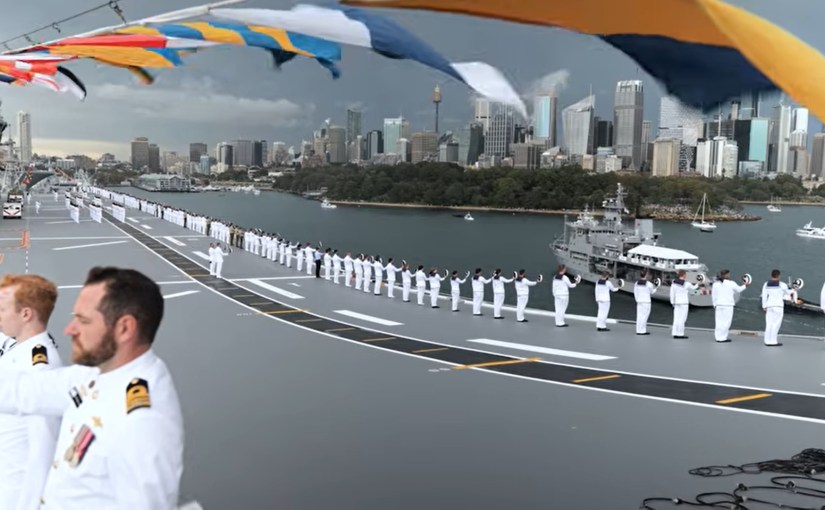
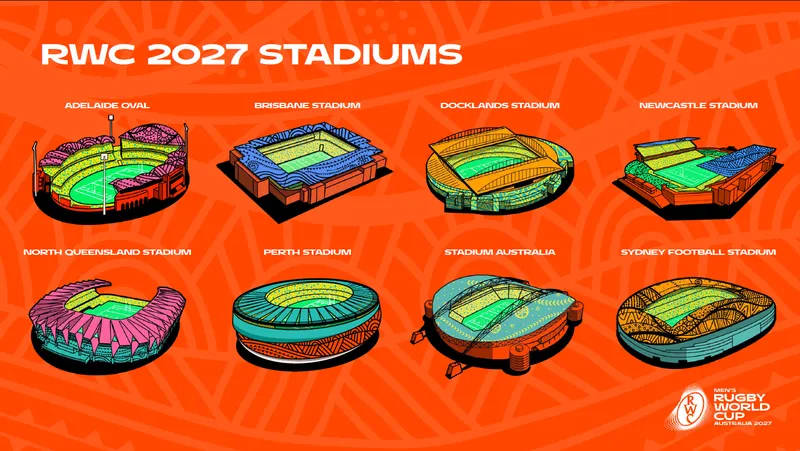
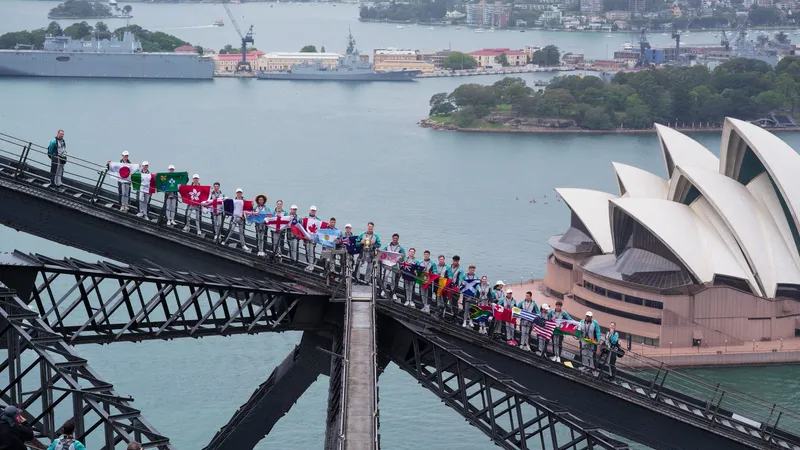
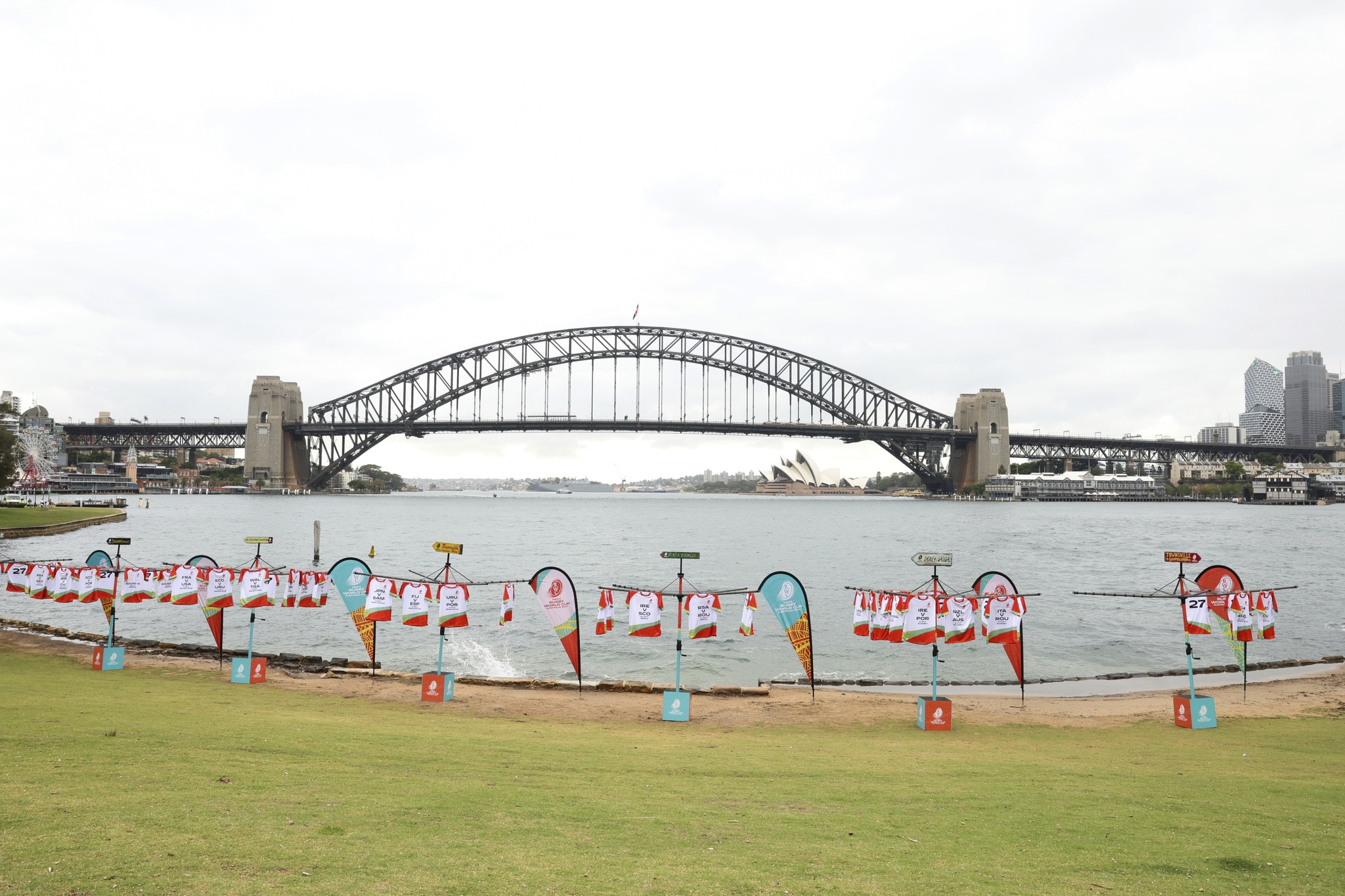
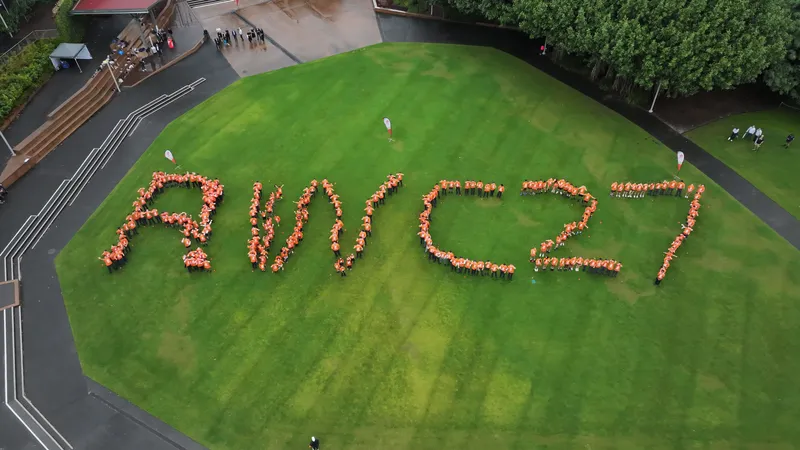
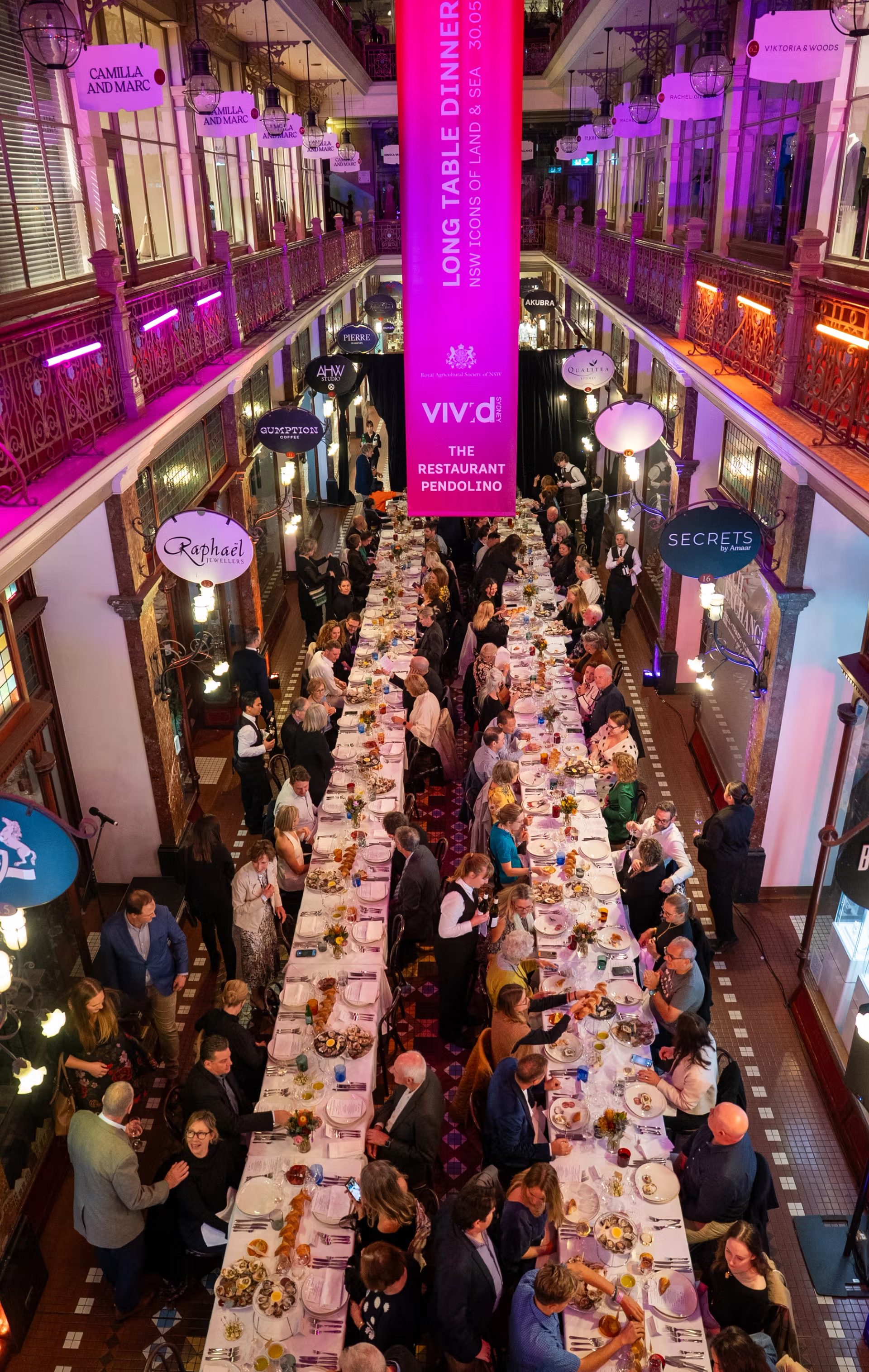
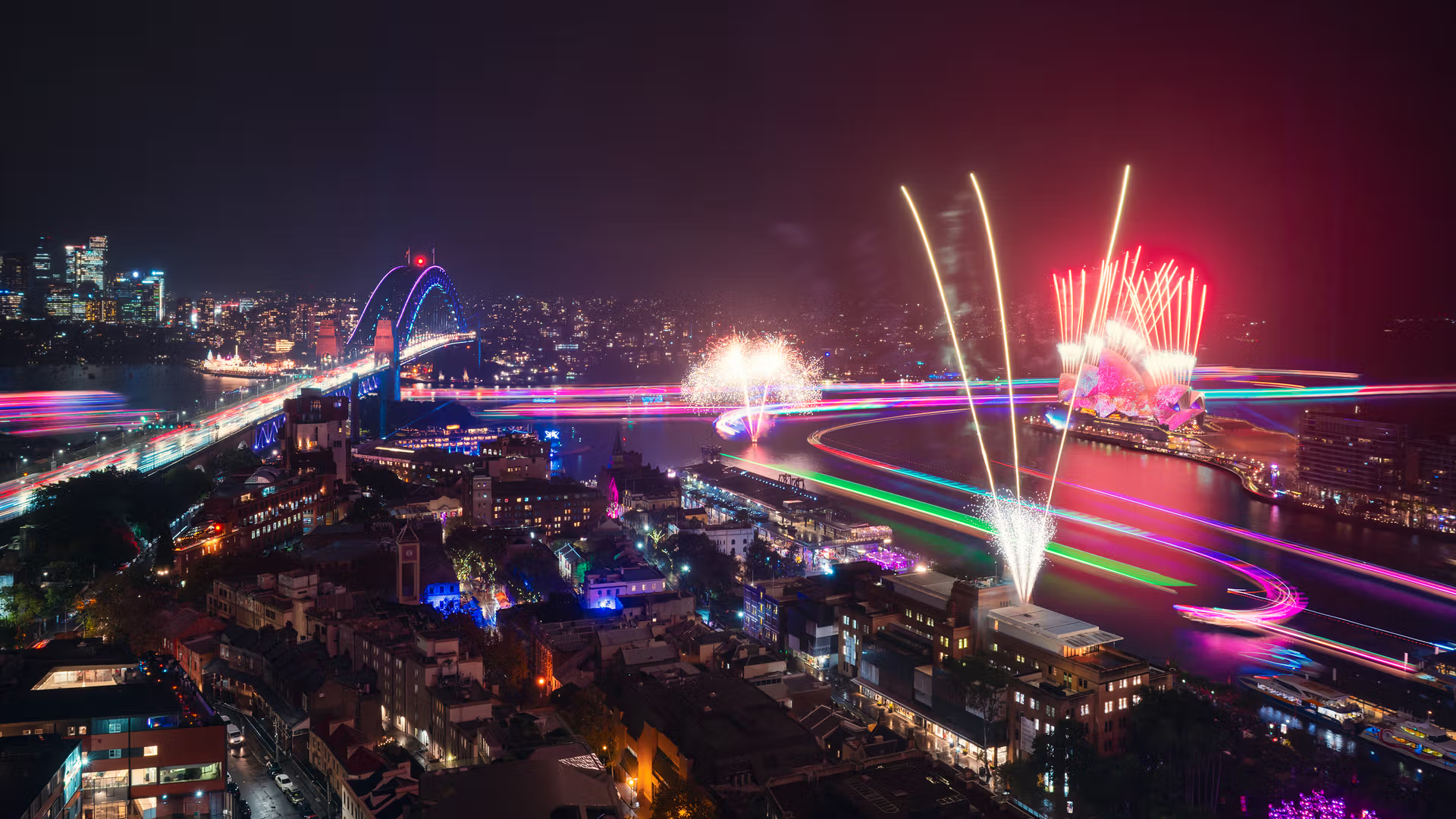
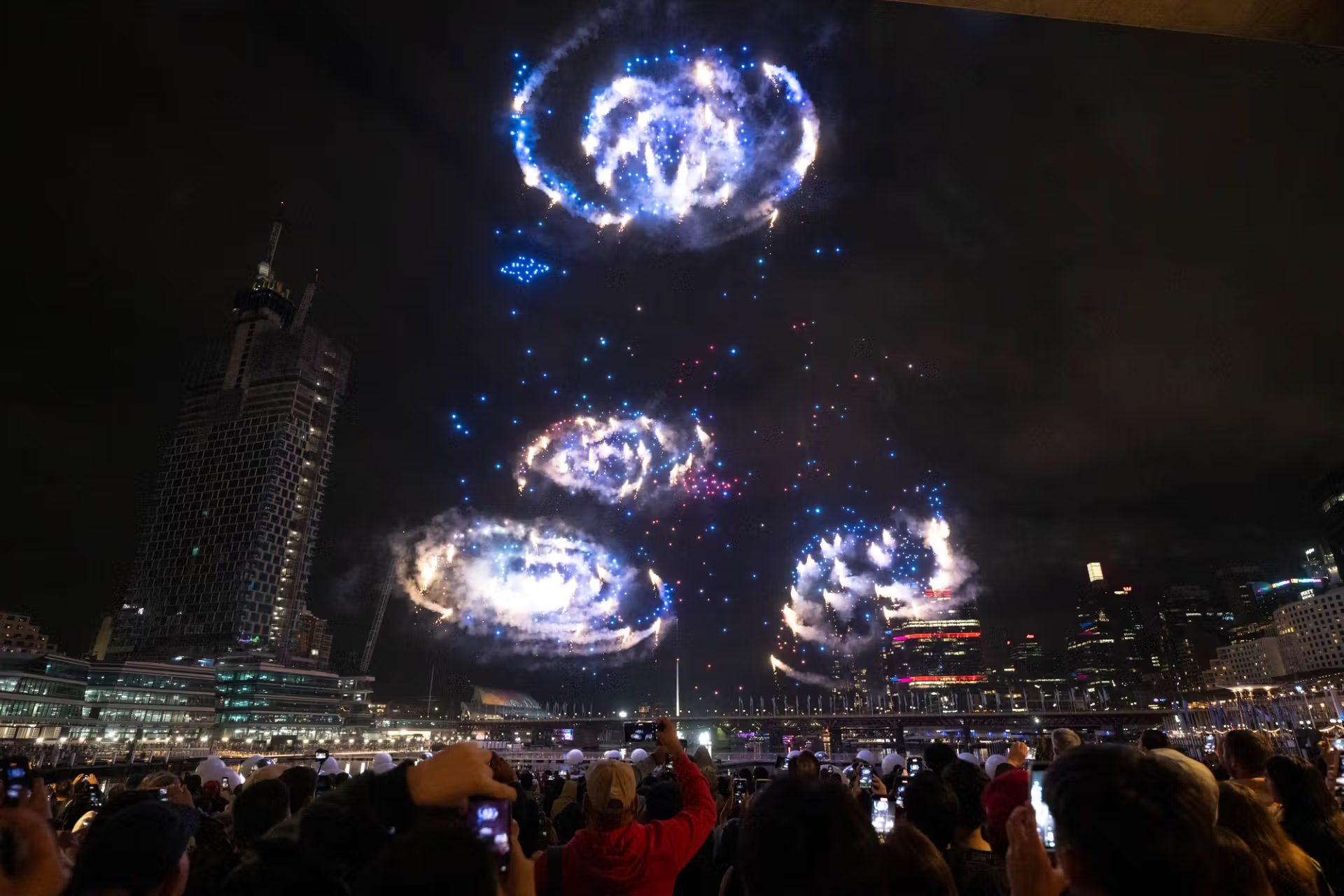
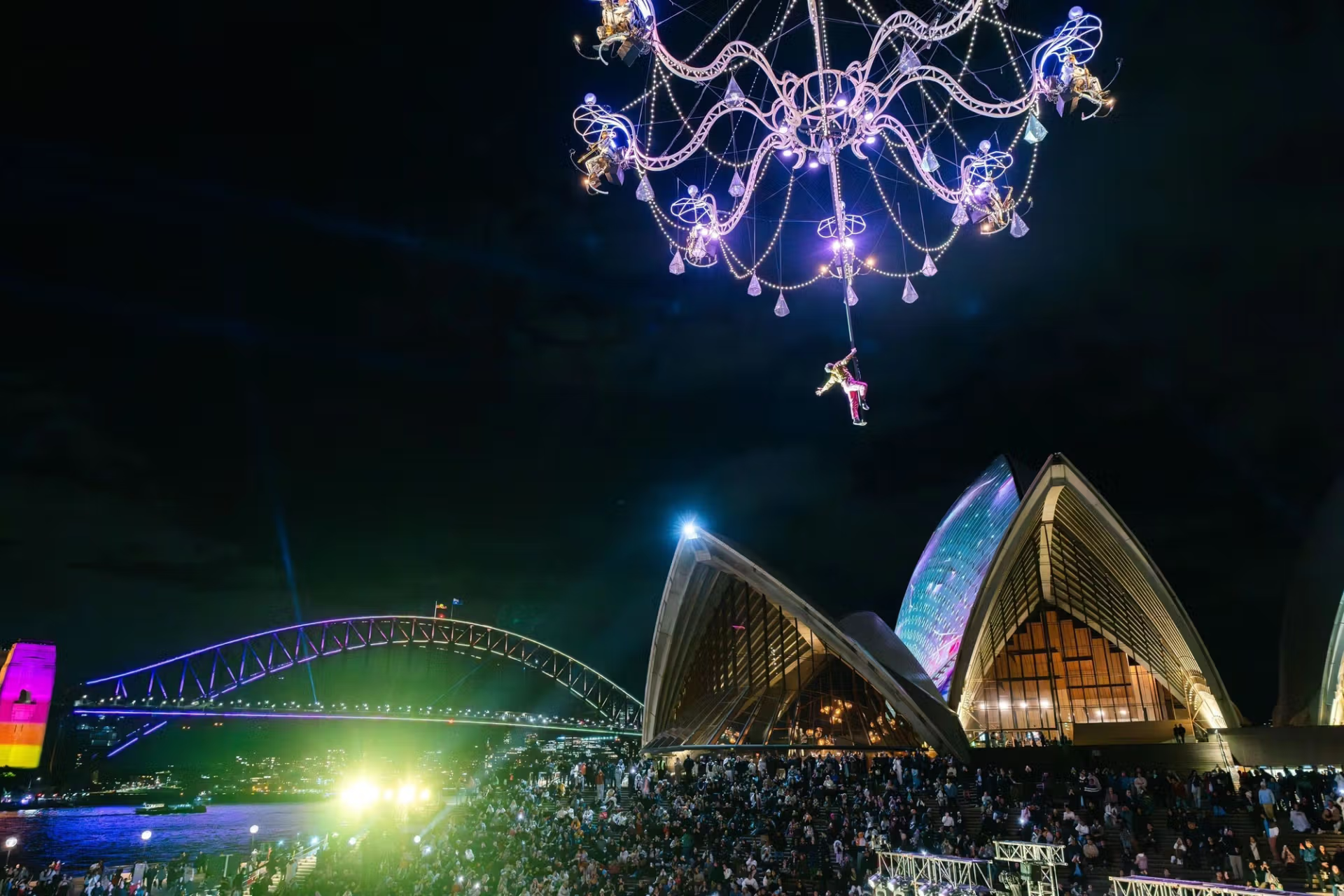
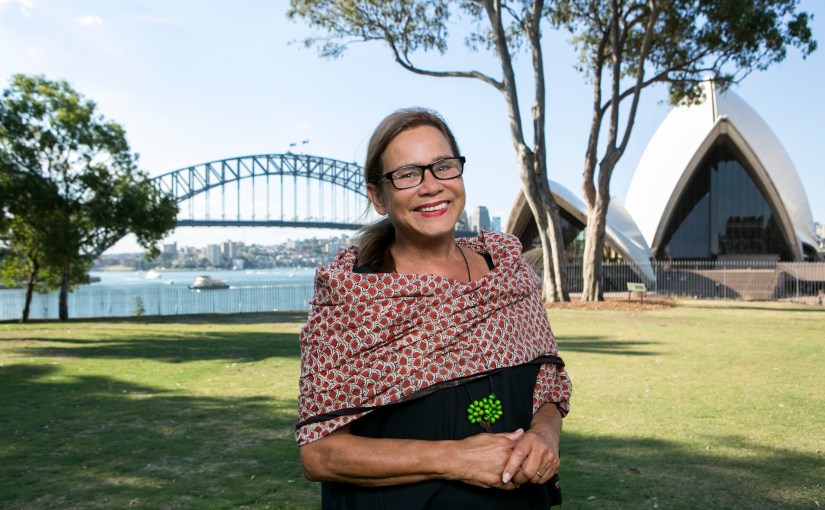
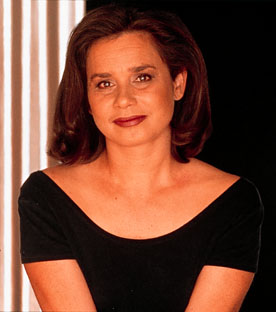
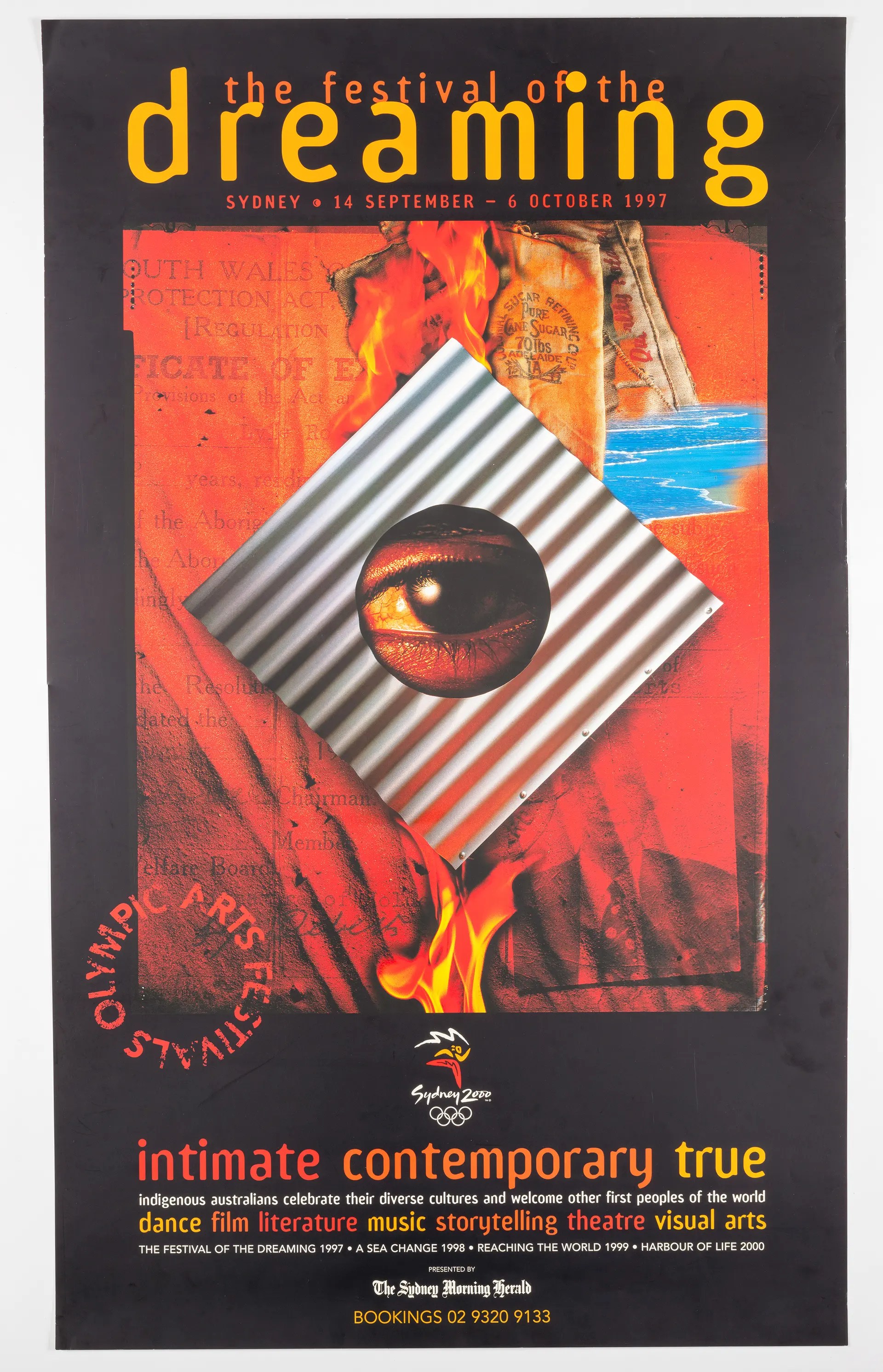
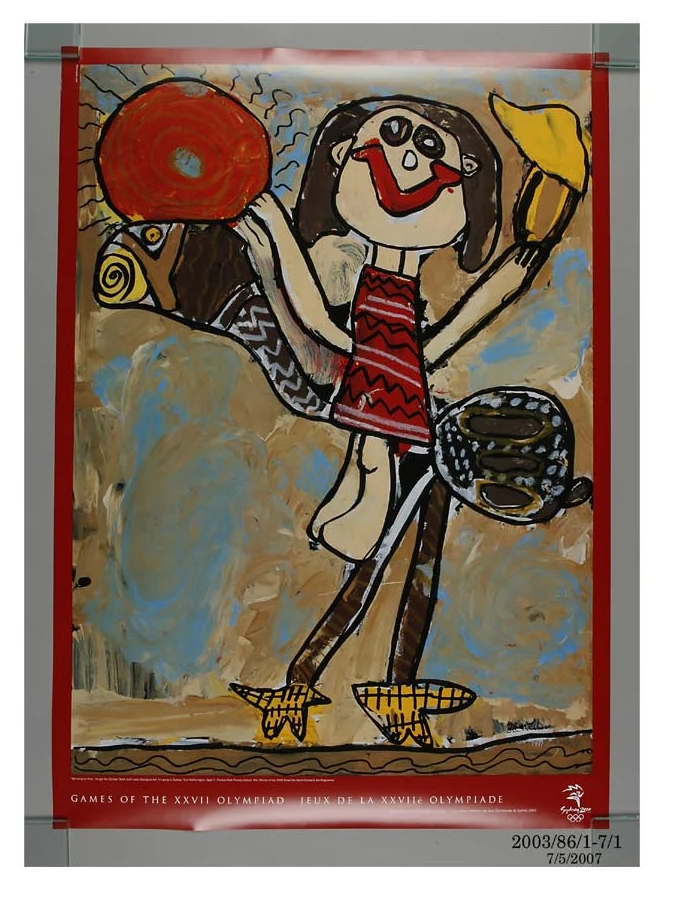
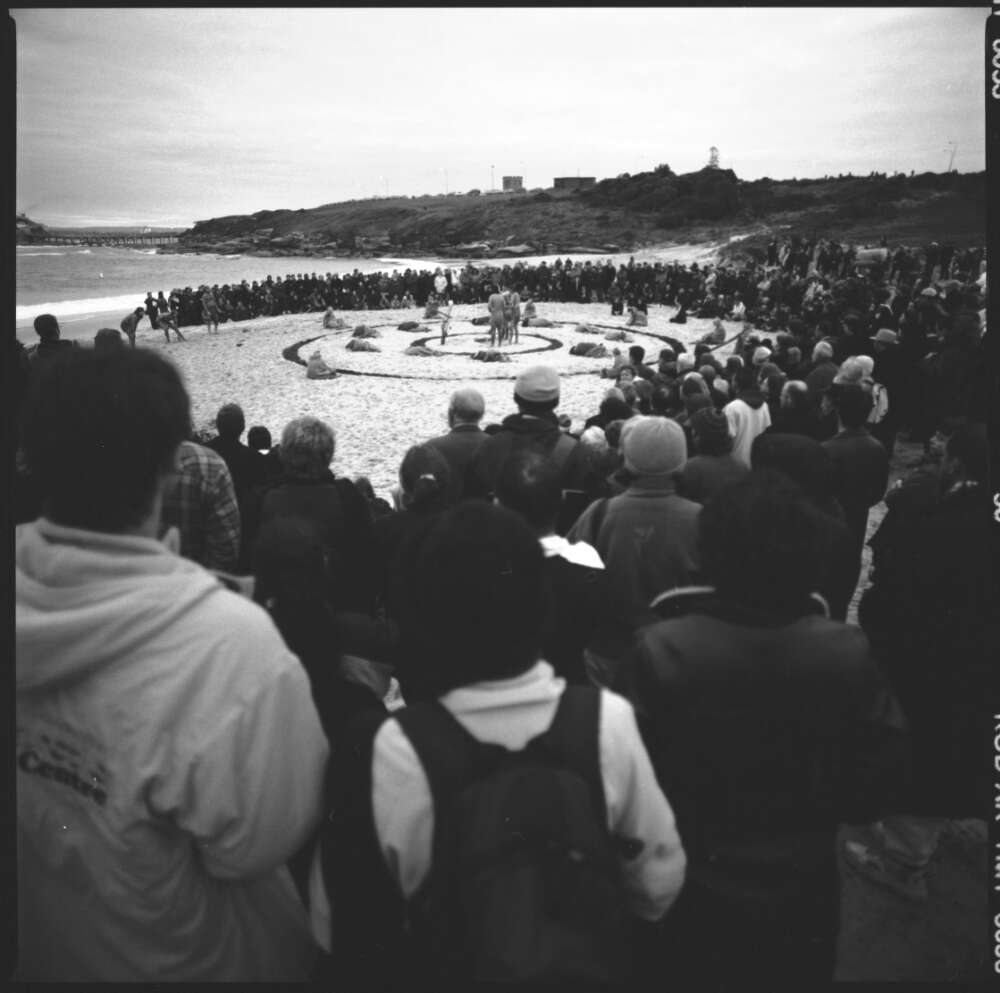
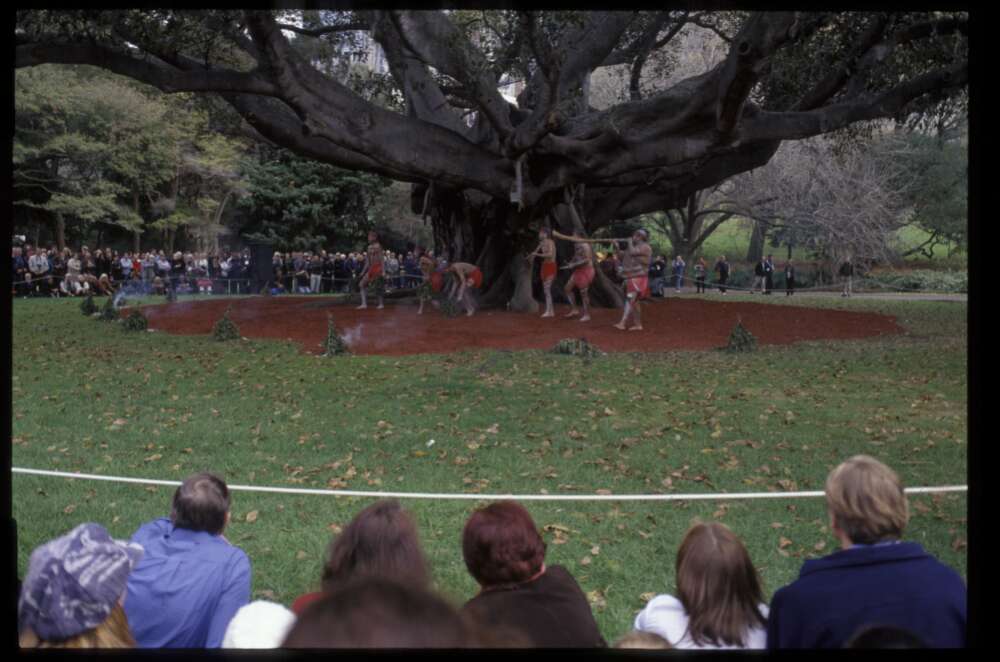
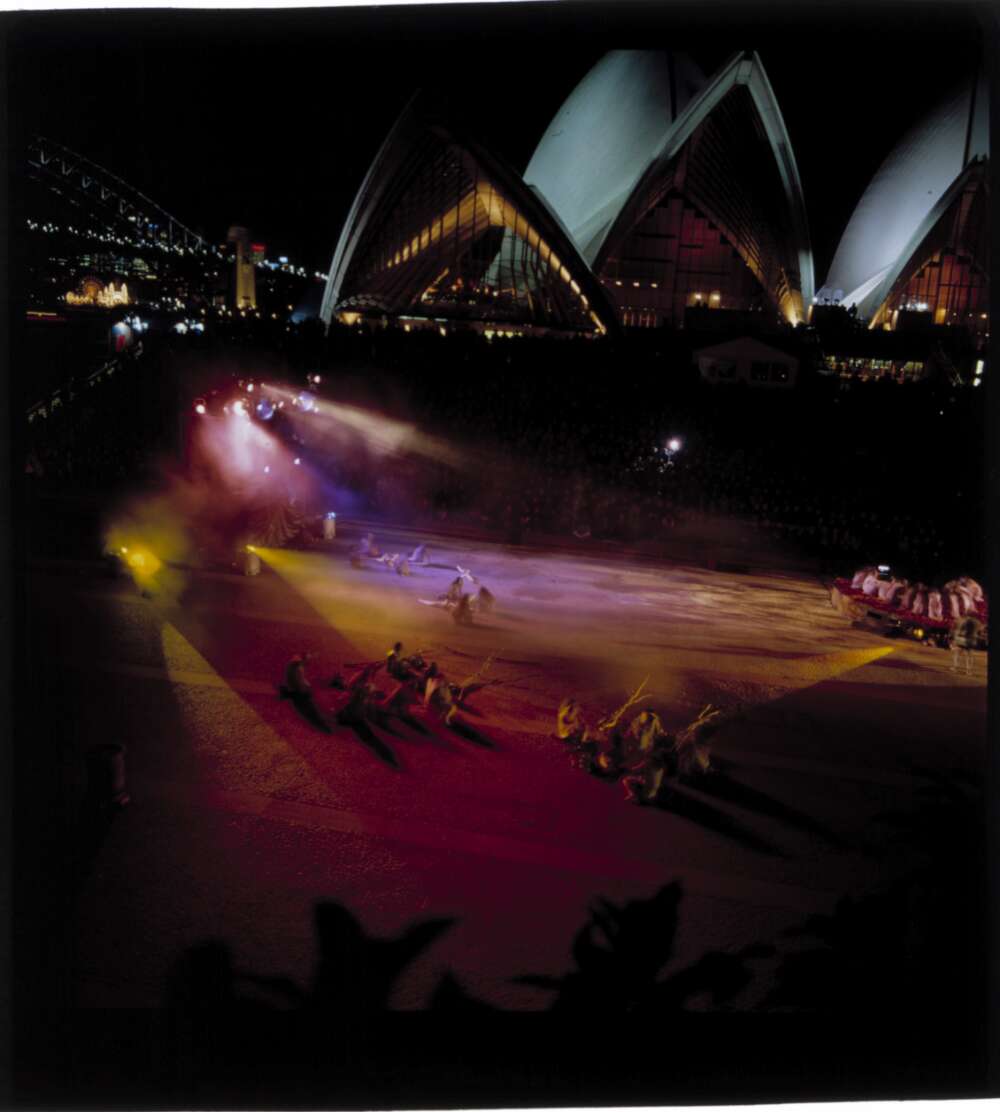
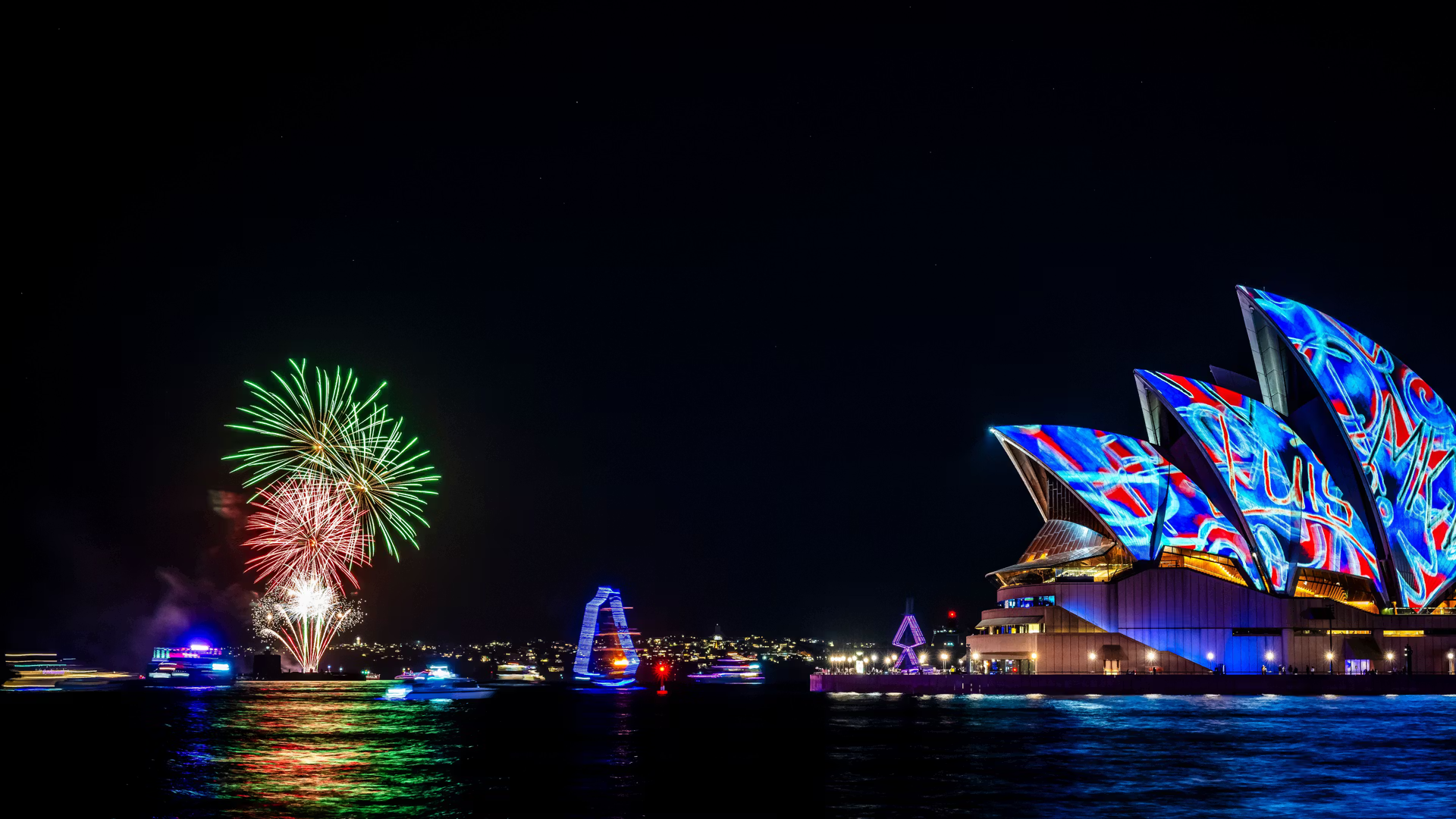
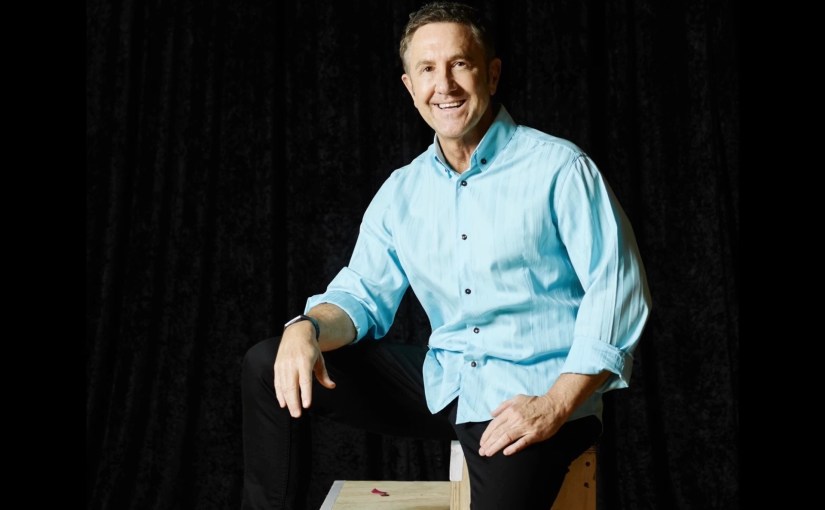


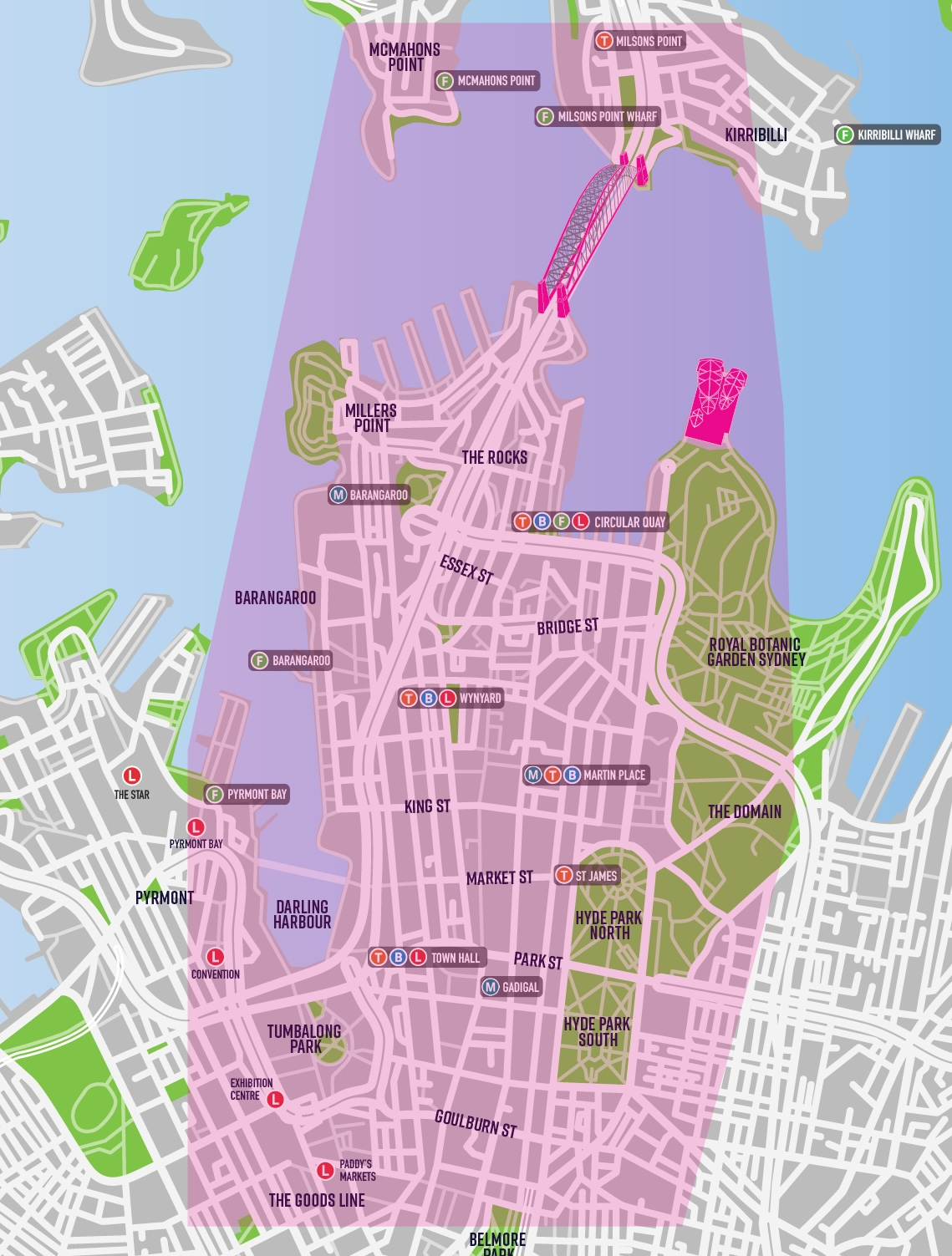
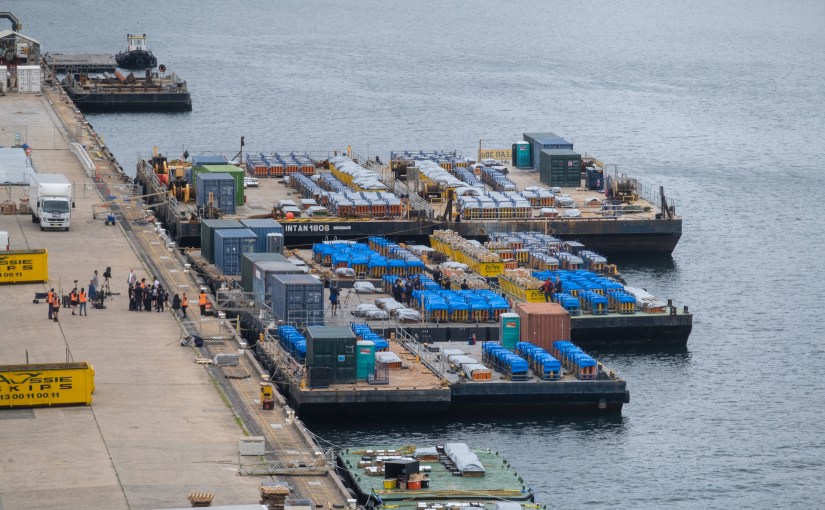

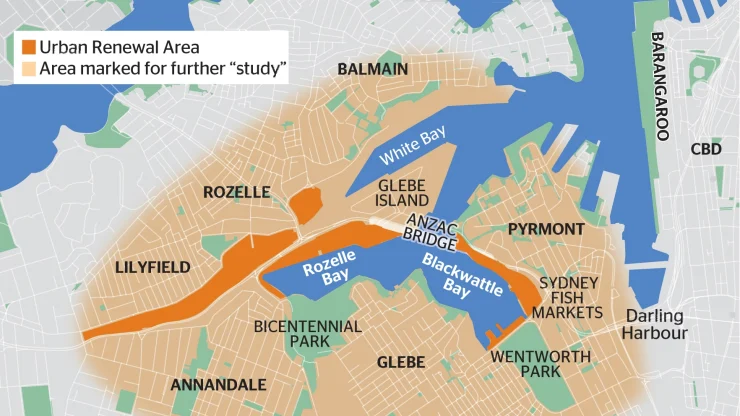
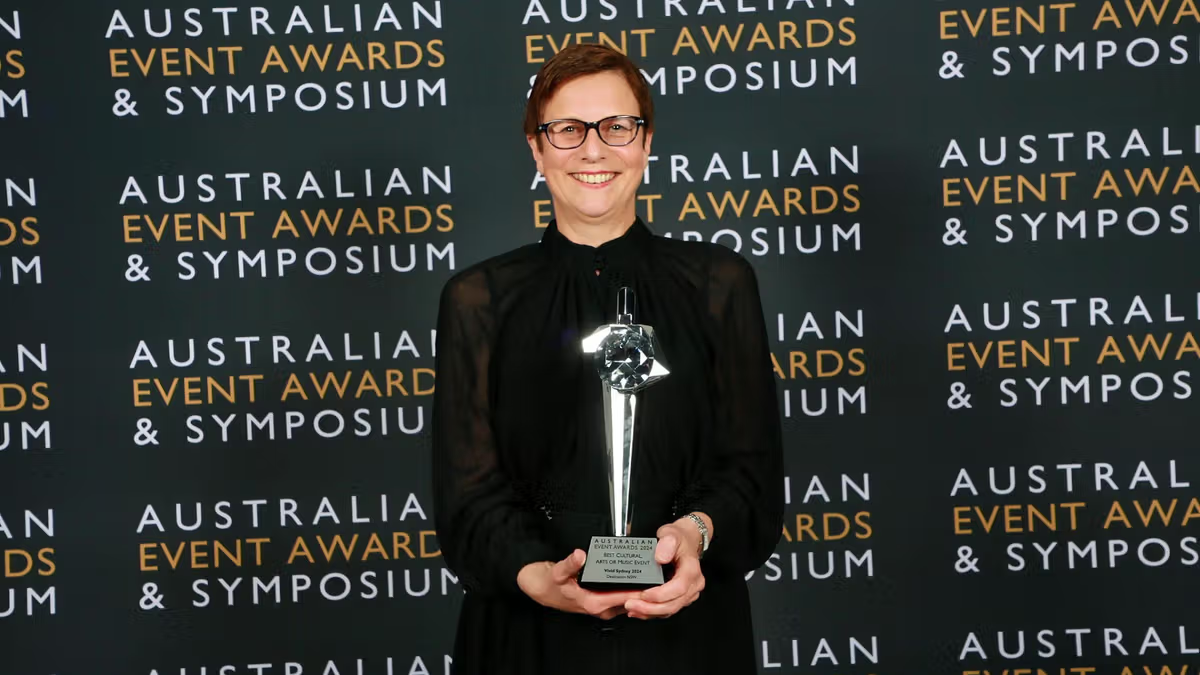
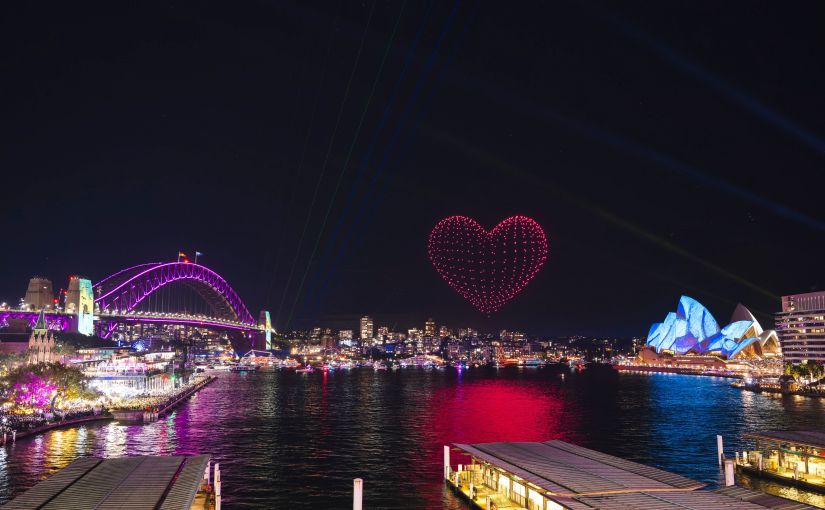


You must be logged in to post a comment.