
This post has been updated to include the Final Report’s addendum, which was published on the 13th of August.
The Sydney-Hobart Yacht Race has published, in full, a review into 3 incidents that happened during the previous race, which resulted in 2 fatalities & a man swept overboard.
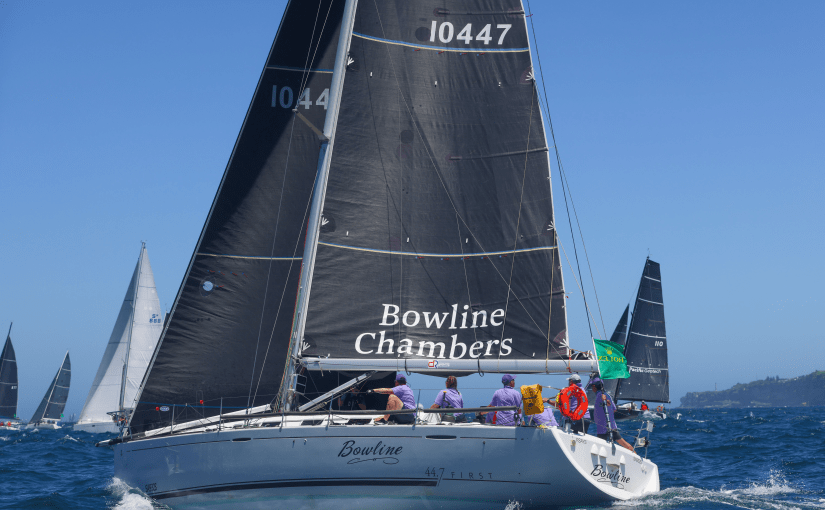
The 2 fatalities occurred between 10:30pm on Boxing Day (26th December) & 2:16am on the 27th December on 2 separate yachts (Flying Fish Arctos & Bowline). The former, Roy Quadon, involved a head injury from a boom strike while the latter, Nick Smith, a 2-leg Clipper Round the World Yacht Race sailor’s chest was compressed against the port mainsail winch. The man swept overboard, at 3:07am, was Luke Watkins, the Boat Captain from Porco Rosso. Also, at 10:16pm last Boxing Day, Quetzalcoatl reported a boom striking a crew member causing a significant but non-fatal head injury. This earlier incident likely led to media reporting that both fatalities involved boom strikes to the head.
A 3-person Review Committee was set up to review the 2 fatalities & the man overboard (MOB) incident. On the Committee was Adrienne Cahalan, Dave Jordan & as chair, Chris Oxenbould. All 3 have raced at some point in their lives in the Sydney-Hobart.
Whilst it was claimed to be an independent review, the Cruising Yacht Club Of Australia (CYCA), the primary race organiser, provided resources to the Review Committee including data and stakeholder access, a budget & administrative support. During the Review Committee’s existence, the Chair was definitely a member of the CYCA but while Adrienne Cahalan definitely wasn’t, it couldn’t be determined with certainty whether Dave Jordan was a member of the CYCA or whether all were members of the Royal Yacht Club Of Tasmania, who are the other race organiser.
Of note, their report reveals 1 of the fatalities wasn’t due to a head injury from boom strikes & that there were no broken or dislocated shoulders as initially reported. All 3 yachts suffered a ‘crash gybe’ – an uncontrolled manoeuvre when the stern is passed through the wind (which in Flying Fish Arctos‘ case was, at the time, ~51km/h, while in the other 2, were in gales) & causing the mainsail to flick violently, with a great deal of force, from 1 side of the boat to the other. All 3 crash gybes happened around a change of watch, even though all 3 had staggered crew changes. In Flying Fish Arctos‘ case, the crash gybe caused the boom to fatally strike Roy Quadon, who was standing & who “must have been out of his normal position”. In Bowline‘s case, Nick Smith, who was on their knees, was caught in the mainsail’s bight (the curved section or slack part between 2 ends of a line when it is not under tension) & they were thrown with their chest fatally forced and compressed against the port mainsail winch. In Porco Rosso‘s case, the canting keel canted 80% to starboard, causing Luke Watkins to be underwater, held by a Spinlock Performance Safety Line 3 Clip Stretch DW-STR/03/C & other lifelines but wedged between the top lifeline, a stanchion & a safety rail protecting the front and side of the starboard steering wheel, restricting his movement except to the boat end of the Spinlock Performance Safety Line 3 Clip Stretch DW-STR/03/C, which, while feeling he was on his last breath, he used to pull himself up to the boat’s windward side to release the Spinlock custom clip from the jackstay & thus, the Spinlock Performance Safety Line 3 Clip Stretch DW-STR/03/C. His lifejacket had also automatically inflated, the buoyancy of which assisted in freeing him from the other lifelines & the safety rail, releasing himself from the boat & thus, saving his life. Porco Rosso‘s crew later identified that the deck jackstays might be better positioned closer to the yacht’s centreline (they were positioned at the hull’s top edge) & short tethers should be used whenever possible. After seeing the yacht sail into the distance, Luke Watkins activated his Personal Location Beacon (PLB) but against training, didn’t pause before activating his Automatic Identification System (AIS) beacon. While in the water, he put on his spray hood, but it fogged up after 30 seconds & so he removed it. After his rescue, Porco Rosso‘s crew identified that the MOB throw line should be incorporated with reflective tape or strands, that a combined white flashing masthead lantern should have been switched on & that intracrew communications could be improved by point-to-point communication between the helm and the navigation station. Whilst not formally stated in their recommendations, the Review Committee says individual crew members should taking into account their yacht & its situation peculiarity when deciding whether to use an in-built Harness Release System (HRS) mechanism.

Photograph: Sydney-Hobart Yacht Race
At 6am, an announcement was made in the news that there had been 2 deaths on 2 separate yachts, 1 on each – 1 yacht of which was named as Bowline. However, it wasn’t until 8am that Bowline’s crew could make contact with their families. Whilst not formally stated in their recommendations, the Review Committee considers the major incident details public release protocols be reviewed with the New South Wales (NSW) Police in an attempt to ensure that the involved crews’ next of kin have been informed of the incident before any victims are named whenever possible. The crew of Bowline were also “hounded by the media” “unrelenting” & “it ‘stretched’ them”.
The report also found that crews were not comforted by the lack of weather forecasts broadcast as part of the radio schedule routine (sked), as done in previous editions. After the sked, a Comma-Separated Values (CSV) file with all boat positions accompanied by Bureau Of Meteorology (BOM) weather reports was sent, which yachts with low bandwidth satellite phones didn’t always receive.
The Race Operations Centre & Control Room logbooks made it clear that “communications were not perfect & that there were quite a few cases where contact could not be made with a boat” “by satellite phone voice calls & messages had to be left” instead. The report found a “lack” of experience, confidence or understanding of satellite phones & their application in the rules by the racing fleet, which resulted in “unease” in the competitors. This was evident in the need by the Sailing Manager to clarify that Starlink could be used 3 days prior to the race start. The Review Committee noted the intention of the Race Committee to review available evolving satellite phone systems & the Communications Plan, with the latter being refined.
In the Flying Fish Arctos fatality, important messages were not able to be passed on Very High Frequency (VHF) radio channel 16 (reserved for distress calls) due to a traffic jam including contact being made by a medical expert on another competing yacht (Flying Fish Arctos was in contact though with at least 5 medical experts including 3 which were their own crew members). However, the Review Committee found that both deaths were instantaneous. Bowline‘s fatality revealed that the satellite phone & charging station would have been better installed in a more central place like the navigation station (Both were installed in the aft (back) cabin as the charging station couldn’t operate in the navigation station when the satellite phone was being used). Whilst not formally stated in their recommendations, the Review Committee considered that the Race Committee should review the practical performance of low bandwidth satellite phones to confirm they have sufficient capability to meet competitor’s requirements, in particular, whether the data transfer capability provides a yacht with the ability to receive the files emailed by the Race Committee after each sked (such as the CSV boat position file & the BOM weather reports) with Australian Sailing specifying (precisely by bandwidth & data transfer rate) a minimum acceptable data transfer capability level in the Special Regulations, which the Race Committee can included in the Notice Of Race (NOR) & Sailing Instructions (SIs).
Also, up until 7am on the 27th of December, PLBs were also set off accidentally 9 times, 2 of which took 2 hours to resolve. Porco Rosso made an error, which they later identified, in not numbering off when trying to account for everyone, leading to the wrong assumption that everyone was on board & that an activated PLB as well as a MOB alarm was accidental. However, these mistakes didn’t add any delay to recovering Luke Watkins. The mistakes were realised when the PLB was associated with the sailor’s name, which the report found was “vital”. Luke Watkins was recovered 53 minutes after he released his tether. The crew of Porco Rosso also identified poor rehearsing of numbering offs prior to the race start & that luminous numbers on foul weather gears’ arms/back could be used as well as an investigation into a better interface between the AIS beacon and the boat’s receiver, which the Review Committee recommended for consideration as a subject for a widely shared webinar as part of Australian Sailing’s Sea Safety & Survival Course (SSSC).
On Porco Rosso, their Spinlock Deckvest Vito Lifejackets accidentally inflated 5 times since the race start, despite being advertised by the manufacturer as being resistant to such occurrences. The crew of Porco Rosso later identified a high level of accidentally inflated lifejackets in the wider racing fleet, which they considered should be reviewed to see if the current Special Regulations Of Australian Sailing (ASSR) requirements for lifejacket spares & lifejacket re-arming kits should be increased to 2.
Also, competitors found the race’s entry process repetitive, cumbersome, time-consuming & lacking automation and monitoring. The report found that Race Management is aware of the issue & that the CYCA Board has already approved an entry process system update. The Review Committee also said the qualifying race/ocean passage added little value given the qualification was for the yacht & not the crew.
Whilst not formally stated in their recommendations, the Review Committee says everything Porco Rosso identified should be reviewed for inclusion as appropriate in race documentation (but was recommended for forwarding to Australian Sailing by the CYCA as stated below) & they suggested that it might also be a suitable time to review SSSC content including an expansion to include heavy weather downwind sailing. The Review Committee also said the CYCA’s recently announced Offshore Sailing Academy could expand racing education & training, possibly with endorsement by Australian Sailing & further dissemination among other offshore sailors, similar to other international race organising committee offerings, with seamanship and performance treated in the context of a major ocean race & crash gybe risk and consequences understanding furthered through formal structured sailing and sharing of real-life experiences. Whilst not formally stated in their recommendations, the Review Committee found that each yacht deserves a Downwind Sailing Risk Assessment. The Review Committee also said the practical application of boom brakes/preventers, the sail settings & the True Wind Angle selection should be left to the person in charge (PIC).
The report also found wearing a helmet would have been “very limited help” & “unlikely to have saved” Roy Quadon’s life.
The Review Committee made 13 formal recommendations:
- the existing recommendation in the ASSR (5.01.1(b)) should be mandated so that an AIS MOB beacon & PLB should be carried by or attached to each crew member on deck with the CYCA introducing the change in the Notices Of Races from the next race & approaching Australian Sailing to make the mandate
- a more automated & user-friendly race entry procedure (starting with a simple online accessible electronic checklist on what has (not) been accepted)
- the lessons learnt from the MOB incident be provided to Australian Sailing for dissemination to SSSC instructors & used in the training of MOB recovery
- boom brake & preventer awareness & understanding should continue in training courses but their use should be a personal choice that does not need to be regulated
- the major incident details public release protocols be reviewed with the NSW Police in an attempt to ensure that the involved crews’ next of kin have been informed of the incident before any naming of the involved boats whenever practicable
- an improved minimum satellite phone capability requirement definition
- a list of acceptable satellite phone systems be provided
- the wording associated with the passage or qualifying race in the NOR be amended to link the crew (50% including the PIC) with the entered fully crewed yacht, subject to a Race Committee special exemption application determination discretion.
- the in-built HRS mechanism availability & effectiveness should be widely promulgated but the choice of incorporating an HRS lifejacket harness & tether should be left with the individual crew member
- helmets should remain optional & dependent on an individual’s personal choice or boat requirement
- a Heavy Weather Downwind Sailing Forum be convened (possibly by the CYCA with their most experienced sailors & also recorded) before the next Sydney-Hobart Yacht Race
- a recorded & widely disseminated communications seminar be convened before the next Sydney-Hobart Yacht Race (Among other things, to teach about the satellite communications-based framework, available weather and emergency service sourcing & that 1 uninvolved boat with a good high-quality signal VHF system and experienced disciplined operator is needed to take control of an emergency situation and that the other boats comply with their instructions including to shift to a working channel)
- whenever feasible, media assistance (such as a mobile media club representative) be provided to crews when a significant incident has involved a boat
The full report can be read here, which was published on the 15th of May with the addendum published on the 13th of August.
The CYCA board considered the full findings & will implement all recommendations, as they stated they would at the time of the tragedy.
The CYCA also extended its sincere thanks to the Review Committee for their comprehensive and thoughtful work & in particular acknowledged the Chair for his leadership and commitment to improving sailing safety outcomes.
The report also noted that the Race Committee Chair plans to review in the coming months:
- Roles & responsibilities
- Scenario planning for the full emergency/incident range
- The race start
- The overarching Race Management Plan, NOR & SIs
So far, over 60 entries have been received for the 80th anniversary of the Blue Water Classic including Comanche, 4-time line honours winner, LawConnect, 2-time & current line honours winner, URM, Smuggler, Love And War, Borderline, Moneypenny & Scarlet Runner. Among these 60 entries are 8 international entries from France (2), the United States Of America, Poland, Germany, New Zealand & China including Scallywag, Bacchanal, Callisto, BNC & Poulpito.
In other news, after receiving 30 expressions of interest, entries opened on May 22 for the new Southern Cross Series with entries closing at 12pm, 1st of December. Also, 50 entries had been received for the Sydney-Gold Coast Yacht Race.
This announcement was made on June 13.
The Sydney-Hobart Yacht Race 2025 – its 80th anniversary – begins at 1pm Australian Eastern Daylight Time on the 26th of December, Boxing Day.







 Sydney Spectaculars
You must be logged in to post a comment.